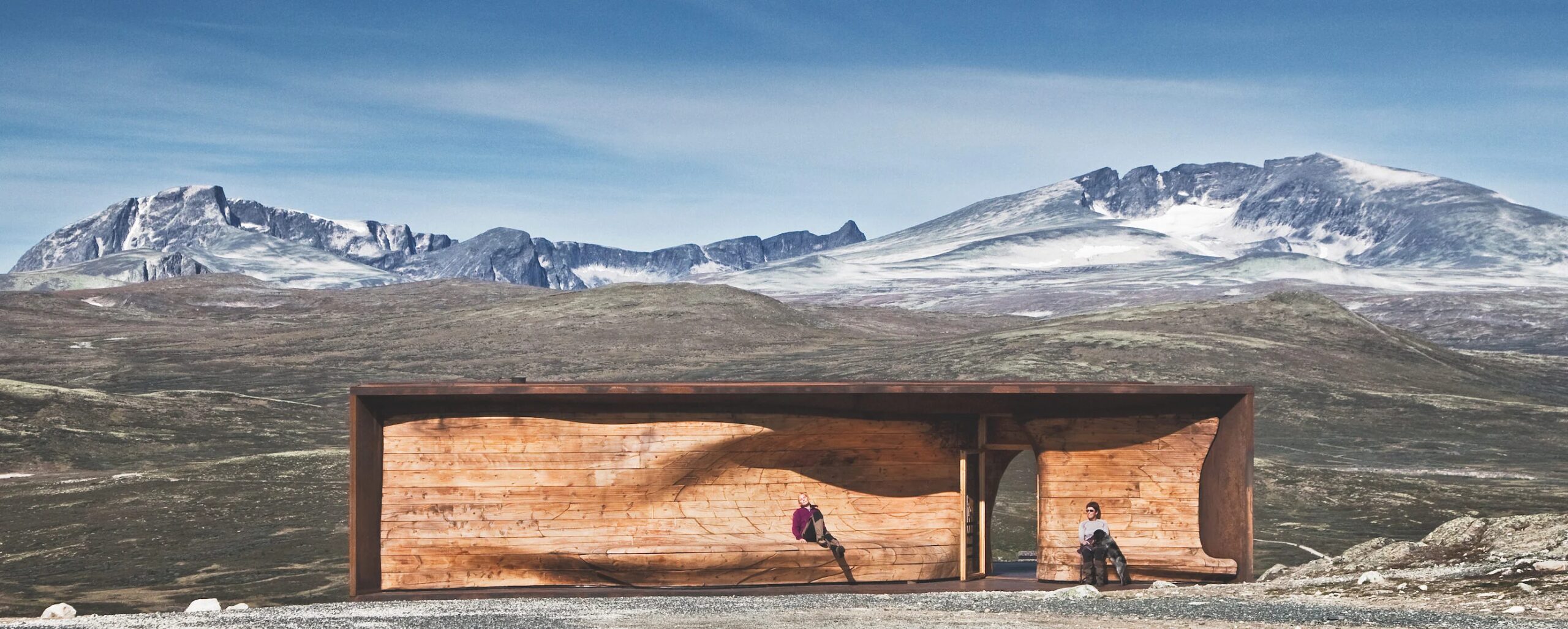
From street furniture to works of art: the seats of Chris Bangle, Pablo Reinoso and other designers become places of sociality and well-being, but also panoramic points where you can stop in a wonderful moment of contemplation
The bench represents the right to happiness. Yes, what the fathers of the American Constitution talked about and which, in this specific case, could establish the right to be happy while sitting. Paolo Ciampi speaks like this in his book The freedom of the benches, just released by Ediciclo. In this invitation to reflect on the nature and function of an object as simple as it is intriguing, the bench is attributed with undeniable qualities not only for the protection of human health, but also for its ability to coexist with its peers and, looking more closely at the tics that characterize current society, the bench invites dialogue and interpersonal relationships, considered strictly in the physical and analogue state.
In fact, in the United Kingdom it has been decided to increase the number of benches in historic places to combat loneliness. The news came from a few days ago: English Heritage has approved a plan to combat the growing loneliness among new parents which involves installing Bonding Benches in historic places, including castles. They are very popular destinations for young families, who can use them to communicate their need to chat or enjoy a moment of silence and peace in the open air. English Heritage’s plans are based on the UK Government’s Five Ways to Mental Wellbeing guidelines, which encourage people to socialise, keep learning and give. England had already played a pioneering role in learning a few years ago, launching the Books about town campaign: around fifty book-shaped benches had invaded London (and then many other cities).
But what is so magical about these sessions? They offer a suspended time and a special vision of the world. Which prompted artists and designers to create special stops.
The list of unmissable benches is truly long, starting from Norway, where the Snøhetta architecture studio created View point, a bench-refuge. We are in the Dovrefjell Sunndalsfjella National Park, in front of Mount Snøhetta. The small building is open to the public in summer and also serves as an observation pavilion for the Norwegian Wild Reindeer Foundation. It is a very special bench: equipped with a stove and protective glass it allows you to stop in comfort even in case of intense cold. In Denmark, in Copenhagen, Off Ground is the playful project by Gitte Nygaard and Jair Straschnow, a duo of designers who have planned soft seats in recycled material, suspended from an iron structure: they are benches, hammocks, swings for playful adults. Probably the same ones that Martin Binder thought of who, in the Garden of Generations in Einbeck (in Germany), transformed the classic wooden bench into a longer one, for about six people, resting on a single central cylindrical support. The name is clear: Balance Bench. And to stay seated, you need to keep it in balance! The playful effect also involves Chris Bangle’s benches: shape and structure have nothing different from the classic benches, only that they are giants… in their presence, one feels closer to the Lilliputians than to Gulliver. They are scattered throughout Lombardy, overlooking wonderful panoramas, for the BingBenchCommunity project designed specifically to enhance the landscape (on the bigbenchcommunityproject.org website).
And then, there are the benches signed by artists. Two examples above all. The first is in Italy, in the Arte Sella park, in Trentino, where in one of the three cultural routes, Thomas Daniel and Ugo Re created the Zen Bench, a philosophical and meditative version of outdoor sitting. The second is in France, an area that has often hosted the creations of Pablo Reinoso, the artist who let the slats of benches come to life by rolling up together, as in the Spaghetti Benches and Garabatos series.
Functionality and organic growth are the basis of his research, perhaps imitating plants as in the Chaises Hautes series: a slight undulating movement of the seat and the vertical development of the backrest tells of the wind in the trees, in an idea of celestial elevation. This is what benches do, humble and philosophical devices against haste.