erms of Saturnia and Chianciano celebrate Made in Italy between heritage, new generations and an evolving model of well-being
Bringing together a hot spring that has flowed for millennia and a new generation called upon to rewrite its future might seem like a rhetorical exercise. In reality, it is exactly the point at which the most interesting game of Made in Italy is being played today: not in the celebration, but in its ability to remain alive, passing through time without ever becoming a museum object.
It is within this tension – between what resists and what changes – that the National Made in Italy Day on 15 April takes place. And it is no coincidence that the story is told by two places that have made time their subject: Terme di Saturnia and Terme di Chianciano.
Made in Italy as an experience, not as a label
There is a misunderstanding that continues to be repeated, especially outside Italy: thinking of Made in Italy as a brand, a certification, a recognizable surface. In reality, its deepest value is less immediate and much more structural: transforming knowledge into experience.
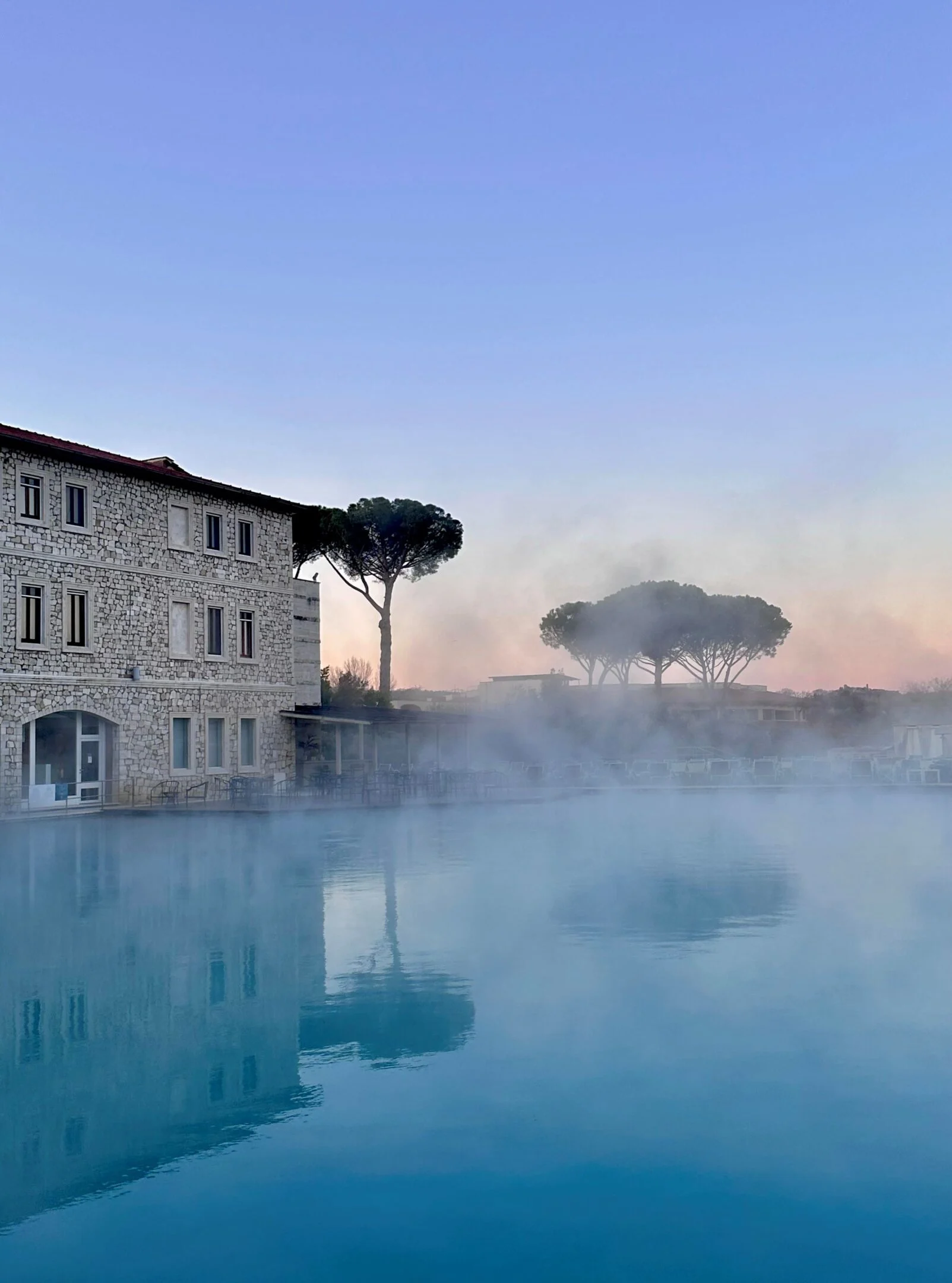
The spa, in this sense, is a perfect synthesis. Not just places of well-being, but complex systems in which nature, science, ritual and identity intertwine. Terme di Saturnia tell it with an almost primordial force: thousand-year-old water that continues to flow, bringing with it a narrative that has never been interrupted.
On April 15th this narrative takes shape in two immersive tours built as real crossings: not a visit, but an experience that restores the sense of a rare balance, that between man and nature, between tradition and research, between past and possibility.
Chianciano and openness as a cultural gesture
A few kilometers away, but with a different sensitivity, Terme di Chianciano chooses another direction: to open.
Free entry, upon reservation, to the Acqua Santa Park. A gesture that goes beyond promotion and takes on a broader value: bringing wellbeing back into a collective, accessible, shared dimension. Not as luxury, but as culture.
From Sensory Spas to Wellness Ceremonies to self treatments, everything builds a dialogue between ancient rituals and contemporary languages. This is where Made in Italy stops being a story and becomes daily practice.
The real issue: the generational transition
However, there is one theme that today surpasses all others: transmission.
It’s not enough to have a story, you have to be able to deliver it. And above all allow it to be reinterpreted without being emptied. The 2026 Youth Campaign “Together, let’s make the future” moves exactly on this ridge, putting twenty young entrepreneurs at the center called to collect a complex legacy and transform it into a contemporary language. “The skills challenge is today the strategic priority to secure the future of Made in Italy.”
It’s not just an economic question. It’s cultural. Because Made in Italy is not made of products, but of gestures. And the gestures, if they are not transmitted, stop.
Spas as cultural centers
In this scenario, Terme di Saturnia and Terme di Chianciano stop being simple destinations and become cultural centers. They tell of an Italy that does not protect its past by closing it, but uses it to build a future. An Italy that does not need to reinvent itself, but to continue to transform without losing its code. And perhaps it is precisely here that Made in Italy makes sense again: not as an image, but as a process. Not as a legacy to be preserved, but as a system to be evolved.