Vortex is revolutionizing ingredients, transforming apple peels and tomato waste into raw materials
It doesn’t end up in household bins, nor does it leave a trace in refrigerators emptied too late. No, invisible waste happens in the fieldsin industrial warehouses, along the conveyor belts of food factories – out of sight and, therefore, even more difficult to combat.
The data processed by Waste Watcher International and the Surplus Project speak clearly. Every year, in Italy, over 8.6 million tons of food end up in the garbage. A number that translates into an estimated cost of 13 billion euros. The most surprising element, however, is not the quantity: it’s where it happens.
In fact, approximately 11 percent of waste is already produced in the agricultural phase. Between 25 and 30 percent occurs in the processing industry – unvalued processing waste, deadlines that are too restrictive compared to the real durability of the products. In short, a third of the food wasted in Italy has never seen the counter of a supermarket. It’s a silent crisis that runs through the entire supply chain: just that the fault, this time, is not the consumer’s.
The solutions to this serious problem, in any case, have existed for some time: better production planning, recovery of still usable surpluses, valorisation of waste through the circular economy. It’s not just an environmental issue. For businesses, it also represents aconcrete opportunity to reduce disposal costs and improve one’s imagein line with the UN Sustainable Development Goals, which al target 12.3 aim to halve global food waste.
How Vortex fights food waste
In this context, Vortex was born, an innovative startup with a social vocation founded in Piedmont by Simone Piccolo and Lorenzo Picco. An idea that comes from far away: from the daily life of an agricultural entrepreneur who saw enormous quantities of organic fruit excluded from the market for aesthetic or logistical reasons, end up directly in the dustbin, for disposal.
From the observation of that paradox, Picco decided to start a research path in collaboration with innovation centers such as the Environment Park in Turin. In 2020 he was lucky enough to meet Piccolo, who brought the strategic and industrial structure necessary to transform research into a scalable business model. And so, Vortex Srl SB was officially born in 2021.
The company develops a proprietary patented food upcycling technology that transforms by-products from the agri-food industry into certified functional ingredients for the Food, Pet Food, Cosmetics and Nutraceuticals sectors. The heart of the process is a three-phase drying system (microwave, hot air and vacuum) which rapidly reduces humidity, blocks spontaneous fermentation and preserves the components of interest: fibres, pigments, flavours, antioxidants and bioactive compounds. What normally ends up in energy recovery becomes, through this process, a raw material with high added value.
The active supply chains linked to Vortex
Today Vortex operates in its Cuneo plant on four main supply chains, with a development pipeline that includes over ten new raw materials by 2028.
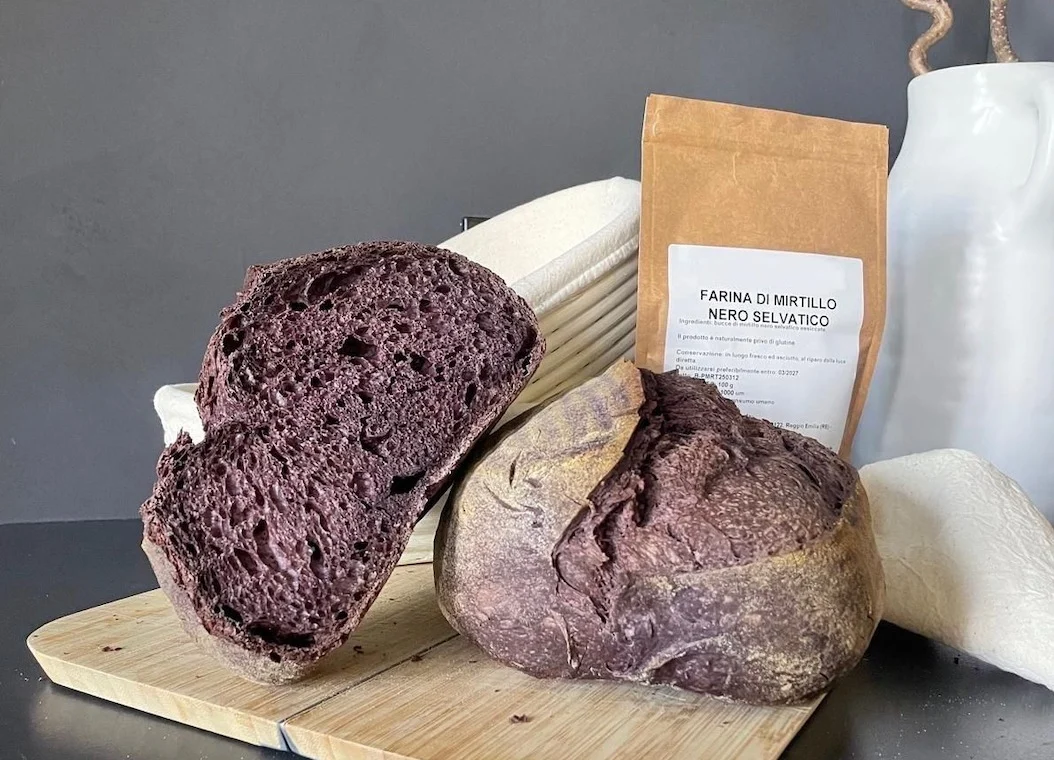
The peels of applethe residues of squeezing the blueberrythe peels and seeds of tomatothe clippings of artichoke: what leaves the plants as waste comes back through the door as raw material. Flours rich in fiber, antioxidant extracts loaded with phenolic compounds, concentrated lycopenes, inulin and cynarin — precious molecules that industrial processing does not destroy, but hides. Just look for them and get to know them.
Industrial applications of these products are already operational. In the sector of bread makingfunctional flours improve nutritional profiles and allow natural colours. In pasta, for example, they add fiber and antioxidant power, with an authentic narrative linked to the supply chain. Other active applications occur in the cosmeticswhere the extracts characterize the products both functionally and in terms of supply chain storytelling, and in pet foodone of the fastest growing markets in Europe.
The partnerships: Andriani, Tellia and pOd
The Vortex model is consolidated through collaborations with industrial and artisan companies that believe in circular ingredients.
Andriania multinational known for its highly ecological and innovative footprint in the world of food, integrates the apple fibers recovered by Vortex into Proggy, its one hundred percent vegetable pet food. Another fundamental partnership is the one with Telliaa Turin Roman pan pizza project founded in 2019 by Enrico Murdocco, trained in bread making and haute cuisine, who uses Vortex ingredients in the development of products based on natural fermentations and unrefined flours. pOd Vegetable Ice Cream by Chiara Ferrari, on the other hand, has the peculiarity of bringing food upcycling to the direct gastronomic experience: the project is part of international networks on sustainable innovation, from Food2030/Cleverfood to the Upcycled Food Association, and also collaborates with the Food for Soul Foundation of Massimo Bottura and Lara Gilmore.
Three different stories, of course, but with a common thread: transform a structural problem in the supply chain into a competitive advantage.A bet on the present and the future, with the patience of those who know that the most successful and long-lasting revolutions sometimes start from what seem like waste.