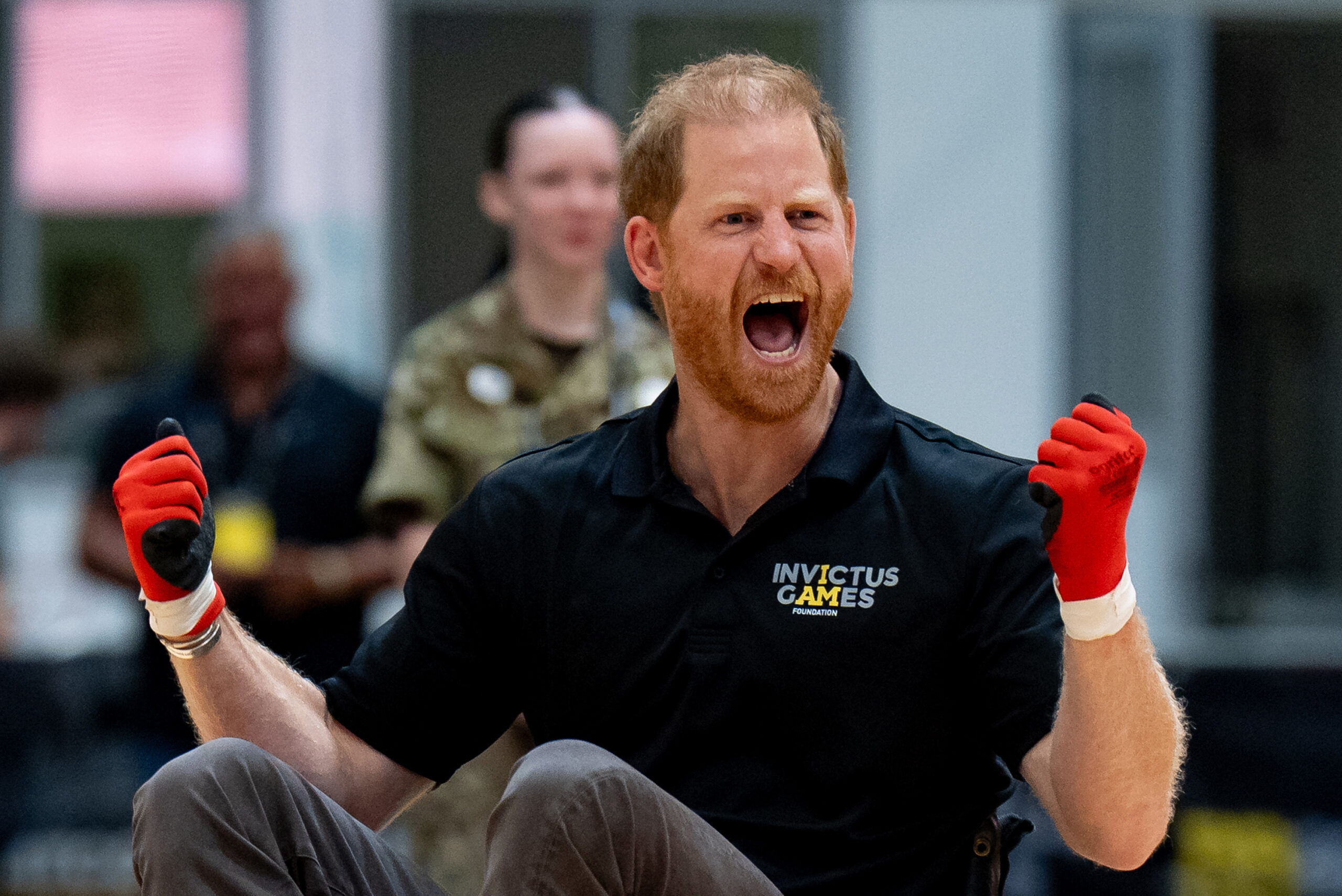
Time honored the Duke of Sussex for transforming the Invictus Games into an international movement dedicated to wounded soldiers and veterans. In New York the first public appearance after the rapprochement with King Charles.
He didn’t win an Olympic medal, he didn’t lift a trophy and he never built his popularity on a sporting record. Yet Prince Harry entered the list of the hundred most influential people in sport drawn up by Time. The reason is a project that, for over a decade now, has used competition not only to decide a winner, but to help men and women scarred by war to regain confidence, identity and purpose.
The Duke of Sussex was chosen for having created and founded the Invictus Games, the international event reserved for active soldiers and wounded, sick or disabled veterans. A sort of adaptive sport Olympics which, since the first edition in 2014, has become the center of Harry’s public activity and probably the most successful and recognizable project of his life after leaving the royal family.
The surprise on the red carpet in New York
Harry was a surprise participant in the evening organized in New York to celebrate the personalities selected by Time. On the red carpet of the event, which took place on 16 July, the prince appeared alone, in a dark suit and white shirt, even joking with the photographers: “You are the most polite I have ever met,” he said in front of the cameras.
Numerous sports and entertainment personalities were present at the evening, including LeBron James, Lindsey Vonn, Chloe Kim and Ciara. Meghan Markle, however, did not accompany her husband, leaving him center stage in an evening dedicated to the project which, more than any other, bears her personal imprint.
New York was also the duke’s first public appearance after the trip to the United Kingdom and the new meeting with his father, King Charles. Harry, Meghan and their children Archie and Lilibet met privately with the King and Queen Camilla at Highgrove House on July 10, in what was seen as a further step towards possible family reconciliation.
The idea born after Afghanistan
The story of the Invictus Games stems from Harry’s personal experience in the British Army. The prince served for ten years and participated in two missions in Afghanistan. In 2013, a few months after the end of the second deployment, he attended the Warrior Games in Colorado, the competition organized in the United States for wounded soldiers and veterans.
It was on that occasion that he understood how sport could become a tool for physical and psychological rehabilitation. Al Time he said he was struck by seeing before his eyes people whose lives were transformed by the competition. Hence the intuition: broaden that model, involve other countries and build an international community.
Just over a year later, in September 2014, London hosted the first edition of the Invictus Games. Over four hundred soldiers and veterans from thirteen nations participated. Even the name already contained the meaning of the initiative: invictusin Latin, means “undefeated”, “indomitable”.
It didn’t mean denying the wounds, visible or invisible, but preventing those wounds from defining a person forever.
Much more than a race
Over time the Invictus Games have become a traveling event. After London came Orlando in 2016, Toronto in 2017, Sydney in 2018, The Hague with the edition postponed due to the pandemic, Düsseldorf in 2023 and Vancouver-Whistler in 2025.
In Canada, for the first time, the program also included winter disciplines such as alpine skiing, snowboarding and skeleton. An expansion that confirmed the ambition of the event: to involve more and more participants and offer disciplines suited to different experiences, abilities and recovery paths.
For Harry, however, the value of the Games is not measured only by the number of athletes or nations present. The aim is to give participants back that sense of belonging that many fear they have lost after leaving the service or after being forced to abandon it due to an injury.
Wearing your country’s colors again, being part of a team and having a goal to work towards can become decisive elements in your recovery journey. It is this ability to go beyond sporting results that has convinced the Time to put Harry on his list.
The next challenge is Birmingham
The next appointment will be in the United Kingdom. The 2027 Invictus Games will be held in Birmingham, from 10 to 17 July, and will mark the return of the event to the country where it was born. The English city was chosen after an international selection which had also seen Washington reach the final stage.
Around 550 competitors from twenty-five countries are expected. The program will also include three new disciplines: e-sports, pickleball and laser run, a combination of running and laser gun shooting. Harry has already attended events organized to mark the start of the countdown to the Games.
The Duke would like to grow the event further, reaching a duration of two weeks in the future to offer a greater number of military personnel and veterans the opportunity to participate. But Invictus’ success doesn’t just depend on the size of the event.
At a time when his relationship with the royal family inevitably continues to dominate the news, the Invictus Games represent the territory in which Harry is not simply the second son of Charles and Diana, William’s brother or Meghan’s husband. He is the founder of an international movement that has changed the way we talk about the wounds of war and the role of sport in rebuilding a life.
And this is above all why the Time considers him today one of the hundred most influential people in world sport.