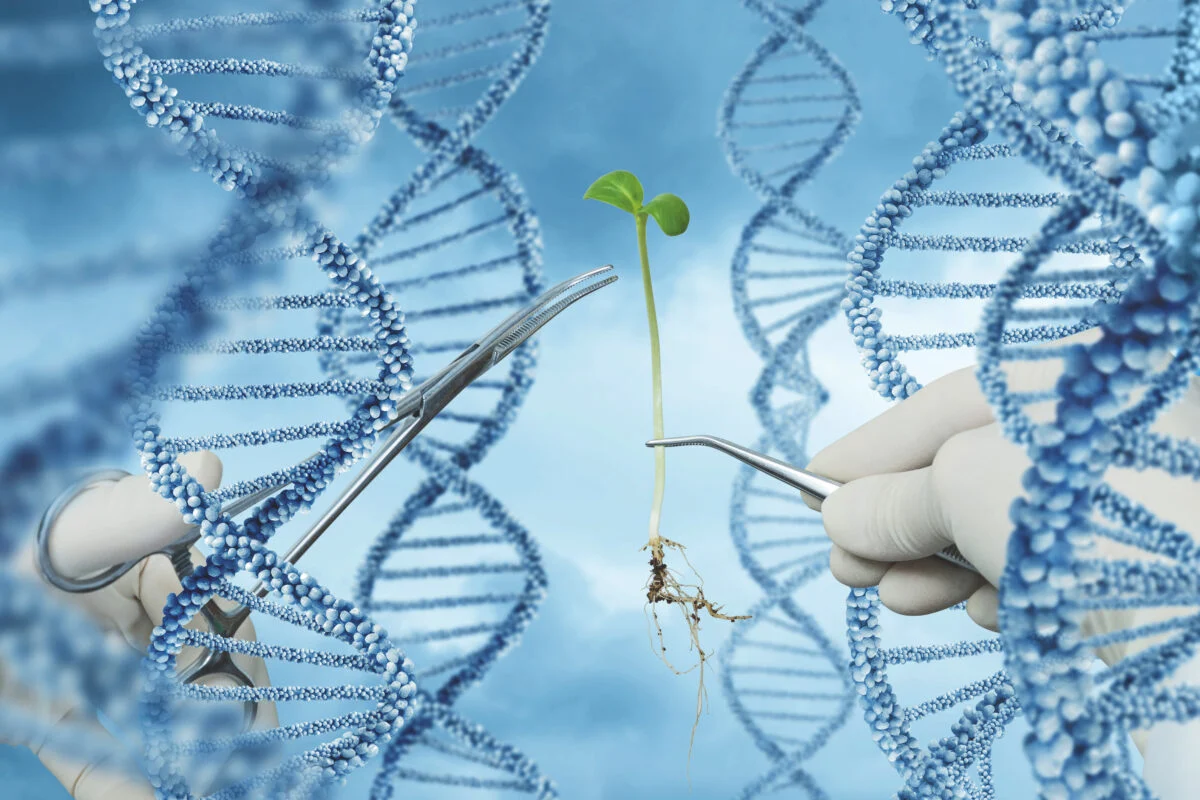
Enough with GMO-Frankenstein. The revolutionary acronym that came out of the laboratories is Ngt, a technique that improves the growth of vegetables, fruit and cereals by intervening on their DNA. Finally the EU has also noticed…
European agriculture is changing and, consequently, the way we eat. We are not talking about yet another food fad, but about a transformation in the way fruit, vegetables and cereals are grown, with inevitable consequences on the shopping cart, without necessarily increasing costs.
The engine of this revolution is Ngt (New genomic techniques). These are genetic editing techniques that allow us to intervene directly on the DNA of plants with a precision that was unthinkable until a few years ago. To understand how they work, just imagine the genetic heritage of a plant as a huge instruction book. If that book contains a printing error that makes the plant vulnerable to a disease or drought, today it is possible to correct only the wrong word, without adding an entire paragraph taken from another book, as happened in traditional GMOs with the insertion of genes from other species.
This is where NGTs differ from traditional GMOs. The genetically modified organisms developed since the 1990s were often obtained by inserting genes from another species into the DNA of a plant: the best-known case is that of Bt corn, which contains a gene from a bacterium capable of protecting it from certain insects.
NGTs, on the other hand, limit themselves to modifying or “correcting” genes already present in the plant, achieving changes in just a few years that would take decades in nature. The symbolic tool of this revolution is CRISPR-Cas9, the “molecular scissors” awarded the Nobel Prize for Chemistry in 2020 to researchers Emmanuelle Charpentier and Jennifer Doudna. Thanks to this technology it is possible to intervene in a precise point of the DNA with unprecedented accuracy.
It is precisely this difference that pushed the European Union to review legislation from the early 2000s, when NGTs did not yet exist. For over twenty years all plants obtained through DNA modifications had been treated in the same way, without distinguishing between those who insert genes from another species and those who only modify those already present. The turning point came on June 17th, with the definitive approval of the new regulation.
Ngt-1 plants, with modifications indistinguishable from those obtainable naturally, will follow simplified procedures and will no longer be equated with traditional GMOs. NGT-2, characterized by more complex modifications, will continue to be subject to the same rules as GMOs, including risk assessment, authorisation, traceability and labelling. The goal is to help agriculture meet the challenges of climate change, while reducing the consumption of water, pesticides and fertilizers without compromising productivity.
In recent months, Roberto Defez, researcher at the Microbial Biotechnology Laboratory of the Biosciences Institute of the CNR in Naples, one of the Italian pioneers in this field, participated in a field demonstration in Piedmont organized to show 15 MEPs the results of experiments on rice obtained with Ngt.
«The European vote finally puts public research in a position to support Italian agriculture» explains Defez. «We have the possibility of intervening on symbolic crops such as rice, tomato, vine, wheat, apple tree and aubergine, developing varieties of Italian plants that are more resistant to diseases and reducing the use of agrochemicals». The benefits could go far beyond simple crop protection.
«Reducing treatments means reducing the environmental impact of agriculture, improving soil fertility and maintaining high productivity without consuming new surfaces. This is also why Italy played a decisive role in supporting the new European legislation.”
In research laboratories all over the world, varieties of wheat are being developed that are more resistant to fungal diseases, tomatoes that require less irrigation, potatoes that are less vulnerable to downy mildew, rice that is better able to tolerate the heat and vines that are able to naturally combat some of the pathogens that today force farmers to carry out numerous phytosanitary treatments. We are also studying fruit trees that preserve the quality of the harvest for longer and vegetables that stay fresh for longer, thus helping to reduce food waste. «In the case of rice, together with Vittoria Brambilla of the State University of Milan, thanks to the support of the Bussolera Branca Foundation, we are making the plant more tolerant to the attack of some pathogenic fungi» Defez continues.
The applications of NGTs go beyond disease resistance. We are studying crops that consume less water, make better use of soil nutrients and offer a better nutritional profile, with more vitamins and higher quality vegetable oils. For the consumer the change will be almost invisible. Tomatoes, rice, wheat, aubergines and wine will continue to have the same appearance and flavour, but will be obtained with less use of pesticides and water.
Some varieties are already in an advanced stage of experimentation. «I see great opportunities for the vineyards and apple orchards of Trentino-Alto Adige» observes Defez. «And in the future, livestock farms could also benefit indirectly from Ngt. Today we import large quantities of GMO soya from South America to feed livestock. Tomorrow we could grow soya obtained with new genomic techniques in Europe and return to producing enough Italian corn, reducing dependence on imports.”
What is at stake, therefore, goes far beyond agricultural innovation. NGTs are a strategic issue for Europe. If Brussels has maintained a very cautious attitude towards agricultural biotechnology for years, other countries have accelerated. The United States, China, Japan, the United Kingdom and Argentina are already growing or experimenting with plants obtained through genome editing. According to the European Commission, continuing to apply rules designed for GMOs from the 1990s makes European agriculture less competitive.
The reform, however, does not convince everyone. Environmental associations ask that consumers be informed about the method by which food is obtained, even if many of them are not informed of the fact that approximately 87% of the feed used on Italian farms contains GMOs. Then there remains the issue of patents: genome editing technologies and many of the new plant varieties are protected by intellectual property and there are those who fear growing control of the seed market by a few multinationals. Precisely for this reason Europe has reserved two years to define the implementation rules. The direction, however, is now clear. The food of the future will be the result of agriculture designed to produce more with fewer resources and a lower environmental impact.