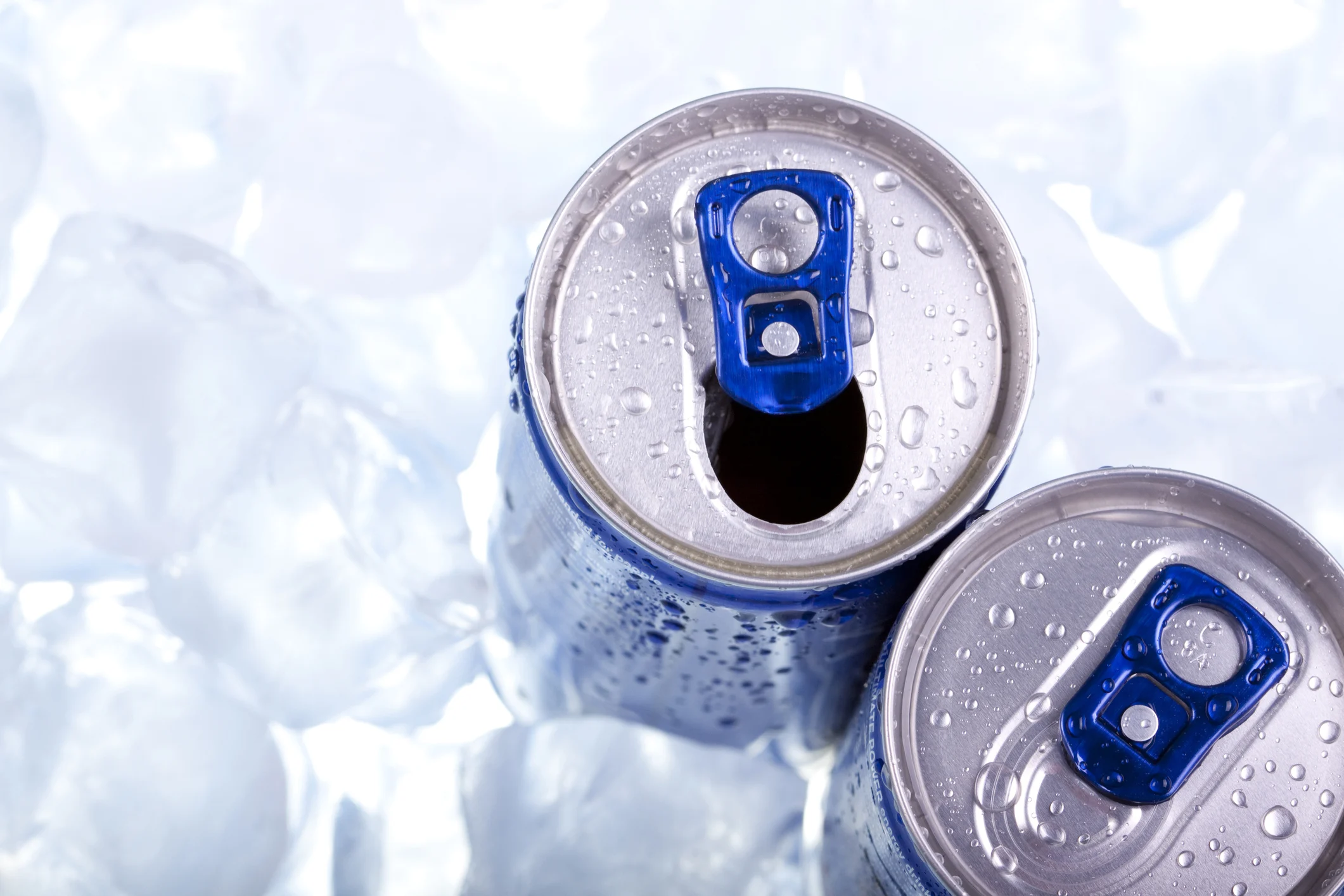
They promise immediate energy, concentration, resistance to tiredness. They have brightly colored cans, aggressive names and a now constant presence in sports, video games, social networks and influencer content. For many teenagers, energy drinks have become an almost ordinary drink, to be consumed before a match, during a study session or simply to imitate adults.
In England, however, they will soon no longer be able to be purchased freely by anyone under 16. The British government has confirmed that from April 2027 the sale of high-caffeine energy drinks to minors will be banned. The measure has yet to complete parliamentary passage, but the political decision has been made and the executive intends to introduce it through secondary legislation under the Food Safety Act.
This is not a ban on any energy drink or, more generally, on all caffeinated drinks. The established threshold is 150 milligrams of caffeine per liter: above this level, the product cannot be sold to under 16s. Tea, coffee and soft drinks with lower concentrations will be excluded.
The ban will also affect vending machines and online sales
The restriction will be extended to all main commercial channels: supermarkets, small shops, bars, restaurants, cafes, websites and vending machines. Traders will have to verify the age of buyers, while checks will be entrusted to local authorities. Fines could reach up to £2,500.
It is an important step because several British chains had already spontaneously adopted limits on sales, but the system left large areas uncovered. A boy could have the can rejected at the supermarket and buy it a few meters later in an independent shop, online or from a vending machine.
According to government estimates, approx 100 thousand English children and teenagers consume energy drinks with a high concentration of caffeine every day. Consumption would also be more widespread in families and economically disadvantaged areas, transforming the issue into a problem of health and education inequality.
The choice comes after a public consultation held between September and November 2025. 1,095 responses were collected and 90 percent of participants declared themselves in favor of introducing an age limit. Support came mainly from parents, teachers, doctors, local administrations and organizations involved in the protection of minors. More critical, however, is a part of the beverage industry, which considers the measure disproportionate compared to the available scientific evidence.
How much caffeine does a can contain
A standard 250 milliliter can generally contains approx 80 milligrams of caffeinea quantity similar to that of an espresso. The concentration, however, is around 320 milligrams per liter, more than double the threshold identified by the English government to trigger the ban. Larger formats or particularly concentrated products can provide significantly higher quantities in one go.
The problem is not only the absolute value, but the relationship with body weight. The European Food Safety Authority, EFSA, indicates a caffeine level for children and adolescents that does not cause concern at approximately 3 milligrams per kilogram of body weight per dayconsidering all food sources.
For a 40-kilo boy that means about 120 milligrams daily. A single standard can already provides 80; to this can be added cola, tea, coffee, chocolate and other products containing caffeine. Furthermore, the EFSA reference does not represent a threshold beyond which intoxication automatically occurs, but a prudential level referring to the healthy population.
It is precisely this difference that makes the often used comparison between a can and a cup of coffee misleading. Caffeine may be similar, but the audience, consumption patterns and context change: energy drinks are often drunk quickly, in large formats, sometimes in multiple consecutive units and in combination with other sources of stimulants.
The effects of energy drinks on sleep, anxiety and the heart
Caffeine stimulates the central nervous system and temporarily reduces the perception of tiredness. In more sensitive subjects or when quantities increase it can cause agitation, tremors, headaches, nausea, palpitations, increased blood pressure and difficulty falling asleep.
In adolescents, energy drink consumption has been associated with poorer quality sleep, anxiety, gastrointestinal disorders, difficulty concentrating and some acute cardiovascular effects, such as increased heart rate and blood pressure.
However, a distinction is necessary on this point. The English government itself recognizes that much of the available research is observational: that is, it shows a relationship between consumption and health problems or academic performance, but does not always allow it to be demonstrated that it was exclusively the drink that caused them. Those who sleep little, lead an irregular lifestyle or exhibit other risky behaviors could, for example, also be more inclined to consume energy drinks.
The evidence, therefore, is not definitive. However, they are coherent enough to have pushed London to apply a precautionary principle, especially considering that the product already contains the indication on the label not to recommend it to children.
The sugar problem
Next to caffeine there is sugar. According to the briefing from the European Parliamentary Research Service, a typical 250 milliliter can can contain approximately 27 gramsequivalent to five or six teaspoons. In a single product it is therefore possible to reach or exceed the daily quantity of free sugars indicated as a prudential objective by the World Health Organization.
Sugar-free versions eliminate this specific problem, but not the caffeine one. For this reason the English measure is based on the concentration of the stimulant and not on the calories of the drink.
Another particularly risky habit is pairing it with alcohol. Caffeine may make a person feel more alert, but it does not reduce blood alcohol levels or restore normal coordination, judgment, or reaction times. The Italian guidelines for healthy eating remind us that the exciting effect of energy drinks can mask, but not cancel, the neurological effects of alcohol.
In Europe, six countries have already introduced limits
England is not the first European territory to intervene. Lithuania and Latvia introduced bans on sales to minors in 2014 and 2016 respectively. Poland and Romania followed in 2024, while Hungary and Bulgaria adopted restrictions in 2025. The Spanish region of Galicia also banned sales and consumption by minors, partly equating these drinks with alcohol.
However, the rules are not uniform: the minimum age, the definition of energy drink, the concentrations considered and the places where sale is prohibited change.
At community level there is currently no specific law that prevents teenagers from purchasing them. The European Food Information Regulation requires drinks with more than 150 milligrams of caffeine per liter to clearly display the warning “high caffeine content” and the indication that the product is not recommended for children and pregnant or breastfeeding women.
Brussels still considers the scientific advice published by EFSA in 2015 to be sufficient and has not announced a joint ban. However, Member States remain free to introduce more stringent national rules, provided they are justified.
Energy drinks banned in Italy? Not for now
In Italy Today there is no national age limit for purchasing energy drinks. A teenager can buy them at the supermarket, at the bar, online or through a vending machine, while the only mandatory protection is represented by the information on the packaging.
The English decision will not automatically produce consequences in our country. However, it could reopen the debate on the effectiveness of a simple warning printed in characters that are often not very obvious, especially when the product is promoted through extreme sports, gaming, music, creators and campaigns capable of speaking directly to young people.
A possible Italian intervention could follow the English model, limiting only drinks with over 150 milligrams of caffeine per liter, or focus on schools, vending machines, advertising and sponsorships aimed at minors. However, a ban alone would not solve every problem. A study cited by the European Parliament found that in Poland, after the restrictions were introduced, only a minority of children attempting to purchase were subjected to regular age checks.
The issue is therefore not to establish that a single can is necessarily dangerous for every teenager. The point is to decide whether a product already declared not recommended for children should continue to be available without any limit, even in large formats and at any time.
England chose to answer no. From 2027 the can will remain on the shelves, but to buy it you will need to be at least 16 years old. Now the debate is destined to move to other European countries too, including Italy.