They have charisma to spare, but also serums, creams, lipsticks and mascaras. Celebrities use their popularity to bring their beauty products to perfumery shelves. From Rihanna to Selena Gomez, passing through Drake, Dua Lipa, Beyoncé, Pharrell Williams, Jennifer Aniston, not to mention the Italians (who we’ll talk about later). Now almost every star has their own line, and the list is constantly renewed. After all, why limit yourself to lending your face to the brands that would like you as ambassadors, when you can earn directly from your own? An intuition that today’s famous people owe to the American top model Cindy Crawford who, at the beginning of the 2000s, well before the era of Instagram and TikTok, promoted her skincare line on teleshopping channels. After a quarter of a century, the game has moved to social media where, between high quality products and more questionable ones, the beauty business contributes to making VIPs millionaires and, in some cases, even billionaires.
Pop star Rihanna knows this well: despite the pleas of her fans, she hasn’t released an album or organized a tour since 2016, ten years, but on the other hand she has never stopped launching new products since 2017, when she founded the Fenty brand in collaboration with the luxury goods giant LVMH. Her brand not only revolutionized the world of make-up with a hyper-inclusive offering (it offers foundations in over 50 shades), but also made the Barbadian singer a billionaire well before music did it. Yet, the stage was useful to her: three years ago, during the Super Bowl, Rihanna interrupted a dance to give herself a quick touch-up of powder live worldwide. A move that earned Fenty a media value of $5.6 million in the first twelve hours alone.
It is no coincidence that today the brand, valued at almost 2 billion, is tempting the investment company supported by the singer Jay-Z, interested in purchasing LVMH’s ownership stake. Moreover, his wife Beyoncé has also chosen to invest in the sector by recently launching the Cécred hair line. What can we do: by now – claims Forbes – the couple’s billion-dollar bank account comes mainly from their activities in fashion and beauty.
Much of the wealth of actress Selena Gomez also comes from a cosmetics brand, and at 34 years of age, thanks to income from Rare, she is considered one of the richest young women in the world. Ditto Hailey Baldwin married Bieber: Justin’s wife, not yet thirty years old, has already earned a billion dollars from the sale of the Rhode brand to the giant Elf Beauty, which after the acquisition of the line signed by the model (it will debut in Italy in September) recorded an increase in turnover of 38 percent.
Beauty attracts business from celebrities “because the barriers to entry are low: third-party manufacturing allows anyone with an audience to launch a collection without owning production facilities”, explains Mauro Ferraresi, professor of sociology of communication and scientific director of the Beauty and Wellness master’s degree at the Iulm University of Milan. «Furthermore, the cosmetic product has a high repurchase frequency, it generates an ongoing relationship, not a one-off expense as can happen for a fashion item, and above all it touches the body, therefore it allows famous people to transfer the implicit promise of their image onto what they sell».
This explains the targeted choice of some stars. Lady Gaga’s Haus Labs, for example, focuses on color, with pencils and eyeliners that allow you to reproduce the singer’s distinctive make-up, while Jennifer Aniston, iconic for her cut since the days of the television series Friends, could only get into haircare with LolaVie. Similarly, Shakira created Isima for those who, like her, have to tame masses of curly hair, and the rapper Cardi B, Grow Good, dedicated to Afro-Latin hair: the first collection presented in spring sold out in just 45 minutes.
The list could continue because even men have not remained impervious to the opportunities offered by the beauty business. Drake made his debut with perfumes: his Better World Fragrance entered the portfolio of the Parlux company, which also manages the fragrances designed by Billie Eilish and Paris Hilton and which, thanks to the success of these brands, has seen its turnover increase. Celebrities such as Brad Pitt, Dwayne Johnson, Pharrell Williams and John Legend, however, have invested in skincare with the brands Beau Domaine, Papatui, Humanrace and Loved01, tapping into a rapidly growing department. According to the most recent estimates, men’s skin care was worth $17.6 billion in 2025 and could reach $30.9 billion by 2034.
Italian VIPs try to follow suit, with more or less success. Goovi by Michelle Hunziker, born in 2018 with the healthcare company Artsana and today with robust growth in revenues, is the most structured case, but Miriam Leone’s brand, Lávika, is also in excellent health, a skincare line based on natural extracts that pay homage to her Sicily.
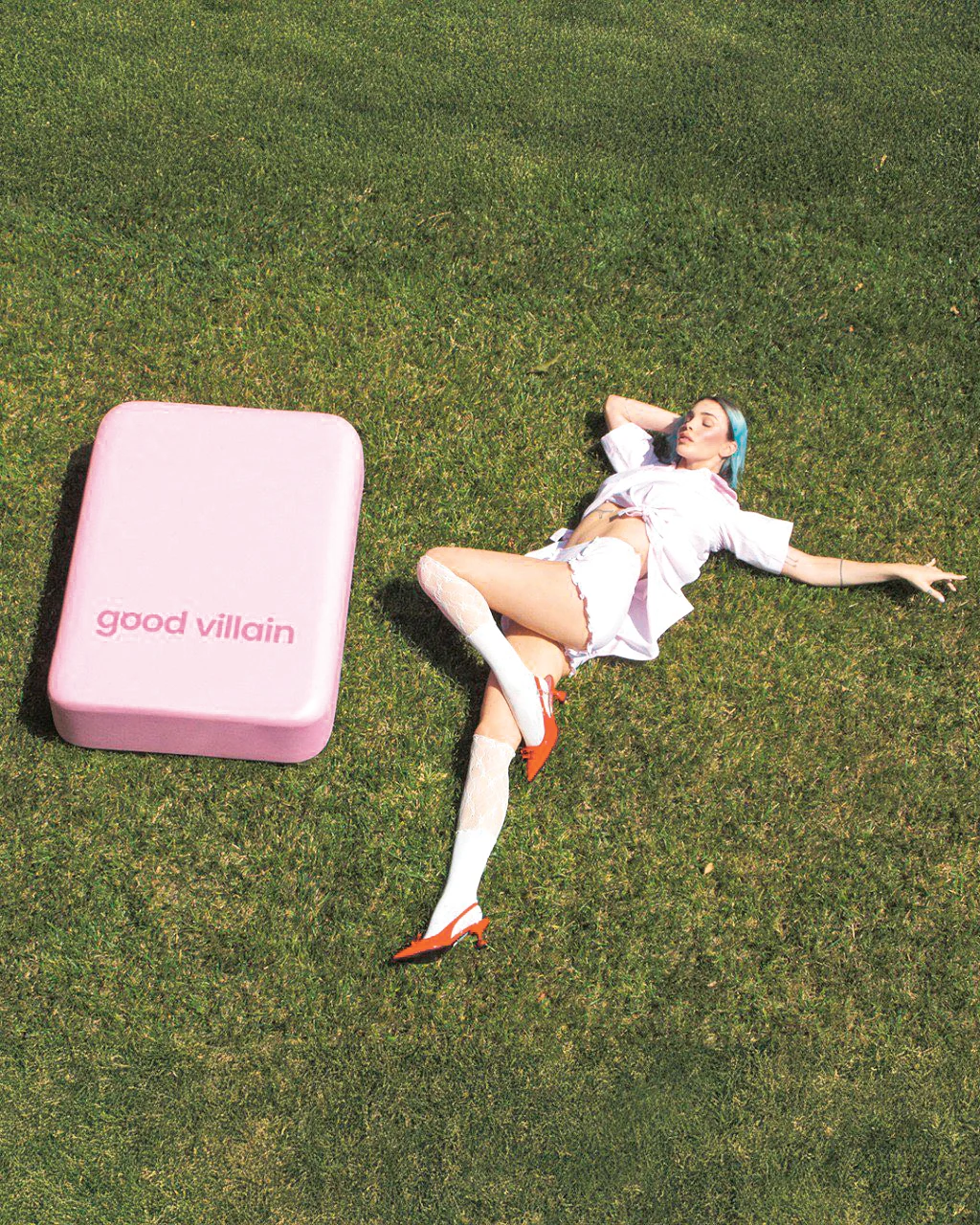
Designed for athletes is Fit.fe by Fede, by swimming champion Federica Pellegrini. Another brand, Luce by Alessia Marcuzzi, is dedicated to skin care and aims to enter the pharmaceutical channel. Then there is Rebeya, by Belén Rodríguez, who has been talked about above all for an intimate mask in the shape of a butterfly… Among the latest arrivals, the musician Rose Villain with the make-up brand Good Villain, launched in 2025 shortly before her performances in Sanremo, and many influencers, first and foremost Chiara Ferragni. The former queen of Instagram, however, did not hit the mark: her line of caramel body cosmetics was criticized for an old and mediocre quality ingredient list.
In short, fans may also be the most loyal customers, but notoriety is no longer enough. According to industry reports, today quality, effectiveness and price weigh above all in purchasing decisions. Perhaps this is why some brands are starting to disappear: only in 2025 did Gxve Beauty by singer Gwen Stefani, Flower Beauty by actress Drew Barrymore and Cosmoss by top model Kate Moss close.
«Consumer surveillance is a global phenomenon, just think of the cases of defective lipsticks or overly aggressive scrubs that overwhelmed the reputation of American celebrity brands a few years ago», recalls Ferraresi. «People today have greater access to information on formulations, thanks to the spread of the INCI, the acronym with which by law the ingredients must be listed on the label, which has become a field of widespread literacy also thanks to specialized content creators on social media».
There are those who choose not to take risks and rely on the top of the class, as the pop star Dua Lipa did last year with the scientist-entrepreneur Augustinus Bader, immediately positioning themselves in luxury and very high quality cosmetics. The result? To take home 30 ml of one of the “Dua” creams, you have to spend 78 euros, more or less enough to attend one of his concerts.