World Cappuccino Day will be celebrated on Sunday: history, origins and curiosities about the Italian drink that has conquered international palates
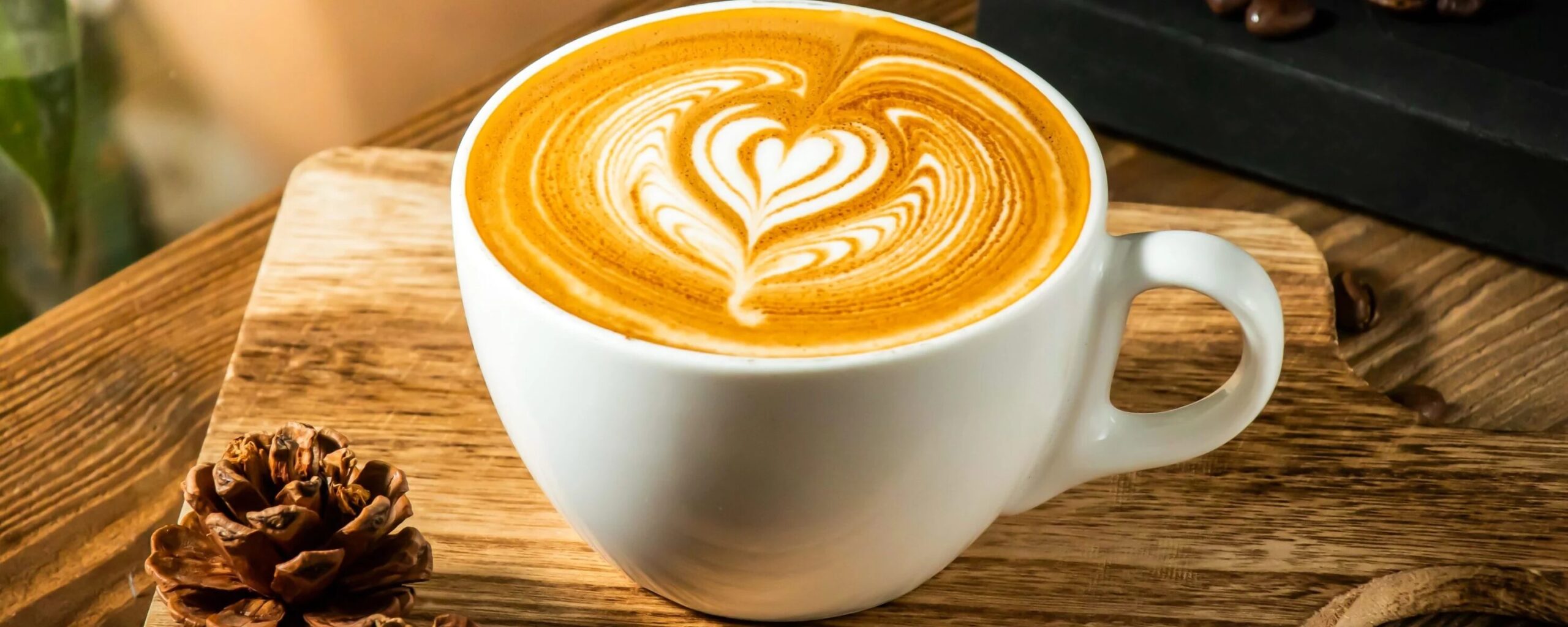
Sunday 8 November will be one of those special days. It won’t be football or tennis, or even Formula 1, that will make it so special. No, November 8th will be the gastronomic day dedicated to cappuccino. World Cappuccino Day, as it was officially named internationally. An anniversary dedicated to one of the best known and most consumed drinks in the world today. Behind a cup of cappuccino lies a centuries-old history, made up of legends, transformations and cultural contaminations.
The history of the cappuccino
The roots of cappuccino date back to 1683, in Vienna. According to tradition, the Capuchin friar Marco d’Avianosent to the Austrian capital to make alliances against the dangerous Ottoman Empire (which had expansionist aims on Christian Europe), would have sweetened the too intense flavor of the local coffee by adding milk. An innkeeper who observed him would have exclaimed “Kapuziner!” (referring to the friar), thus giving the drink its canonical name.
The colour, similar in fact to the brown habit of the friars of the Capuchin Order, a Franciscan branch of the Catholic Church, would later strengthen the link with that denomination. The term «cappuccino», in Italian, is the diminutive of «cappuccio»: headgear, or in any case something that covers the head.
The evolution of the drink and the technological leap
During the 18th century, cappuccino was enriched with spices, aromas and whipped cream, spreading throughout Friuli Venezia Giulia and then throughout the entire Austro-Hungarian Empire. At that time, the manual preparation of milk foam became a central element in its identity. But it was only with the advent of the first espresso coffee machines, at the beginning of the twentieth century, that the drink took on the form we know today. In this sense, the steam nozzle allowed the milk to be frothed more precisely and uniformly. A further technological breakthrough occurred in 1945, when Achille Gaggia he perfected the modern espresso machine, further accelerating the spread of the drink.
Making a perfect cappuccino is not as simple as it might seem. The relationship between espresso, hot milk and foam requires attention and precision in large quantities: so much so that it is considered one of the most difficult preparations among those based on espresso. The most experienced baristas even manage to create refined decorations on the surface of the milk, a practice today known as “latte art”.
Who is the best barista at Espresso Italiano
While waiting for World Cappuccino Day, the Espresso Italiano Champion 2026, the international competition promoted by the Istituto Espresso Italiano, took place in Turin today, November 6th. He emerged the winner In the Pavleticsa young 22 year old Slovenian bartender.
The five finalists, all of the highest level, challenged each other in a competition where what counted were precision, technical preparation, sensorial ability and mastery of the serve. A jury evaluated them for every single step of the extraction of the espresso and cappuccino (which will be the absolute protagonist on November 8th).
The president of the Italian Espresso Institute, Alexander Boreasspecified the real objective of the competition: «This final put the talent of the baristas at the center and the value of international comparison, different experiences, schools and sensibilities met around a common objective: expressing the quality of Italian espresso in the cup». «The title», he added, «rewards excellence, but the meaning of the competition goes beyond the result, that is to encourage exchanges between professionals and contribute to the growth of the culture of coffee (and consequently also of cappuccino, ed) and service standards”.
The cappuccino in the world of cocktails
On the occasion of World Cappuccino Day, the Roman distillery Pallini will propose a reading of this very original anniversary. The «Nero a mezzo» cocktail, signed by Daniele Scotti of the Cappuccino Cocktail Bar in Rome and made with Amaro Formidabile, its appearance is inspired by the cappuccino, reinterpreting its imagery through mixology. The name is a tribute to the album of the same name by Pino Daniele: a reference to Neapolitan culture and a certain idea of meeting between different worlds, of dialogue. Aromas and textures intertwine in a glass that looks to the past without giving up the taste of experimentation.