
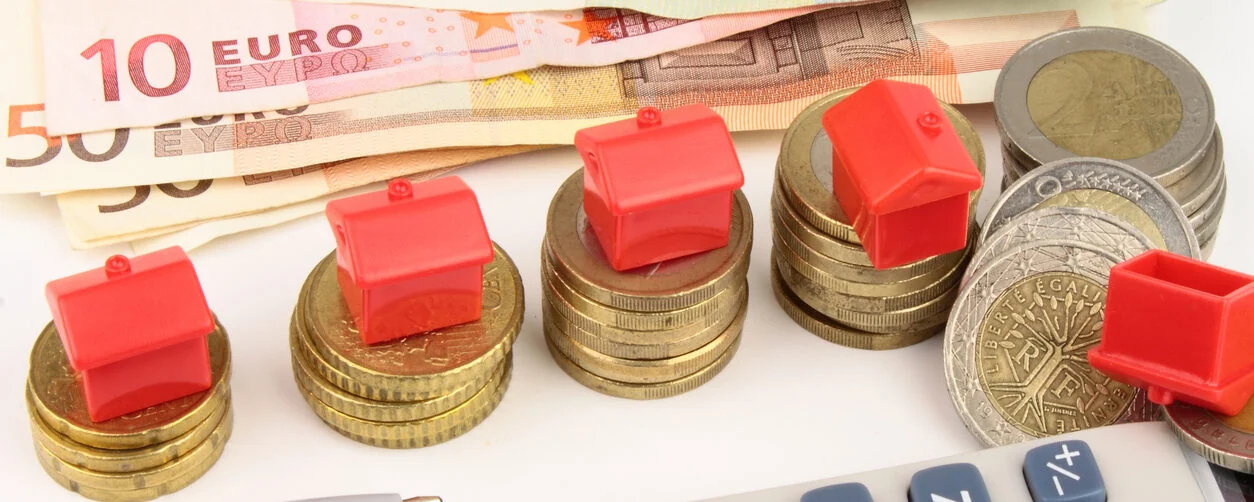
In view of the December rate increase (the last French one before a probable candidacy), 22% of potential borrowers postpone the purchase and 5% give up.
Christine Lagarde seems to have decided that the best way to say goodbye to Frankfurt is to leave one last souvenir to the owners of the house and above all to those who would like to become one: the most expensive money. The president of ECBwho on February 7 will leave office nine months early (perhaps) to attempt to climb the Elysée, leaves a legacy that is not exactly light.
After the two increases already decided this year, it is very likely that another tightening of rates will arrive in December to combat ainflation which, however, has very little to do with an overheated economy or overly generous consumers. Above all, energy tensions and oil are pushing prices, external factors on which Frankfurt can have very little influence. But the monetary recipe is the same as always: make money more expensive. Unfortunately, it is families who pay the bill, together with businesses, starting with those who want to put a roof over their heads.
Lagarde’s legacy and the effect of the new tightening on family programs
The new thing will take care of measuring the effects of this policy Borsino Home Purchase Mortgages Of MortgagesSupermarket And Nomisma. The photograph is interesting: 45% of those who want to buy a house with financing expect a further increase in rates in the next twelve months.
Market blocked? Enough, 22% have decided to postpone the programs and almost half are proceeding according to the established times. 17% accelerate, probably thinking about an escalation, and 5% consider giving up or downsizing the project. In short, the ECB makes the installment more expensive and cools the desire for the four walls.
For many, as the Nomisma report explains, it is not an investment, but a necessity: leaving a rent that has become unsustainable, finding a house better suited to family needs or simply stopping paying someone else’s mortgage. It is no coincidence that the Italian real estate market continues to demonstrate a certain tenacity.
The brick resists high money: trades towards 782,000
Sales, says Nomisma, should rise from 767,000 in 2026 to 782,000 in 2028, approaching the record levels of 2022.
The demand is fueled by concrete needs: young couples looking for their first home, families who need to move house, children leaving the family unit and parents who want to free themselves from the dependence on rent. The latter, in many cities, has become a luxury. So, even when credit becomes more expensive, buying continues to seem like the least painful solution.
The point is to understand through which channels Frankfurt’s decisions reach the domestic budget. The ECB does not directly set the mortgage rate, but determines the cost of money. The transmission occurs through two fundamental indices, which describe two different maturities of the money: theEuribor for the short term andIrs for the long one.
How the installments change between the Euribor race and the IRS barrier
The first is the reference for mortgages a variable rate. The three-month Euribor, currently at 2.60%, incorporates expectations on the trend of short-term rates and is affected by the decisions of the ECB. The market sees it rising to 3.33% by the end of 2027. For those who have a loan indexed to this parameter, the risk is a heavier installment at the time of the periodic rate update. The second index, the IRS, concerns mortgages fixed rate. It does not mechanically follow the individual moves of the ECB, but reflects the expectations of operators. It is on this parameter that banks build the price of constant installment loans, adding their own margin. The twenty-year IRS stands at 3.66%. In short, those who have already chosen the variable option may fear new price increases, while those who today seek the security of the fixed option must accept less convenient conditions.
Tranquility, even in the real estate market, has become a luxury good. It is not surprising, says the report, that, on the online channel, the fixed rate continues to garner 88% of preferences, even if it loses some positions compared to the past. Italians seek protection from uncertainty: it is better to know in advance how much you will have to pay each month than find yourself having to deal with market fluctuations.
At the same time, interest in mixed formulas and the still minority interest in variable formulas are growing.
Wages behind inflation: why the mortgage becomes financial engineering
The choice of mortgage has thus become an operation of domestic financial engineering: you need to evaluate the price of the house, the sustainable instalment, the duration of the loan and above all how much margin the family has left to deal with any unforeseen events. What makes the picture even more delicate is the delay accumulated by the wages compared to inflation, equal to 8.6% in recent years. A loss of purchasing power which weighs on the ability to sustain higher installments. It is therefore not enough that people like the house and that the price is considered reasonable: it is also necessary to convince the bank that the income will be sufficient to pay the debt for twenty or thirty years. So Italians are becoming more organized.
A rationality that captures the new climate well: the desire to buy resists, but must deal with Lagarde’s future.