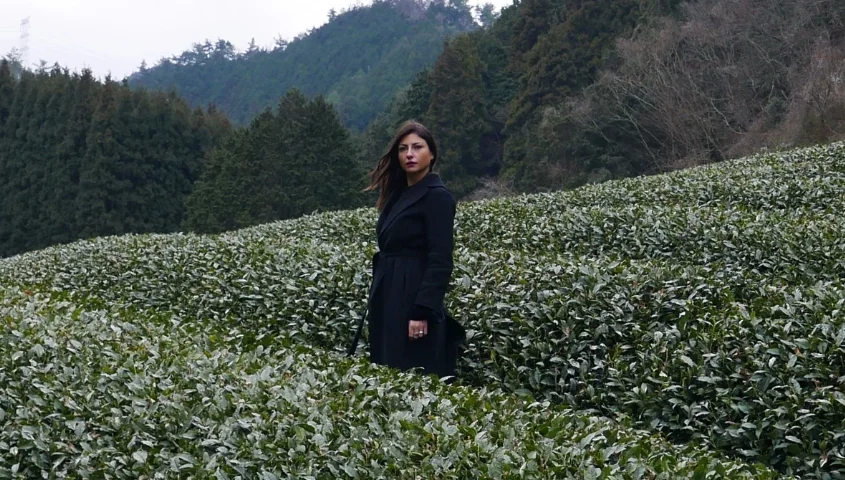
Silvia Mella, after 14 years in fashion, launched Sorate, a tea house in Soho (and another on Broadway) which was very successful. And now he wants to replicate it in other cities in the United States, perhaps launching the brand in Italy too
In the city that never sleeps there is a corner that we like to define as Italian-Japanese where you can escape from the frenzy of the Big Apple. Inspired by the Venetian term “Sorate”, which means “calm down”, and the Japanese term for the sky, “sora”, the name embodies simplicity and reflection, defining the Sorate brand. Welcomes tea fans to the realm of traditional Wabi-Cha ceremonies. It is located in Soho, one of the chicest neighborhoods in Manhattan and the idea of launching it came from an Italian entrepreneur who, after dedicating herself to fashion, discovered another world after a visit to Japan. And she decided to become an entrepreneur. Silvia Mella, CEO and founder of Sorate, tells how the idea was born. “Sorate was born from a moment of clarity. A solo car trip across Japan that I took when I knew I needed to slow down and reconnect with myself. Somewhere between the rice fields and winding mountain roads, I found something I didn’t expect: quiet. It didn’t come from doing less, but from doing certain things with intention. On a small family-run tea plantation in Ujiin southern Kyoto, I watched the rhythm of the day unfold around a simple ritual: the reflective pause of a tea break. Nothing dramatic. Just presence. It was there that I understood that serenity is not a destination, it is a daily practice. I returned home carrying that lesson as a gift. Green tea became my anchor. Growing up in Italy I always knew this feeling, even if I had never called it. The morning espresso at dawn – that sacred pause before the world rushes in – is a form of mediation in its own right. A moment of clarity before the leap.”
Quiet and business
The dream had always been to have a tea house reminiscent of Japanese ones. Starting online was easier at first, but that was the goal. When Silvia started in 2020, matcha wasn’t easy to find. Someone offered it, but with very low quality. People were starting to hear about it, but they didn’t know exactly what it was. In the last two years the matcha trend has explodedbut at the beginning the main job was precisely to educate the consumer: to explain what matcha is and how to use it, because in New York there was no culture about it. In Soho the majority of customers are millennials, many also students. And much of the clientele is Asian. Then there are the neighbours, the people who live nearby. Sorate is run as if it were a home, a bit like old Italian trattorias, so people feel welcomed and at ease. After Soho Silvia decided to expand the brand, and so it was born Flatironon 18th, exactly on Broadway. Continuing the language of the Soho location, the Flatiron Teahouse it features four counters, a take-away counter and a long blue worktop – sculptural in shape, which recalls Sorate’s distinctive colour. And now the time has come to expand to other cities and perhaps launch the brand in Italy too. Meanwhile, those who want Sorate products can find them on the site (Sorate.co).
What is matcha
Matcha is a fine Japanese green tea ground into a very fine bright green powder. Unlike normal leaf tea, with matcha you consume the whole leaf dissolved in the liquid. Sorate tea and matcha are grown in Ujitawara-cho, the small country town in Kyoto Prefecture, where the farmer Nagatani Soen invented the Japanese green tea production method in the mid-Edo period. This is also where the first tea tree seed was planted by a Japanese Buddhist priest who imported both Zen Buddhism and green tea to Japan from China around 700 AD and advised the priests of Uji on how to grow and produce the drink. Today, well-organized tea plantations spread across the green hills surrounding the city. In Uji, farmers still harvest the softest, freshest leaves by hand. This method is most often used for producing premium quality and competitive grade.