Eliminating it to lose weight, banning it after sunset or considering it a sin of gluttony to be “exited” the next day with fasting and cardio: over the years a large literature of prohibitions without scientific foundation has stratified around pasta.
For the World Pasta Day of October 25ththe Corposostenibile Integrative Nutrition platform takes the field to clarify. The objective is to rehabilitate the strategic role of complex carbohydrates in human metabolism, overcoming the restrictive logic of punitive diets to promote a sustainable approach in which taste, health and weight management coexist on the same plate.
The problem, second Angelina Galiulina, nutritionist and co-founder, together with Matteo Sciaudone, from Corposostenibileis the tendency to judge the individual food outside the overall context of the diet. It is not pasta alone that determines weight gain and its elimination does not automatically guarantee a better diet: what matters is theoverall balance Between what you eatthe amount and your own lifestyle.
From an Italian study on over 23,000 people (Pounis and colleagues, 2016) it emerged that those who eat pasta regularly, in the context of a Mediterranean diet, have an average of body mass index and one lower waist circumference.
«One of the myths we encounter most often is the one according to which pasta makes you fat», they explain Galiulina And Sciaudone. «In reality, no food alone determines the growth of body weight, which increases when for a prolonged period we introduce more energy than we consume. Pasta can therefore easily find space in a weight loss program.”
Because eliminating carbs doesn’t mean you eat better
Among the most widespread beliefs is that according to which to lose weight it is necessary to eliminate carbohydrates. But, according to Corposostenibile, the point is not to remove a category of food, but to build a diet that allows you to reach a adequate energy balance without systematically giving up what you like.
When comparing diets with the same calories and the same amount of protein, changing only the amount of carbohydrates and fats, fat loss is substantially similar.
«Those who eliminate pasta can lose weight because they simply end up eating less», he continues Galiulina. «But if the food plan is not sustainable, the risk is that, once the food is reintroduced, we return to previous habits. The point is therefore not to remove the pasta, but to work on the quantities and overall composition of the meal.”
A third myth is perhaps the most damaging: I only allow myself pasta on the weekend. «When a food becomes a prize, on Saturday you eat it as if you would never see it again. I always say: Food is neither a friend nor an enemy, it is an ally.”
Galiulina adds a clarification: «to lose weight it is necessary to eat a little less than what the body consumes. The point is to get there without taking away what you love, working on the quantities and composition of the dish. Often the problem is not what there is too much, but what is missing: a source of protein, vegetables, a real meal for lunch.”
Of course, nutrition must be personalized: in the presence of conditions such as diabetes, insulin resistance, celiac disease or polycystic ovary syndromequantities and combinations must be defined together with your reference professional.
Pasta for dinner: yes or no?
Furthermore, according to a common belief, pasta should be consumed for lunch because in the evening the body “burns less” and it would therefore be easier to accumulate weight.
But, with the same overall power supply, there is no reason why pasta should necessarily be excluded from dinner.
«Let’s imagine two people who eat exactly the same things every day and who differ only in the moment in which they consume pasta: one for lunch and one for dinner», he explains Galiulina. «If the overall calories of the day are the same, the result does not change simply because the pasta was eaten in the evening. The body does not keep a separate account for each meal, but thinks about it as a whole.”
Even during the night, in fact, the metabolism continues to function: the body uses the own reserves and keeps you active the processes necessary for its functioning. Additionally, for those who exercise in the late afternoon or evening, a meal containing carbohydrates can contribute to the recovery of energy reserves.
The rule, therefore, is not «never pasta for dinner», but listen to your individual response. If a plate of pasta digests well and doesn’t interfere with sleep, there’s no reason to eliminate it just because it’s evening. In the presence of diabetes or insulin resistanceHowever, the distribution of carbohydrates should be evaluated with your nutritionist.
The false myths on how to deal with the after-effects of a large meal
Another behavior that can turn a single meal into a problem involves eating compensation.
After a more abundant dinner, the following day it is common to try to «remedy» skipping breakfast, eating much less or increasing physical activity. According to Corposostenibile, however, a larger meal does not require punishment.
«The day after a large dinner the scale may even show one or two kilos more, but this does not mean you have accumulated the same amount of fat», he explains Galiulina. «A major part of that variation is related to water, glycogen stores, salt and food still being digested. The energy balance is based on the week, not on the individual meal. And the body knows how to regulate itself: often, after a rich meal, you simply feel less hungry the next day. Just listen to it.”
The risk is entering the mechanism restriction-compensation: after an excess, the diet is drastically restricted, hunger increases and the desire for the foods that we have decided to avoid grows. The result can be a new episode of excess and the consequent feeling of guilt, starting the cycle restriction-binge That Polivy and Herman they were already describing in the 1980s.
The same principle applies to physical activity: training should not become a form of “compensation” for what you have eaten.
“Moving is great when we do it to feel good,” he underlines Sciaudone. «However, when physical activity becomes a way to pay off a food debt, the risk is that movement can also be transformed into a punishment. The most sustainable answer is much simpler: after a richer meal, return to your usual diet, without punishment and without starting from scratch.”
Indications for eating pasta in a balanced way
To continue including pasta in your diet without turning it into a “forbidden” food, Corposostenibile identifies four simple principles.
1. The portion is a starting point, not a law.
The standard quantity indicated by the LARN for dry pasta is 80 grams, but the portion must be adapted to hunger, level of physical activity and the rest of the diet. It may be useful to weigh the pasta a few times to learn to visually recognize the quantity, without turning the scale into a permanent control tool.
2. Pasta shouldn’t be alone on the plate.
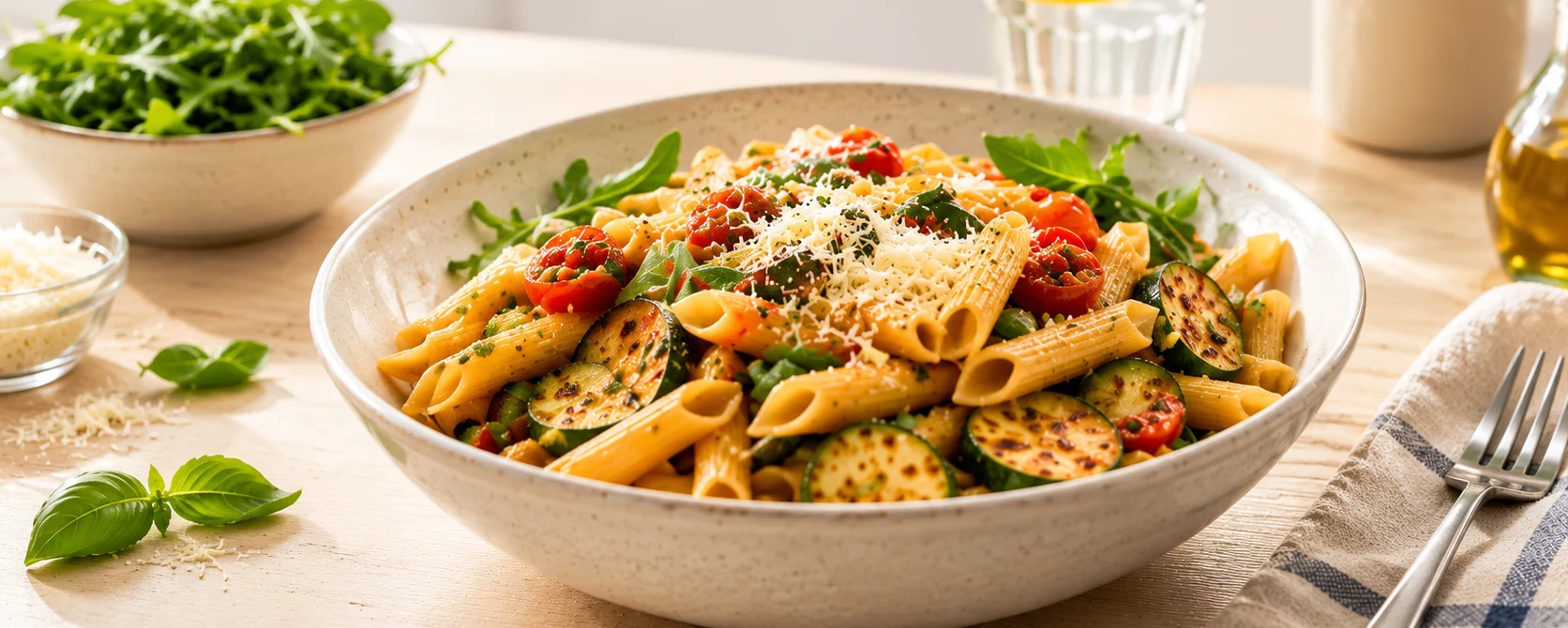
Combining a protein source – legumes, fish, eggs, meat or dairy products – and vegetables allows you to build a more complete meal. Pasta and chickpeas, or pasta with courgettes and prawns, are examples of dishes that combine carbohydrates, proteins and fibre.
3. Also pay attention to the seasoning.
It is not necessary to demonize richer condiments and recipes, but consider them within the balance of the meal. Even a carbonara can find space in the diet: it can be considered a single dish and accompanied by a side dish of vegetables.
4. There is no universal frequency.
Pasta can also be consumed daily if included in a varied and balanced diet. The frequency must be evaluated in relation to the rest of the diet, possibly alternating pasta with other sources of carbohydrates such as rice, potatoes, bread or legumes.
Angelina Galiulina And Matteo Sciaudone conclude with one last piece of advice: «Pasta should be eaten while sitting and should be enjoyed. Pasta eaten standing, in front of the sink, with the phone in hand, is much less filling. As highlighted by research, eating distracted leads to eating more even in subsequent meals.”