With the Magnifica humanitas, Leo XIV asks to “disarm” AI. An encyclical that relaunches Rerum Novarum in the era of algorithms
The famous “historical courses and recurrences” of the philosopher Giambattista Vico. Leo XIV chose to sign his first encyclical on May 15, the anniversary of the Rerum Novarum: as if history would never return to itself, but persisted in returning. One hundred and thirty-five years separate Leo XIII from Leo XIV, and in between there is the entire twentieth century – with its mechanistic utopias, its industrial catastrophes, its scientific totalitarianisms. Yet the question is always the same, always current: what should a thousand-year-old institution like the Church do when a technical transformation threatens the dignity of man?
The Church and artificial intelligence
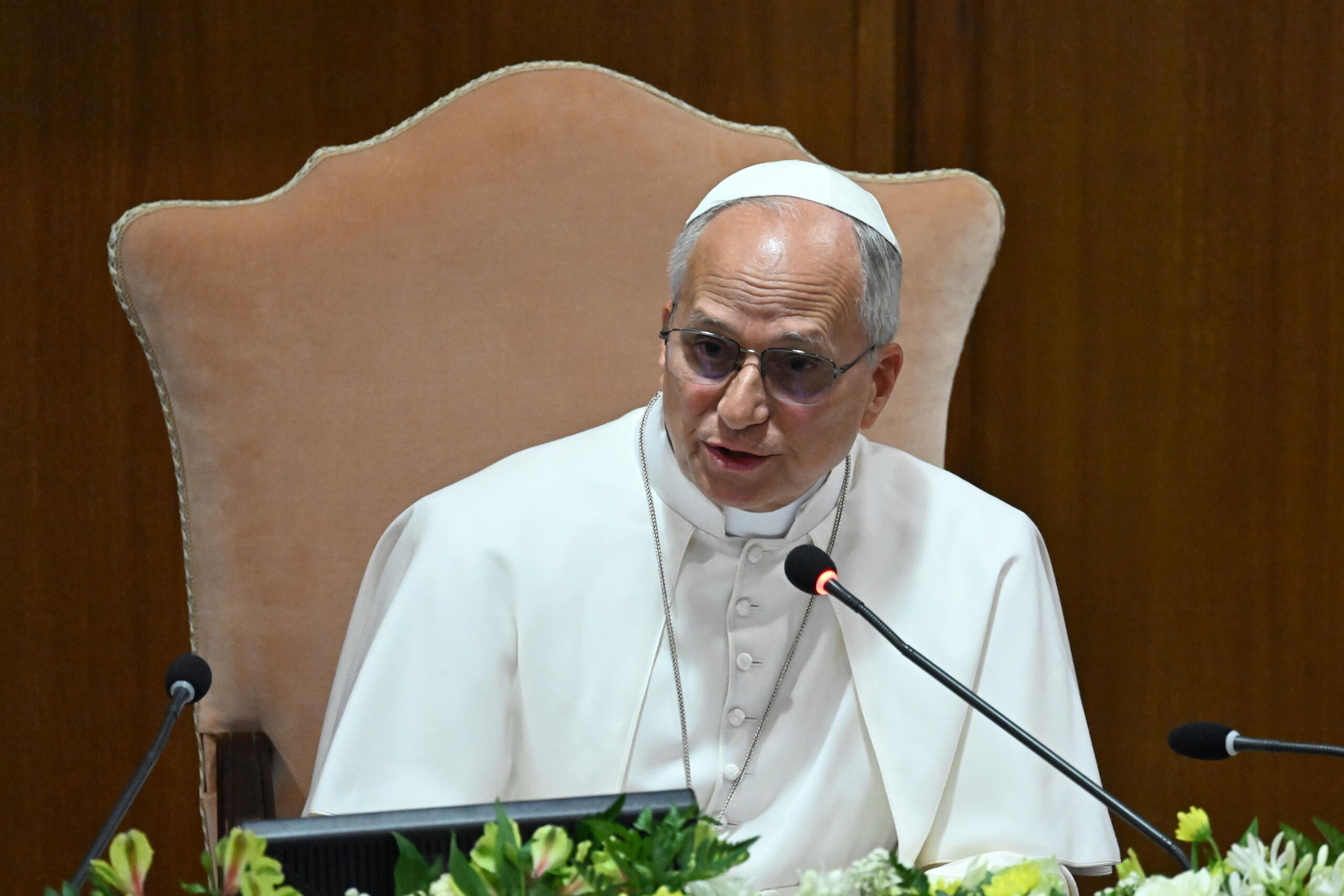
The Pope’s response is called Magnificent humanitypresented today 25 May in the Synod Hall, with an absolute novelty in pontifical protocol: the Pontiff protagonist at the presentation of his own magisterial document, sitting next to Christopher Olah, co-founder of Anthropic. It is a message, and it indicates that the Church does not summon theologians to talk about artificial intelligence: it directly summons those who build AI. And when Leone thanks Olah “for having accepted our invitation”, he promptly adds: “On behalf of the Church I also accept your invitation to walk together.” The case in which a courtesy formula is considered a programmatic statement is rare, but it is precisely one of those rarities.
Leo XIV’s goal to “disarm AI”
The heart of the document – approximately two hundred pages, the result of ten years of internal reflection within the Holy See – is concentrated in a formula that the Pope himself admits is “strong” and “deliberately chosen”: “Artificial intelligence must be disarmed.” The reference to nuclear disarmament is explicit and particularly fitting. In fact, like atomic energy, AI can alleviate enormous suffering, or produce exclusion and death on a systemic scale. With one substantial difference: the atomic weapon is visible, the algorithm that denies healthcare based on data tainted by structural prejudices remains invisible, challengeable by any tribunal of collective conscience. It is this invisibility – not brute power – that is the new danger that Leo XIV focuses on, with extremely concrete clarity.
The genesis of the encyclical
Magnificent humanity was born, says the Pope, from “listening” to scientists, legislators, parents, teachers. But above all – and this is where the text acquires its unmistakable voice – from the “silence of those who have no voice when decisions are made.” Ancient rhetorical category, of course; yet rarely applied with such precision to the governance of algorithms, which by definition decide without calling meetings. AI doesn’t vote, it doesn’t listen, it isn’t moved: it simply executes. And it is precisely in the execution that the new form of injustice that the encyclical intends to name and fight lies.
Leo XIV and the personal Peruvian experience
The Pontiff closes the curtain with a personal image – the floods of northern Peru in 2017, the houses swallowed by mud, the disappeared streets – which transforms personal biography into theology: “Rebuilding does not simply mean replacing what has been destroyed.” It means repairing bonds, restoring trust. “No one rebuilds alone.” The Church, he concludes, does not bring technical answers; brings “a wisdom about the human that our time desperately needs.”