Almost 30 planes blocked in Europe and military fighters mobilized: here is the real economic impact of the threats on air transport and tourism.
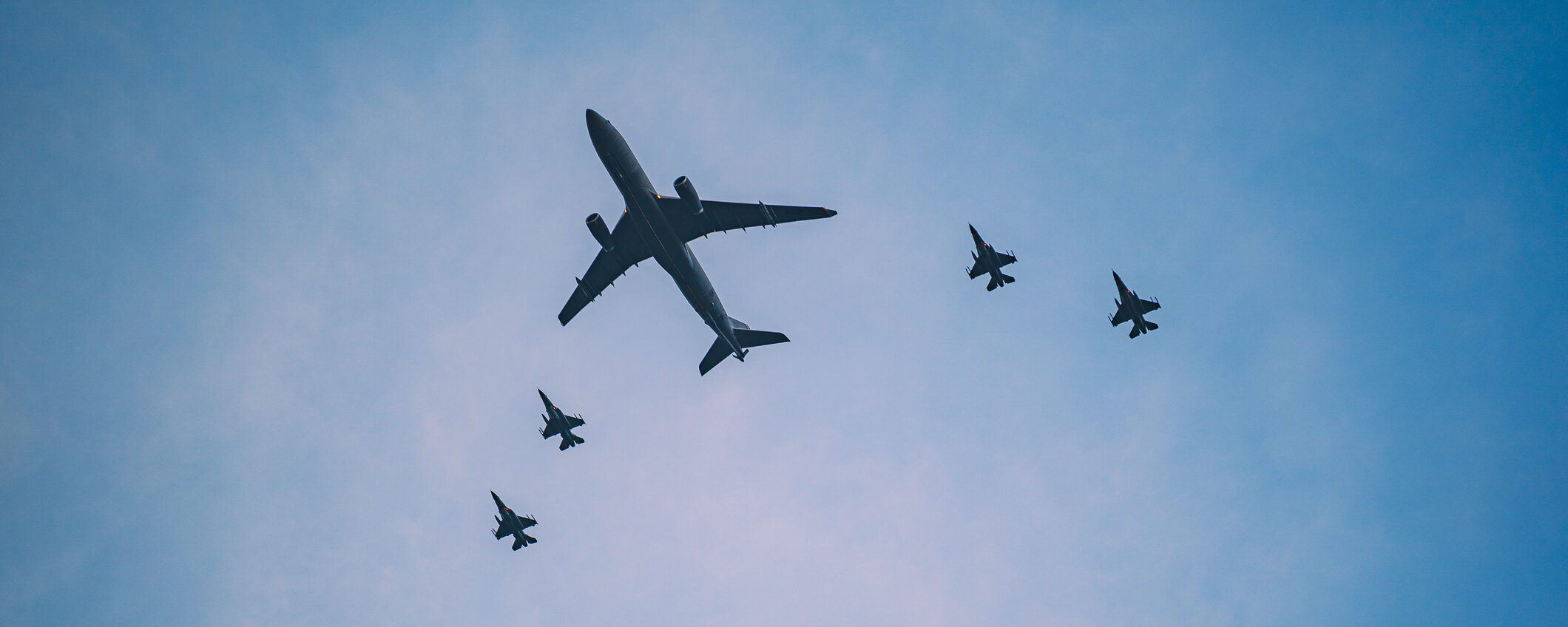
The sequence opened last Monday. In four days, almost 30 flights, in at least eight European countries, ended up under false bomb threats. Eight flights to and from Italy. The point, for those who deal with air transport safetyit is not the single alarm. It is the relationship between the cost of a message, practically zero, and the amount of military, police and corporate resources that that message manages to set in motion, every time, in multiple countries at the same time. According to estimates based on the parameters of Eurocontrola delay can result in an estimated cost of between 160 and 2,000 euros per minute for each flight, also considering the knock-on effects on other connections. An aircraft forced to land at an alternative airport must be refueled and subsequently repositioned. Companies must reorganize flight programs and guarantee assistance to passengers involved. Added to these costs is that of the military intervention: an hour’s flight Eurofighter of the Italian Air Force It has an estimated average cost of around 75,000 euros.
By applying a cost of 166 euros per minute of delay on the ground to the 29 flights involved, including the chain effect on the network (value Eurocontrol at 2022 prices), and assuming between 90 and 180 minutes of delay per flight, we obtain from 0.43 to 0.87 million euros. The five confirmed hijackings, valued at between 1,400 and 10,500 euros each, add 10,000 to 50,000 euros. The direct cost for the companies is therefore, according to this estimate, between 0.45 and 0.9 million euros.
The economic disproportion between the threat and the costs on the ground
Making this calculation on the eight planes to and from Italy that were affected by the bomb threat, assuming a delay duration of between 90 and 180 minutes for each aircraft, the overall estimated cost varies from 0.12 to 0.24 million euros (from 119,520 euros to 239,040 euros).
On the reimbursement front, the European regulation 261/2004 lists security risks among the circumstances that can be considered exceptional (EU Court of Justice): pecuniary compensation to passengers is probably excluded, but assistance obligations remain.
The burden of care rights and nighttime diversions
Let’s assume an average flight with 150 passengers (Airbus 320 or Boeing 737) for a total of 1,200 passengers involved in eight flights. Since the financial compensation for the bomb threat is zero, the economic impact varies depending on the operational management of the delays. In the case of a daytime delay managed on the same day between 90 and 180 minutes, the cost per passenger is 15-30 euros and per flight between 2,250 and 4,500 euros. The total cost for the eight flights affected is between 18,000 and 36,000 euros. But in the case of a night detour, therefore with an overnight stay, the total cost rises between 180,000 and 360,000 euros.
Kerosene consumption and the immediate effect on reservations
Then there’s the extra fuel consumption. If the alarm goes off while the planes are in flight, they must fly holding orbits, waiting for clearance to land or divert. Fuel consumption is approximately 2,200-2,500 kilograms/hour per aircraft. In case of lengthening the route towards a suitable port of call, the cost of extra consumption per route can reach up to 2,975 euros. Furthermore, during ground checks by the bomb squad, the APU (Auxiliary power unit) remains in operation to guarantee air conditioning and energy to the on-board security systems: the extra consumption for 1.5-3 hours ranges from 255 to 765 euros per flight. So, for eight flights, the extra fuel cost varies between 2,040 and 6,120 euros if the delay is on the ground. If the wait is in flight and there is a route deviation, the additional fuel cost varies between 10,200 and 23,800 euros. Summing all the cost components for the eight Italian planes, the overall estimated impact is between 139,560 and 622,840 euros, depending on whether the flights suffered a simple daytime delay on the ground or night-time hijackings with an overnight stay.
The effects on tourist flows are already being felt. The president of Federturismo Confindustria, Massimo Caputihighlights that «there has been a peak in cancellations of scheduled trips of around 11%. The risk of flights could decrease the growth of tourism in our country, which until now was perceived as safe.”