The emotion of a match can become a risk factor for those suffering from cardiovascular diseases. From studies in the New England Journal of Medicine, this is why rigors can increase heart attacks, arrhythmias and hypertensive crises.
There are those who live them with their hands in front of their eyes, those who change rooms for good luck and those who hold their breath until the last spot kick. THE penalties they are probably the moment of greatest emotional tension in sport. And while millions of fans follow the FIFA World Cup 2026medicine reminds us that those emotions are not just a metaphor. For some people, especially those affected by ischemic heart disease, arterial hypertension or other cardiovascular diseases, a particularly close match can be the trigger for a heart attackof a serious one cardiac arrhythmia or a hypertensive crisis. The idea that a sporting event can influence health seemed, until a few decades ago, little more than an epidemiological curiosity. Today, however, it is supported by a surprisingly consistent scientific literature. The most authoritative studies agree on one point: it is obviously not football itself that is bad, but it acute emotional stress caused by the most dramatic matches. And no moment concentrates a tension comparable to that of a series of penalties. The researchers’ interest arises from the observation of a phenomenon already known in cardiology: intense emotions can act as “triggers”, i.e. as factors capable of causing a cardiovascular event to emerge in already vulnerable people. The same mechanism has been observed after earthquakes, wars, terrorist attacks and other events with a high emotional impact. Football represents an ideal natural laboratorybecause millions of people go through the same psychological experience at the same time, allowing epidemiologists to compare what happens during a match with the days before and after.
The biological mechanism is now quite clear. During a situation of high tension, the production of adrenaline And norepinephrine. The heart rate accelerates, blood pressure rises, the heart requires more oxygen and the coronary arteries may experience vasoconstriction. In people with atherosclerotic plaques already present, this sudden overload can promote the rupture of the plaque and the formation of a thrombus, triggering a acute coronary syndrome. At the same time, the probability of developing it also increases arrhythmiasespecially in patients with pre-existing heart disease. It is therefore not a damage caused by typhus, but the physiological effect of particularly intense emotional stress.
From the New England Journal of Medicine to the BMJ: when science measured typhoid
The research that definitively changed the way we look at the relationship between calcium and the heart was published in 2008 on New England Journal of Medicineone of the most authoritative medical journals in the world. Coordinated by the German cardiologist Ute Wilbert-Lampen of the Ludwig Maximilian University of Munich, the study prospectively followed 4,279 patients affected by cardiovascular emergencies during the 2006 World Cup in Germany. The results were impressive. In the days when the German national team was playing the number of acute cardiovascular eventsit turned out 2.66 times higher compared to the control periods. In men the risk even exceeded three times. Even more significant is the fact that almost half of the affected patients had a previous history of coronary heart diseasecompared to around 29% recorded on non-match days in Germany. The peak of events was concentrated in the first two hours from the start of the meeting and concerned both the myocardial infarctionsboth the unstable anginaboth the symptomatic arrhythmias. But the most interesting detail emerged when analyzing the individual matches. The largest increase was observed during the Germany-Argentina quarter-final, which was decided on penalties. The authors noted that even a victory could cause a high number of cardiac emergencies: it wasn’t so much the final outcome that made the differenceas the level of tension reached during the meeting.
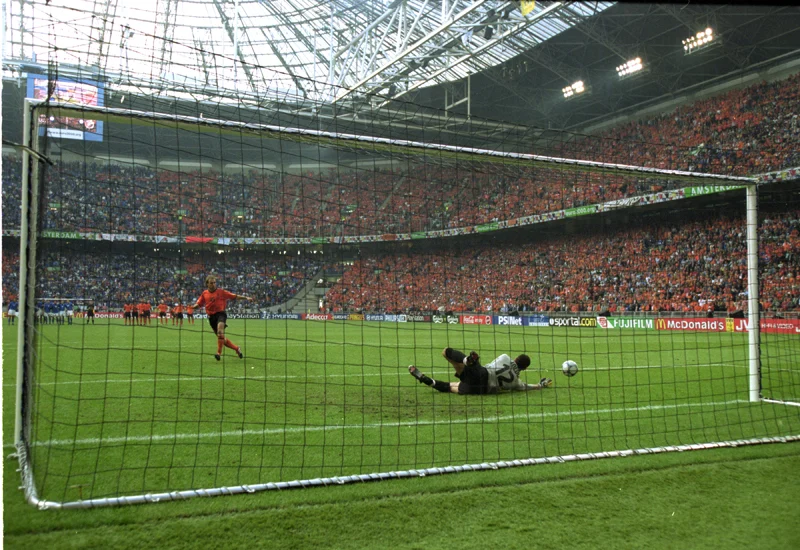
This observation confirmed what had already been suggested six years earlier by a study published in BMJ. Analyzing English hospital admissions during the 1998 World Cup, researchers at the University of Birmingham discovered that on the day England were eliminated against Argentina on penalties, admissions for acute myocardial infarction increased by 25%. The conclusion was clear: the tension accumulated during a series of penalties can represent the triggering factor for a heart attack in predisposed subjects, even if coronary heart disease has not yet been diagnosed. Even further back in time, in 2000, another study also published on BMJ had observed what happened in the Netherlands after the elimination of the Netherlands at the 1996 European Championships. In men over 45 the risk of cardiovascular mortality turned out to be higher than 51% compared to the surrounding days, with an estimate of approximately fourteen excess deaths attributable to the stress of the match.
Cheering is good for the soul, but those with fragile hearts must plan ahead
Of course, it would be a mistake to conclude that watching a football match is dangerous. For the vast majority of people, cheering remains a source of fun, sharing and psychological well-being. Indeed, several studies have shown that following sport, practicing it and experiencing social moments produces benefits on mental health and quality of life. The problem arises when an already vulnerable organism is subjected to one sudden and intense emotional stressjust like what can accompany a decisive penalty or elimination at the World Cup. This is why cardiologists especially invite patients with a history of coronary heart disease, heart failure, arrhythmias, uncontrolled hypertension or with previous heart attacks not to underestimate these moments. Taking the prescribed therapy regularly, avoiding excesses of alcohol and coffee during the match, not smoking “the cigarette of tension” and not interrupting medications for any reason represent simple but important precautions. Also watch the match in company, in a relaxed environmentcan help contain the emotional load, while binges, sleepless nights and abuse of energy drinks risk adding further stress factors to the cardiovascular system. The message from the scientific literature is therefore reassuring but also very clear: It’s not football that causes a heart attackbut rather the encounter between an extreme emotion and an already sick heart. The same principle applies to other highly engaging events, from Olympic finals to TV marathons to the emotional shocks of everyday life. Football, quite simply, offers epidemiologists a gigantic natural experiment in which millions of people experience the same adrenaline rush at the same time. And perhaps this year, at least for Italians, the risk is a little lower. THE’Italyin fact, failed to qualify for the World Cup 2026leaving millions of fans in front of the television with an inevitably more lukewarm involvement. A small consolation for those who would have liked to see the Azzurri play for a place in history, but perhaps a little good news for some cardiologist. Because, if it is true that the disappointment of staying out weighs on the morale of an entire country, it is equally true that no Italian will have to face those ninety minutes, or even worse, those interminable penalties, with bated breath and heart in their throat. And, at least this time, the hearts of Italians will be able to afford to cheer with a few less beats.