Eye, hand, heart. Three simple words, accompanied by their Korean translation, kept in a small personal dictionary that an Italian man had created so as not to forget a language learned on the other side of the world. That man was called Emilio Donatoni and he had been one of the protagonists of the humanitarian mission of the Italian Red Cross during the Korean War, an experience that had marked his life to the point of accompanying him long after his return to his homeland. When, in August 2024, Panorama met his daughter during a commemoration between Seoul and Busan, the story emerged of a bond that even within the family had been difficult to fully understand. “I didn’t understand this strong love that my father felt for Korea,” he said, explaining that he had discovered its meaning only by reconstructing his father’s memories and experiences.
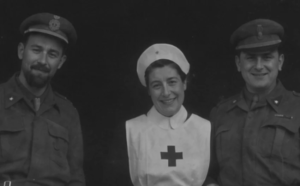
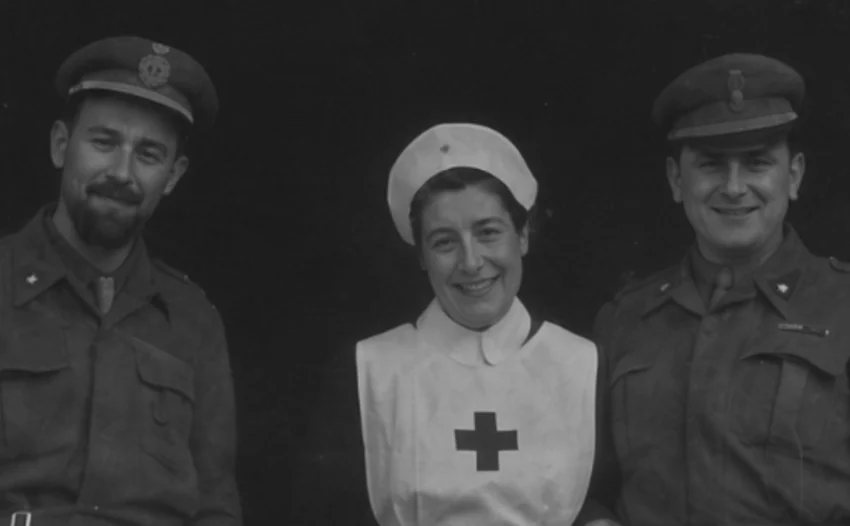
More than seventy years after the end of that mission, Donatoni’s name is back at the center of a story that unites Italy and South Korea, this time through images. In Milan, the Consulate General of the Republic of Korea organized a photographic exhibition dedicated to the Italian humanitarian mission during the Korean War, collecting 133 photographs, including unpublished images from the private archives of the families of six of its protagonists.
Among these appears Emilio Donatoni, together with Poloni, Cirillo, Puntieri, Ragazzoni and Riboldi. Six personal stories that contribute to reconstructing a still little-known chapter of the Italian presence in Asia, but which represents one of the most significant testimonies of the relations between the two countries.
Italy in the Korean War, when solidarity became a mission
The Korean War, fought between 1950 and 1953, represented one of the most dramatic moments of the Cold War and left a devastated peninsula, an exhausted civilian population and a geopolitical division destined to survive to the present day. In 1951, while the conflict continued to cause thousands of victims, Italy decided to intervene through a health mission, despite not yet being part of the United Nations.
The decision led to the sending of approximately seventy people belonging to the 68th Hospital of the Italian Red Cross, including medical officers, nurses and military personnel, with the aim of guaranteeing healthcare to a population living in extremely difficult conditions.
As Panorama had already reconstructed in an in-depth study dedicated to Hospital 68, the structure was initially set up in an abandoned elementary school in the Yeongdeungpo area, today an integral part of Seoul. The Italian personnel had to deal with the Korean winter, the shortage of medicines and the consequences of a war that had hit hard even those who had never taken part in the fighting.
The hospital began its activity in December 1951, progressively becoming a point of reference for civilians of all ages, with particular attention to children, malnourished people and patients who needed surgery and specialist care.
That Italian presence took on a meaning that went beyond the health dimension alone. In a country still engaged in its reconstruction after the Second World War, men and women of the Red Cross found themselves providing aid thousands of kilometers from home, in a scenario that would contribute to redefining the international balance of the second half of the twentieth century.
The lives saved and the commitment beyond the end of the war
Among the episodes that best describe the activity of the Italian mission is that of 17 September 1952, when a serious train accident on the Gyeongin line caused numerous victims and injuries. Around 160 civilians were quickly transported by Italian Red Cross vehicles and received healthcare, in an intervention that tested the operational capacity of the hospital and its staff.
But the history of Hospital 68 was not only characterized by emergencies. For three years, doctors and nurses continued to work daily to meet the needs of a population that required treatment, medicines and continuous assistance, even when the major military operations were nearing their end.
According to data reported by the Consulate General of the Republic of Korea in Milan, approximately 230,000 medical services were performed between December 1951 and December 1954. The activity continued even after the signing of the armistice of 27 July 1953, when the end of the fighting did not coincide at all with the end of the humanitarian emergency.
In January 1955, at the end of the mission, the hospital facilities and medical equipment were donated to Korea, leaving a concrete legacy that would survive the presence of Italian healthcare workers.
Family photographs and the value of a private memory
The heart of the Milanese exhibition, hosted in the Samsung AI HOME spaces in via Mike Bongiorno, was above all the recovery of a memory that had remained kept within families for decades.
The 133 photographs collected and digitized include materials from the private archives of the descendants of six members of the mission, images that allow part of that experience to be preserved and passed on through the testimonies of those who participated directly.
It is not just a matter of reconstructing the history of an Italian hospital on Korean territory, but of restoring a personal dimension to events which, when told exclusively through the dates and numbers of the war, risk losing their most significant component.
Alongside the photographs, video interviews were presented with the family members of the protagonists, with the aim of reconstructing the relationship that many of the Italian health workers continued to maintain with Korea even after the conclusion of the mission.
According to testimonies collected by the Consulate, some members of the contingent, despite having been injured during the conflict, refused to return to Italy before completing their assignment. Others continued to remember Korea until the last moments of their lives, maintaining an attachment that went far beyond the professional significance of that experience.
It is from this perspective that Emilio Donatoni’s little dictionary takes on a particular value. In the story entrusted to Panorama by her daughter in 2024, that notebook of Italian medical terms translated into Korean represented the attempt to preserve a part of one’s life that geographical distance and the passing of the years had not managed to erase.
An apparently common object, which instead becomes the testimony of an identity marked by the encounter with another country, and of a memory that can continue to be transmitted even when the protagonists are no longer there.
A bond between Italy and Korea that precedes the Korean Wave
The exhibition also takes on a particular significance in the context of contemporary relations between Italy and South Korea, elevated to Special Strategic Partnership in 2026, a recognition that consolidates a collaboration that has grown over the years through diplomatic relations, economic exchanges and cultural initiatives.
Today the dialogue between the two countries passes through very different sectors, from technological innovation to fashion, from design to cinema, up to music and entertainment. The Korean Wave has made South Korean culture an increasingly familiar presence in Italy too, helping to bring together audiences and generations who until a few years ago had much more limited opportunities to learn about Korea.
Yet, long before Seoul entered the contemporary imagination as one of Asia’s most dynamic cultural capitals, a relationship already existed built through the solidarity and work of ordinary people, who left Italy to assist a population involved in a distant conflict.
The opening ceremony of the exhibition, organized on October 26, brought together family members of the mission members, representatives of the Italian Red Cross of the Lombardy and Milan Committees, the military authorities and various organizations of the Korean community in Italy. The national anthems of the two countries were entrusted to the Choir of the Korean School of Milan, in a symbolic passage between the memory of the generation that directly experienced those events and the one that today collects their legacy.
The collaboration between the Consulate General of the Republic of Korea and Samsung Electronics Italia has also made it possible to enhance the work of digitizing photographs, allowing images dating back over seventy years to be preserved and made accessible again.
From individual memory to shared history
There is an important difference between remembering a historical event and understanding how that event lived on in the people who lived through it. The Italian mission during the Korean War belongs to both of these dimensions: on the one hand the healthcare commitment documented through numbers, dates and official testimonies, on the other the family memories, the photographs preserved for decades and the small objects that continue to tell stories even when those who owned them can no longer do so.
The work of recovering private archives today offers the possibility of relating these two perspectives, showing how the history of a country can continue to live even in the memory of families who are thousands of kilometers away.
In the case of Emilio Donatoni, that bond survived through a personal dictionary and the story of a daughter who, only with the passage of time, began to truly understand its meaning. For other members of the mission, it probably took on different forms, preserved in the photographs and testimonies that the Milanese exhibition helped to bring to light.
Seventy years later, the value of those images does not only consist in the possibility of observing a now distant past, but in recognizing how much relations between two countries can also be built through individual experiences, gestures of solidarity and memories that continue to be passed down.
Because before the great diplomatic agreements, commercial exchanges and even the meeting between cultures that characterizes the relationship between Italy and South Korea today, there were men and women who left to care for people they did not know, in a country of which many of them would keep the memory for the rest of their lives.