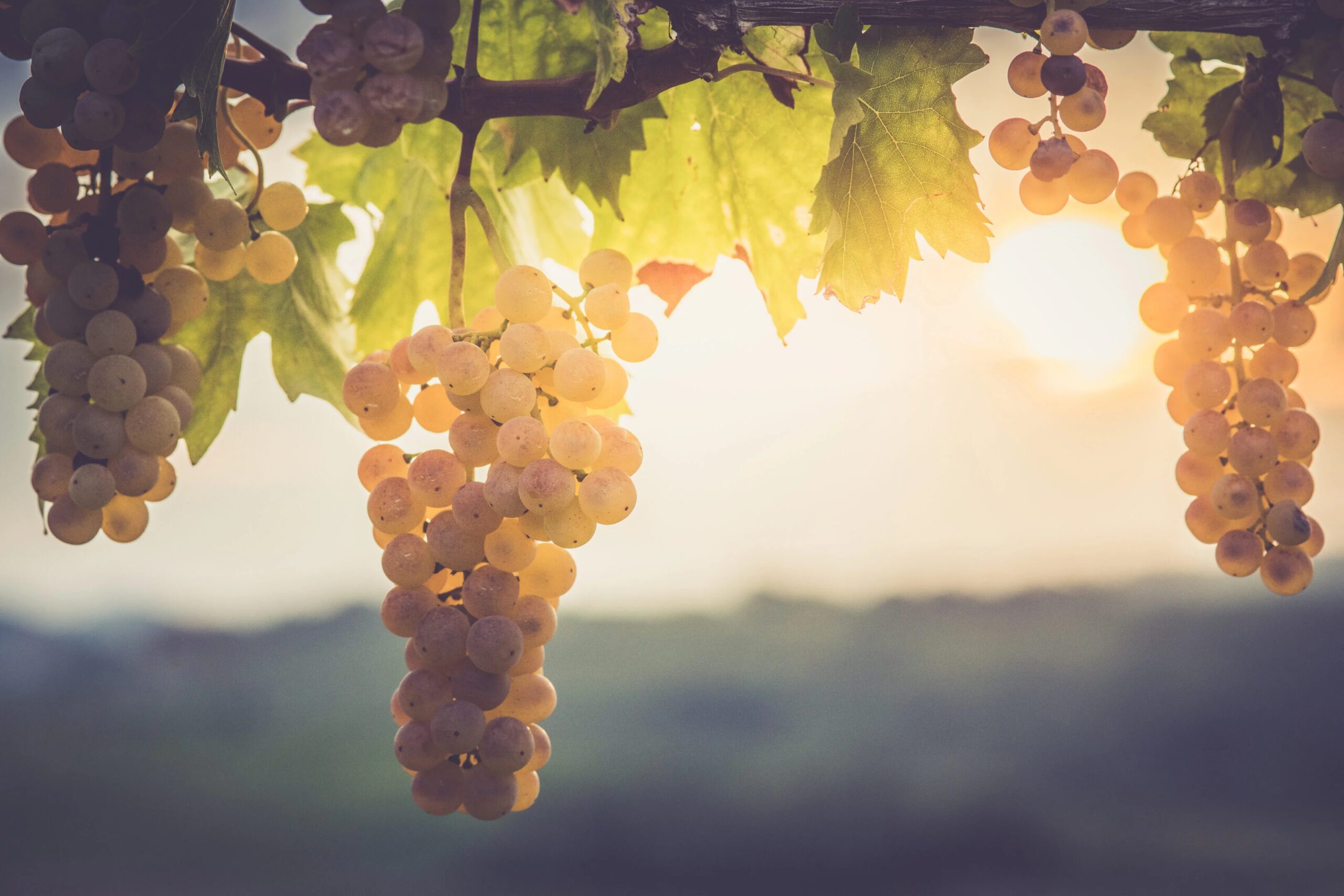
The 2026 harvest begins under the sign of an apparent paradox: there will probably be fewer grapes in Italian vineyards, but this time the producers do not seem to necessarily consider it a problem. High temperatures, drought and a climate trend that is increasingly difficult to interpret are reducing yields in several regions, while the health conditions of the bunches and the concentration of the grapes give rise to hope for excellent quality wines.
However, it is not just the climate that is changing. It is the market itself that suggests a more limited production. Consumption is slowing down, inventories are weighing on company balance sheets and even territories that are symbols of world wine are affecting volumes. In Champagne, the Comité Champagne has set a yield of 8,800 kilograms per hectare for 2026, marking the fourth consecutive cut in production to manage stocks, climatic difficulties and less brilliant demand.
In this scenario, the principle shared by many Italian winemakers is simple: it is better to produce less, as long as it is better. A choice that arises partly from necessity, but which also intercepts the transformation of consumption, increasingly oriented towards recognizable, fresh, sustainable wines linked to the territory.
A harvest that is increasingly difficult to predict
From Alto Adige to Sicily, the picture that emerges is far from uniform. In some areas the harvest will start earlier than usual, in others the expectations of a strong advance have been scaled down. The common fact is the impossibility of relying on the rules of the past.
In Valle Isarco, for example, high temperatures have accelerated ripening, but the health conditions of the grapes remain very good. According to Armin Gratl, general director of the Valle Isarco winery, it will be decisive to identify the exact moment of harvesting, observing each vineyard individually.
There is no longer a one-size-fits-all calendar. Exposure, altitude, water availability and terrain characteristics can produce very different responses even just a few kilometers away. For this reason, winemakers are called to follow the plants with greater continuity, adapting decisions to the evolution of temperatures and rainfall.
Alongside agronomic management, the need to defend the identity of the wines emerges. In a more complex market phase, chasing trends or indiscriminately increasing volumes risks being counterproductive. For Cantina Valle Isarco the answer consists in continuing to enhance the territory and the work of the members, focusing on authentic and immediately recognizable products.
In Trentino the heat slowed down the ripening
In Trentino the season initially seemed destined for a very early harvest. Bud break had started about ten days ahead of 2025 and continued until flowering and the pre-closure phase of the bunch.
The forecasts indicated a possible start of the harvest around August 10, but the high temperatures in June and July, combined with the drought, changed the scenario. The plants have slowed down photosynthesis and, consequently, the accumulation of sugars and the ripening process.
The temperature changes of the following weeks allowed the vines to resume their cycle. For Maso Martis, a company specialized in Trentodoc, the harvest should therefore begin around August 18th, with grapes that are still of excellent quality.
It is an example of how relative the very concept of “early harvest” has become. The heat can accelerate some vegetative phases, but when it is too intense it can cause water stress and physiological blocks, slowing down the very maturation that it seemed to have favored.
In Tuscany the dates could remain the same as always
Even along the Tuscan coast, in the Bibbona and Bolgheri area, the vintage initially seemed oriented towards a strong advance. But the experience of recent years calls for caution.
Niccolò Marzichi Lenzi, CEO of Tenuta di Biserno, Tenuta Campo di Sasso and Le Crocine, observes that at the beginning of August an early harvest is almost taken for granted, only to often arrive at the usual dates.
For the moment, 2026 looks like a “sunny” year, therefore marked by an abundance of light and high temperatures. However, it is still too early to establish what the definitive quality of the grapes will be and, above all, what style the wines will have.
The weeks immediately preceding the harvest will determine the balance between sugar maturation, acidity and phenolic maturity. Rain, a drop in temperatures or a new heat wave could quickly change the picture.
In Umbria yields are up to 10 percent lower
In Umbria the harvest of the sparkling wine bases and the earliest varieties is now close. Here too there remains a certain advance, which could however be modified by the arrival of the rainfall expected by the producers.
Marco Caprai, president and CEO of the Arnaldo Caprai agricultural company, estimates a lower-than-average production of between 5 and 10 percent. Drought and high temperatures are reducing quantities, but could contribute to the production of better wines.
From a business perspective, a moderate contraction is not necessarily considered bad. In a market characterized by weaker consumption, having less product to place can help companies defend the value of bottles, avoiding further replenishing inventories.
The deeper problem, however, concerns the availability of water. According to Caprai, the agronomic suffering of the season must push us to rethink the new systems, providing irrigation tools capable of supporting the vines during the most critical phases.
In the Umbrian Valley, the new infrastructure intended for the distribution of water from the Valfabbrica dam could represent an important competitive advantage. The management of water resources is in fact destined to become one of the decisive factors for the survival and investment capacity of agricultural companies.
In Calabria smaller bunches but very healthy grapes
In Calabria, heat and drought have always belonged to the identity of territories like Cirò. What is new, however, is the continuity of extreme temperatures, which in recent months has forced companies to review traditional practices.
The Santa Venere organic farm foresees an early harvest especially for the white varieties, such as the Greco Bianco. Harvesting earlier will allow you to preserve the acidity and aromatic freshness, avoiding the risk of over-ripening.
On the quantitative front, a contraction compared to historical averages is expected. Water stress has tended to produce smaller berries, but the heat and lack of humidity have reduced the pressure of the main fungal diseases, such as downy mildew and powdery mildew.
The result could be particularly healthy, concentrated grapes, rich in polyphenols, sugars and aromas. Everything will depend, however, on the ability to manage the plants correctly until harvesting.
Santa Venere has reduced summer leaf removal, limited invasive tillage of the soil and used mulching, i.e. green mulching, to protect the soil from direct radiation and conserve residual humidity. Where possible, drip irrigation is also used, above all to avoid early defoliation or blocks in ripening.
The way of establishing when to harvest has also changed. Sugar levels are no longer enough: the titratable acidity, pH and phenolic maturity of the skins are checked daily.
The new challenge is to produce fresher and more sustainable wines
Climate transformations are intertwined with those of consumption. According to Giuseppe Scala, who leads Santa Venere together with his brother Federico, the real strategic problem of the sector is the general decline in demand and the repositioning of tastes.
Consumers are increasingly looking for light, fresh, sustainable and transparent wines. In a saturated market, the solution is not to increase production, but to be able to better describe and enhance the uniqueness of the territories.
Native varieties such as Gaglioppo and Greco Bianco can find space on international markets thanks to their identity, as long as they are interpreted with elegance. The challenge in warmer territories will be to contain the alcohol content, preserving acidity, balance and drinkability.
Even organic certification is no longer sufficient on its own. Buyers and consumers are asking for traceability, attention to biodiversity, reduction of the carbon footprint and lighter and more sustainable packaging.
In Sicily, high quality and first harvests in August
In Vittoria, Sicily, the 2026 harvest looks complex but promising. Spring rains created a water reserve in the sandy-limestone soils of the area, while the high temperatures of June and July accelerated ripening.
Here too, a slight contraction in volumes is expected, but is considered compatible with high-level quality prospects. The first harvests should begin in the first half of August with the sparkling wine bases, and then continue with the white grape varieties.
For native red grapes, however, we will have to wait until mid-September. According to Silvio Balloni, CEO of Santa Tresa and Azienda Agricola Cortese, the organic approach and the protection of biodiversity are proving to be effective tools for tackling climate change and preserving freshness, elegance and drinkability in wines.
The 2026 harvest photographs a sector that is changing
The slight decline in yields is therefore not just an effect of the heat. It tells of a broader transformation that involves the climate, the management of the vineyards, the availability of water and the relationship between production and market.
Italian wine finds itself having to reconcile apparently opposing needs: facing more extreme seasons, preserving freshness and acidity, reducing environmental impact and, at the same time, responding to consumers who drink less and demand more distinctive products.
In this framework, fewer grapes can mean healthier and more concentrated bunches, but also a greater ability to control stocks and support the value of the bottles. It is not a question of celebrating drought or climate difficulties, which remain a growing risk for agriculture, but of recognizing that the old model based on increasing volumes is no longer sufficient.
The 2026 harvest could thus become the photograph of a new phase of Italian wine: less predictable in timing, more attentive to water, more selective in yields and increasingly convinced that, in a crowded market, quality is not just a production choice, but an economic necessity.