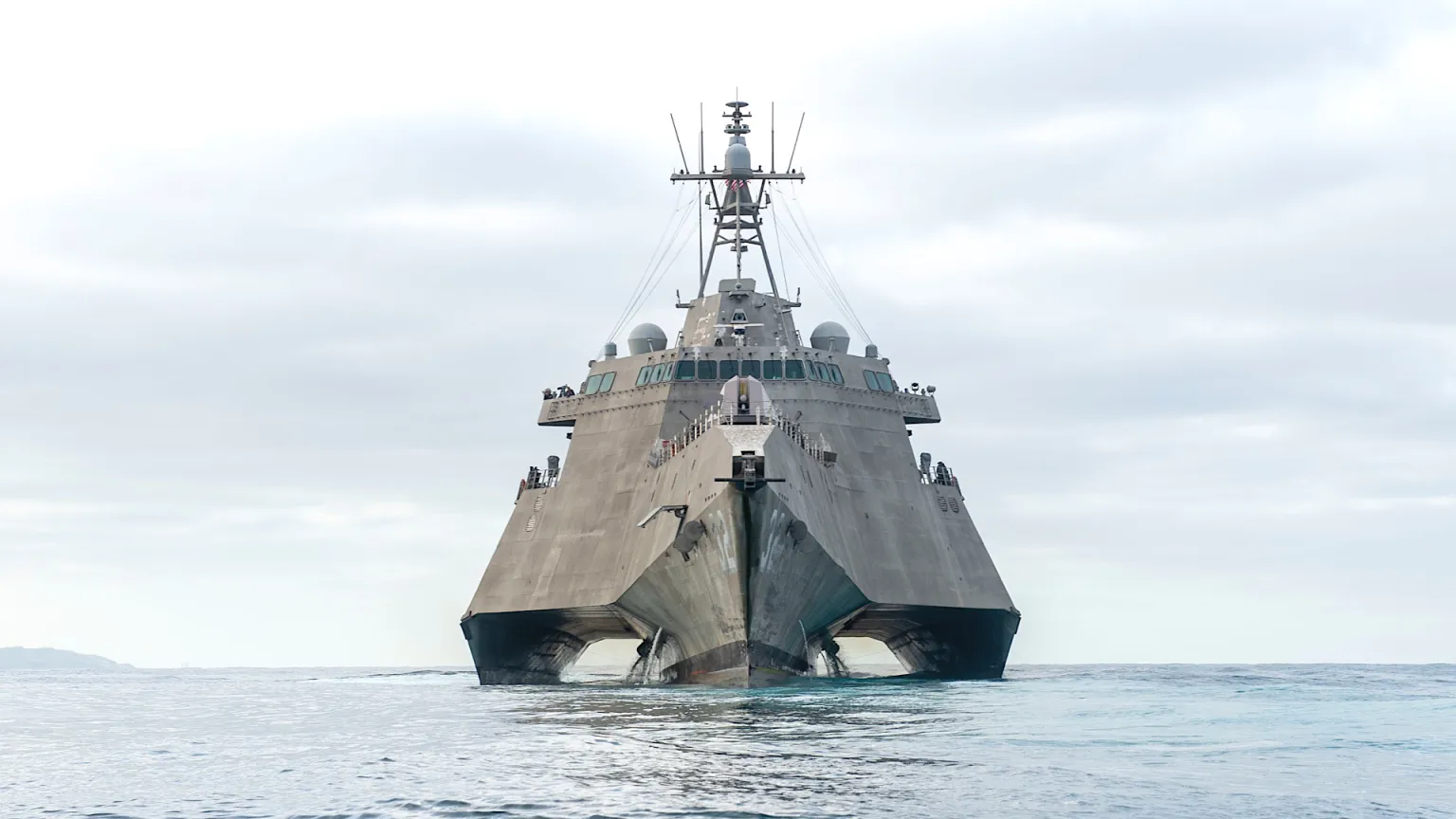
A month and a half after the start of the conflict against Iran, President Donald Trump has entrusted the United States Navy with the task of blocking Iranian ports and clearing the Strait of Hormuz from Iranian mines. Regarding the first, some details are not yet clear, such as which ports the ships would be taken to and blocked, while the mine removal operation is more defined and far from rapid despite the fact that at the start of hostilities, the Iranian ships capable of laying the bombs were targeted by the American air force. The US Central Command (Centcom) said that two guided missile destroyers entered the strait to “create the conditions for mine clearance”, but Iran still has the ability to react by laying mines thanks to an unknown number of small boats capable of carrying missiles and drones of various kinds which could also move to strike Washington’s assets placed to protect ships at sea. In practice, Tehran’s forces could counterattack. According to the size and geography of the Strait of Hormuz, to be effective the US would need two attack groups, that is, two aircraft carriers and a dozen surface ships located outside the Gulf to patrol the mouth. At least six destroyers and other support ships belonging to the navies of countries such as the United Arab Emirates and Saudi Arabia would be needed within the Gulf waters. The number of six is consistent with those necessary for boarding the ships to be stopped, at least a couple, and those that must remain on patrol to detect any Iranian reaction and counter movements. As for mine clearance, the two US destroyers present in the area, the USS Michael Murphy and the USS Frank E. Petersen, have crossed the Strait in recent days, but they are not the units needed to carry out that task and probably did so to demonstrate that navigation was possible and that there were no mines. Search and demining operations will therefore be carried out by underwater drones, specially equipped ships and helicopters. This depends on the type, since Iran could lay (or have already done so) of various kinds, from those “in contact”, or which are activated due to the static electricity generated by ships when they move in salt water, and also those which react to variations in the so-called “magnetic signature” created during passage. There may be acoustic mines that react to noises made by ships’ propellers and pressure mines that detonate when the water pressure reaches a value measured by the mine as corresponding to that of a ship it is designed to destroy. Finally, there may be mines constructed with mixed technologies that make them particularly difficult to neutralize, particularly those that have delay circuits installed useful for allowing a certain number of ships to pass before detonating. All this makes search operations fundamental, which however take a lot of time. Pressure mines can be detected using sonars placed on underwater drones or with lasers mounted on flying drones and helicopters, but then the area must be cleared and their explosion organized. If they are anchored mines, demining involves cutting the cables that connect them to the seabed, they float, rise to the surface where they can be detonated in a safe position. For bottom mines, minesweeping ships tow equipment that can simulate the ships’ acoustic, electrical or magnetic signatures and detonate them safely, thus clearing routes. And today, without the help of the allies, the USA must do all this with only three specialized, non-metallic ships equipped with electromagnetic cannons and underwater drones, as well as with the use of helicopters, i.e. carrying out extremely long and expensive missions. But Donald Trump’s attempt to gain the collaboration of his allies has, at least for now, failed.