Two homes that appeared in the famous Rai fiction are looking for a new owner. They are located in Scicli and Ragusa and prices start from 500 thousand euros.
For over twenty years the houses, squares and buildings of south-eastern Sicily have given shape to Inspector Montalbano’s universe. Scicli became the television Vigàta, Punta Secca hosted the protagonist’s seaside house and Ragusa Ibla lent its baroque views to Rai fiction.
Now two of the homes featured in the series have been put up for sale by Italy Sotheby’s International Realty.
The house in front of the Vigàta police station
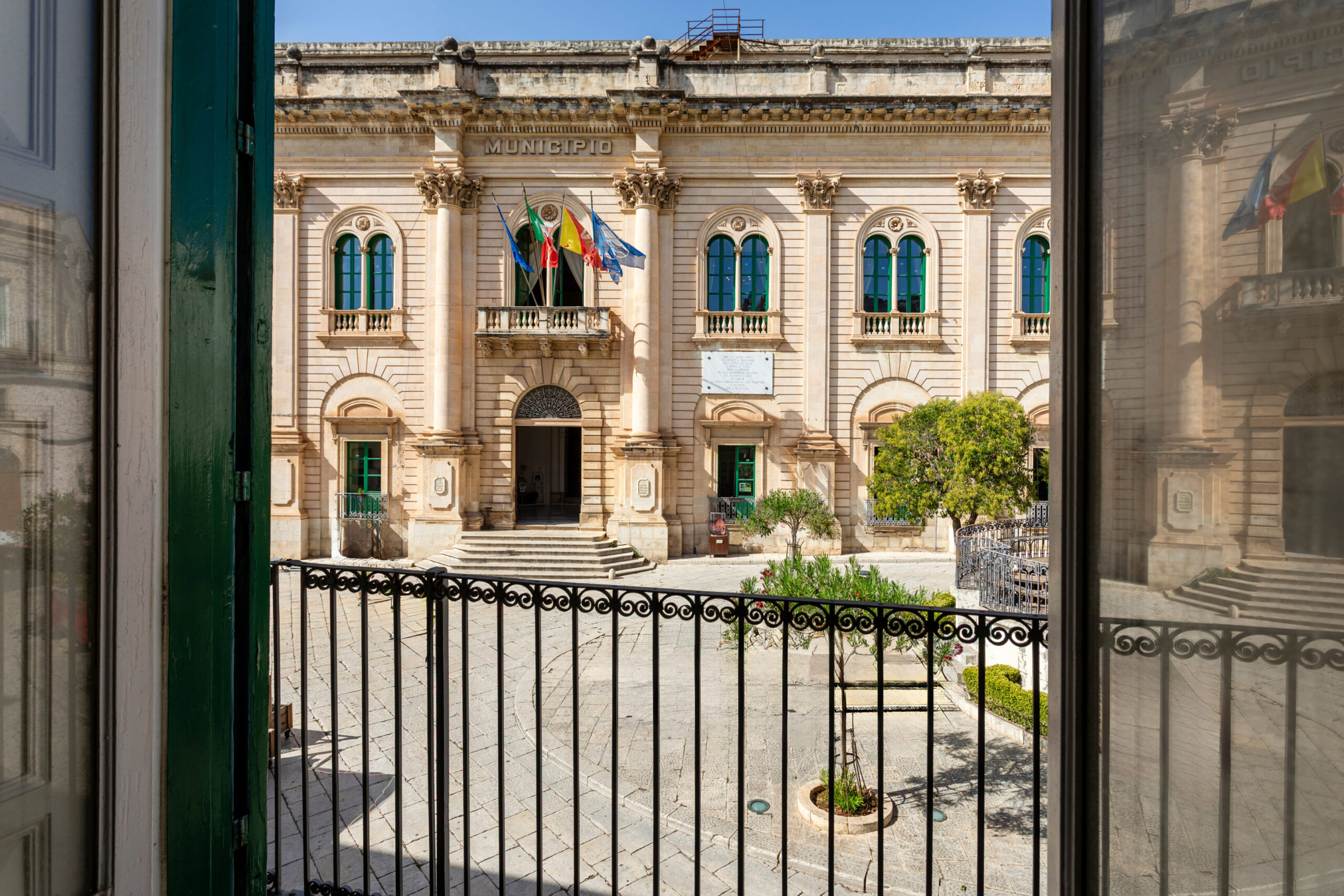
The first property is located in via Arco Castro, in the heart of Scicli, exactly in front of the baroque Town Hall. In the fiction the public building transforms into the Vigàta police station, the place where Montalbano, Mimì Augello, Giuseppe Fazio and the unmistakable Catarella conduct their investigations.
The interiors and views of the private residence also entered the imagination of the series. Some shots were taken directly in the house, whose representative living room looks towards the Town Hall.
The terracielo is spread over three levels and measures approximately 300 square metres. It includes three bedrooms and three bathrooms, as well as a panoramic terrace from which to observe the rooftops, monuments and hills surrounding Scicli. The asking price is 500 thousand euros.
The nineteenth-century palace that appeared in the episode Love
The second property is located in Ragusa, in via Felicia Schininà. It is a historic building from the late nineteenth century, used for some scenes of Lovean episode of Inspector Montalbano broadcast for the first time on Rai 1 on 19 February 2018.
Here the dimensions change considerably. The building, developed from ground to floor on several levels, reaches a total surface area of approximately 954 square metres. The price indicated in the announcement is 790 thousand euros.
The ground and mezzanine floors are introduced by a large entrance hall with original paving stones, vaulted ceiling and a monumental staircase. On the first level there is the main floor, with reception rooms, decorated ceilings, balconies, internal courtyards and terraces. The spaces retain a good part of the period architectural elements and could be used both for a private residence and for a hospitality project.