The blood of an ancient marine arthropod is the basis for the control tests of numerous drugs and medical devices. That’s why the horseshoe crab is still crucial to medicine
What is the trade d’union between a marine arthropod and the most common medical devices? The answer, that is his bloodis in some ways more “obscure” than the question.
Yet the blood of the Limulus polyphemusalso known as “horseshoe crab”, is fundamental to modern medicine, functioning as an essential diagnostic tool for check for the absence of bacterial contamination in injectable drugs, medical equipment and vaccines.
The uniqueness of the horseshoe crab
Let’s start by defining what exactly this very precious (and very expensive) resource of medical biotechnology is.
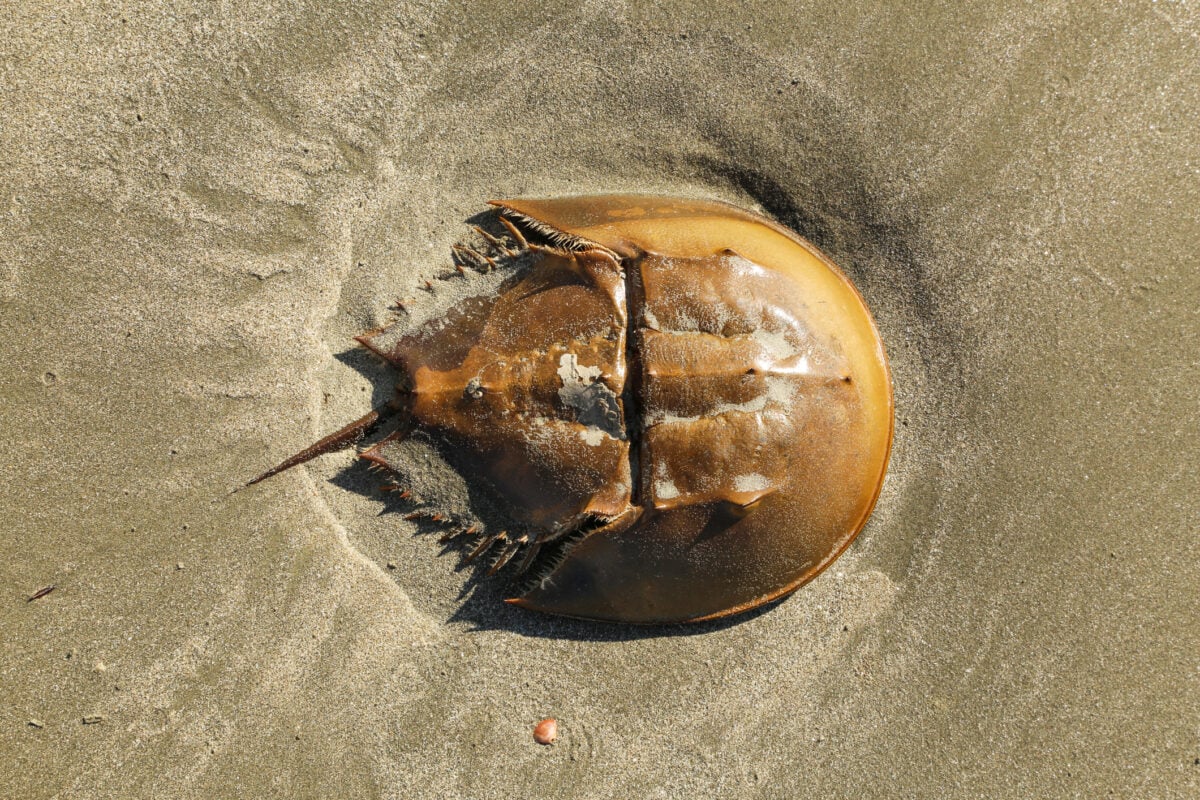
Despite the name by which it is commonly known, the horseshoe crab is not a crustacean, but a chelicerate, that is, an animal strictly more similar to spiders and scorpions than to real crabs.
Another uniqueness of it, in addition to the blood, is its “durability”. It is often called a “living fossil”, because it is an animal that has remained almost unchanged for approximately 450 million yearssurviving several geological eras.
Its habitat is mainly found along the Atlantic coast of North Americafrom Maine to Florida and the Gulf of Mexico. It prefers shallow, sandy or muddy seabeds and feeds on molluscs, worms and other small benthic organisms.
Blue blood
However, we come to its main characteristic, which makes it a unique and very important animal for human medicine: the blue blood.
The “noble” tone of this vital fluid is due to thehemocyanina respiratory protein that, unlike human hemoglobin which uses iron, uses the copper to bind and transport oxygen.
It is precisely the oxidation of copper that gives horseshoe crab blood its characteristic blue color when it comes into contact with air.
However, what makes this blood precious is not its color, but a cellular component within it: the amoebocytes. These are immune cells that are extremely sensitive to endotoxins (or lipopolysaccharides, LPS), molecules present on the cell wall of Gram-negative bacteria.
When amoebocytes come into contact with these toxins, they trigger an instant clotting reaction, trapping bacteria in a protective gel to prevent infection.
This natural defense reaction was reproduced in the laboratory, giving life to LAL (Limulus Amebocyte Lysate), a diagnostic reagent of fundamental importance. From the blood of the horseshoe crab is taken and processed a aqueous extract obtained specifically from amoebocytes contained therein.
It is then used in the LAL test, which is today the global standard for verifying the absence of bacterial contamination in a wide range of products intended for human health.
Every year, the LAL test is used in millions of quality checks around the world to test the safety of vaccines, injectable drugs, implantable medical devices (such as pacemakers and prosthetics) and intravenous solutions
Blood collection
The collection of blue blood, known as “bleeding“, is a regulated process that aims to maximize the survival of the animals. The crabs are collected manually from the beaches or via trawl nets during the breeding season and transported to specialized facilities.
Here, only healthy specimens are selected; the staff takes a sample using a sterile needle inserted into a joint membrane near the base of the tail, allowing the blood to flow out by gravity.
Each crab can provide an amount of blood that varies depending on the procedure, but generally does not exceed 30% of the total volume. After collection, the animals are released back into the sea.
Although regulations mandate live release, the process is not without consequences. It is estimated that a percentage between 15% and 30% of the crabs does not survive due to stress and withdrawal.
Furthermore, even surviving specimens may exhibit behavioral deficits, such as reduced mating activity in the weeks following release.
The alternative
These impacts, combined with habitat loss and harvesting for other uses, have led to a significant population declineso much so that the species is now considered “at risk” in many areas of its range.
Fortunately, science has developed viable alternatives to reduce dependence on this animal resource. The main solution is the Recombinant Factor C (rFC), a protein produced in the laboratory through genetic engineering that replicates the activation mechanism of the LAL test without using crab blood.
Although the transition requires time and validation, the large-scale adoption of these technologies represents the most promising way to ensure a sustainable future for both modern medicine and this ancient “living fossil”.