The case of Padua, with twenty children suffering from cancer transferred from a ward suspected of “hosting” Aspergillus, rekindles attention on an environmental fungus that can cause serious infections in fragile patients
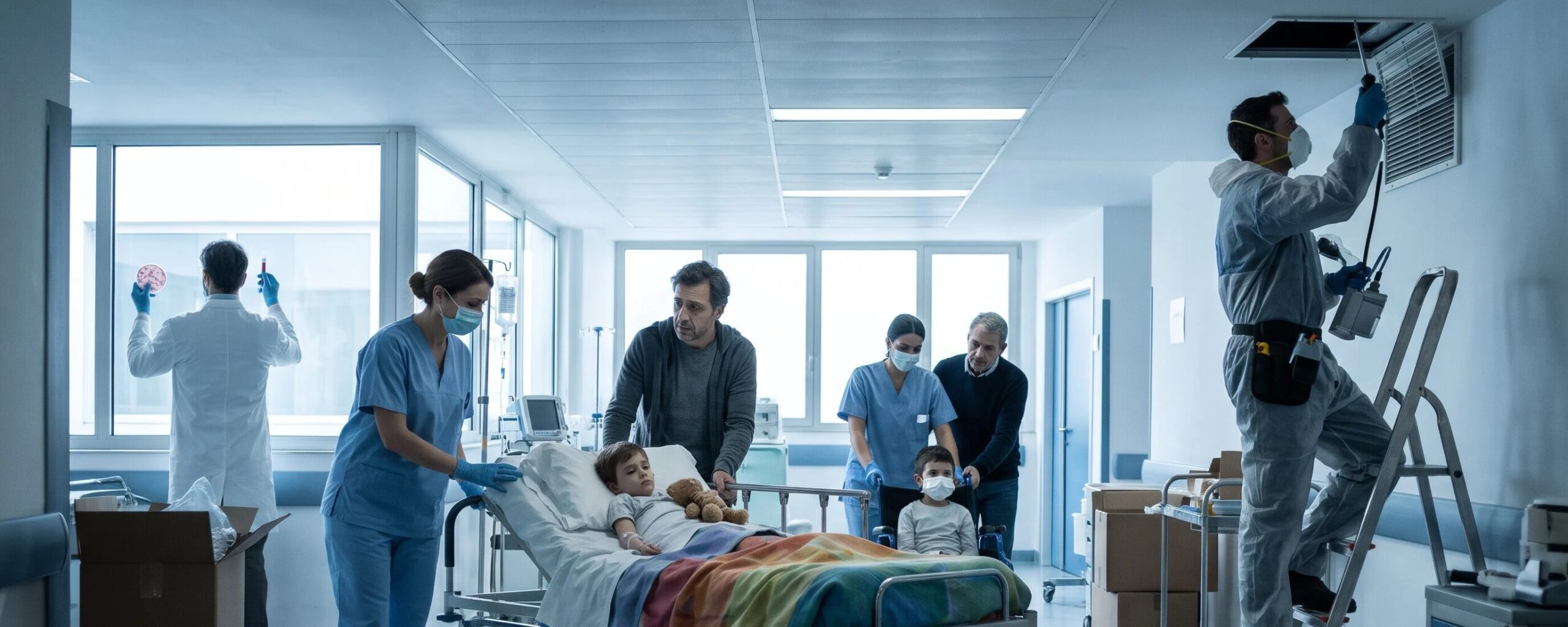
Twenty children transferred from the new department Pediatric oncohematologyfive young patients who developed an infection and a technical commission called to reconstruct what happened. In Padua, the appearance of feverish episodes among children hospitalized at Salus Pueri led, on 9 October, to the decision to transfer the patients as a precaution to the premises of the previous Pediatric Oncohematology. Among the hypotheses under consideration is the possible presence of Aspergillus in ventilation systems. The causes of the criticality must be clarified by technical and health investigations. The story brings attention to a microorganism that normally lives in the environment, but which it can become dangerous when it encounters an organism with compromised immune defenses. For most people, Aspergillus spores pose no real threat. For those facing a tumor, a transplant or treatments that weaken the immune system, however, the risk of a serious infection is real.
Then there is a less visible, but particularly insidious problem: some variants of Aspergillus fumigatus have developed resistance to antifungal drugs. It is a phenomenon that has been studied for years in the Netherlands and also documented in other countries. The result is a growing challenge for medicine: a fungus spread in the air and soil can cause an infection that is difficult to treat in the very patients who have the least margin to deal with it.
A common fungus, but some variants resist treatment
Aspergillus is a genus of mold that is widely spread in the environment. Its spores can be present in the air, dust, soil and plant residues. Breathing them is a common occurrence and, in most cases, causes no consequences. The immune system is normally able to fight off the microorganism before it can cause an infection.
Among the species most relevant to human health is Aspergillus fumigatus, responsible for various forms of aspergillosis. The problem is that some variants have developed resistance to azoles, a family of drugs used to treat many fungal infections.
The issue is particularly studied in the Netherlands. Research published in 2025 reconstructed the presence of Aspergillus fumigatus resistant to triazoles in clinical isolates collected in the country between 1994 and 2022. The results show that resistance is a problem to be followed over time through microbiological surveillance and the analysis of the genetic characteristics of the strains. It does not mean that the fungus originated in Holland or that all resistant variants come from there. The phenomenon is international and its diffusion depends on several factors. The Netherlands represents an important research and surveillance center, but is not the only area affected.
Resistance can make some first-line treatments ineffective. If the microorganism does not respond to the drug used, the doctor must evaluate alternatives based on the diagnosis, the patient’s condition and, when possible, the results of sensitivity tests. For a patient with a compromised immune system, the time it takes to identify an effective therapy can be crucial.
The distinction is also important to avoid alarmism. Not all Aspergillus infections are resistant, and not all people who come into contact with its spores develop an infection. The problem concerns the combination of the patient’s vulnerability, the ability of the fungus to cause disease and the availability of drugs capable of eliminating it.
Symptoms and risks: who really needs to worry
Aspergillosis includes several diseases caused by Aspergillus. It can provoke allergic reactions, especially in people with asthma or cystic fibrosisor chronic lung infections. The most serious form is invasive aspergillosis, in which the fungus penetrates the tissues and can reach other organs. Symptoms include fever, cough, chest pain and difficulty breathing. In some cases blood may appear in the sputum. They are also common signs in other pathologies, but require particular attention in immunosuppressed patients. The most vulnerable subjects are people undergoing transplants, patients with certain blood cancers, those receiving chemotherapy or immunosuppressive therapies and those with a severe reduction in neutrophils. Some pre-existing lung diseases also increase the risk of specific forms of aspergillosis. Antifungal resistance further complicates treatment: if the fungus does not respond to azoles, alternative therapies may be needed. For this reason, a timely diagnosis and tests that allow us to identify the strain and verify its sensitivity to drugs are essential.
The link with agriculture: how resistance was born
Some azole fungicides used in agriculture can favor the selection of Aspergillus fumigatus strains that are also resistant to drugs used in medicine. It is the phenomenon of cross resistance, at the center of European research. The link is documented, but the contribution of the different factors still needs to be explored further.
Treatment and prevention: the challenge is to protect the most vulnerable
Azoles are key drugs against various forms of aspergillosis, but may be ineffective against resistant strains. In departments that care for immunosuppressed patients, air quality control, contamination prevention and timely diagnosis are therefore essential. Aspergillus fumigatus demonstrates that antimicrobial resistance is not just about bacteria and antibiotics. They are needed to counteract it clinical surveillance, research and careful use of fungicidesbecause the protection of the most fragile patients also involves the health of the environment.