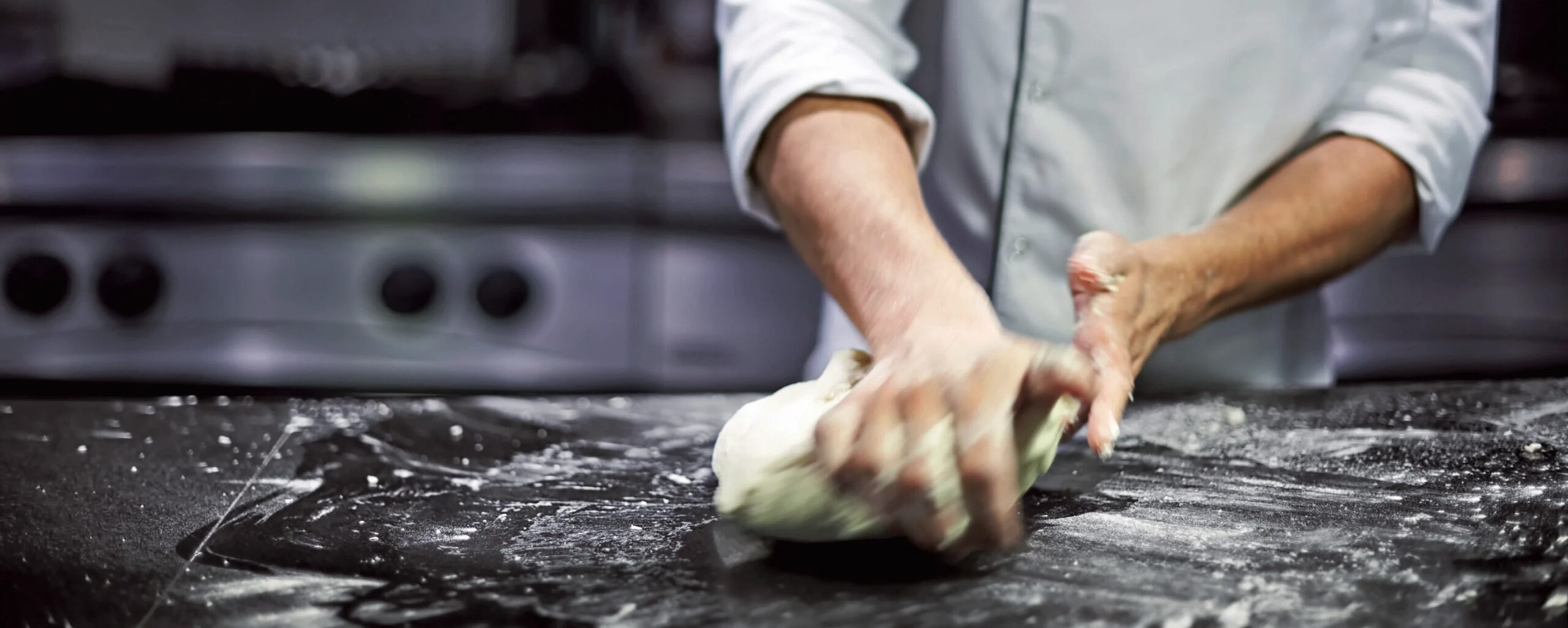
The fresh Unesco recognition for Italian cuisine risks remaining on paper if catering does not change direction. Craftsmanship is our added value on the table: we need to elevate it to a cultural system, also with training
Italian cuisine has been recognized as an intangible heritage of humanity by UNESCO. Following this acknowledgment, it becomes essential to question ourselves on at least three questions: the first is whether an Italian cuisine really exists; the second is whether this cuisine is still practiced and with what level of quality; the third is whether we are equipped to ensure the perpetuation of the values that UNESCO wanted to recognize in our eating habits and in our gastronomic processes.
The motivation for the recognition, summarized, underlines these aspects: «Italian cuisine represents a living cultural practice, a set of knowledge, rites and gestures that transmit identity, conviviality and respect for seasonality. It is considered the cuisine of affection, which unites communities, enhances raw materials and promotes sustainability and is based on biodiversity.” The world of catering, however, is very similar to Darlington Hall in The Remains of the Day, where everything remains still and seems to have Stevens’ syndrome, the butler who serves is silent, subject to the times. The restaurant industry grumbles: it takes issue with the market, with taxes, with the lack of staff, but it does not make any gesture towards renewing the system, nor does it ever subject itself to self-critical examination.
Perhaps already exhausted of a review system that is more opaque than a glass soiled with lard. Hence the need to ask ourselves: what is left in the oven? Because it is now difficult to eat according to tradition in homes, even more difficult to perceive adherence to it in restaurants, and almost nowhere is the search for gastronomic roots found.
The idea has gained ground that Italian cuisine is the one offered by calorie pushers who crowd the historic centers of cities now orphaned of residents and therefore devoid of identity. The belief has also taken root that the Italian gastronomic practice is that which is celebrated in non-places, (to quote Marc Augé) shopping centres, in chains that sell ethnic fakes or meatballs. It was further believed that, under the effect of the media hallucinogen – there has never been as much cuisine on television as now, but for the simple reason that producing it costs little -, that is Italian gastronomy, ending with the triumph of the artificial or Astrusian chefs who do not prepare food, but strive to produce amazement.
Cooking and, in my small way, relying on great intellectuals such as Claude Lévi-Strauss, I try to illustrate it, is first of all language, understanding, exchange of sensations, interpretation and function of the anthropological kit.
Unfortunately, in the kitchen the first ingredient sautéed is commonplace. Thus, some preparations that have a vernacular origin have been imposed as the only interpretative code of our taste, animating legends – an emblematic case of carbonara, which was necessarily the invention of the American liberation troops, while it has always been known that it is an evolution of a pastoral dish which among other things has nothing to do with Rome, but which for marketing reasons had to be altered to the point of inventing a carbonara-day. Therefore, uncertain roots of dishes were created from scratch which instead followed social evolutions and which today present themselves to us very different from their origins.
Another clear example is what happens in Florence. Wandering around a historic center which, due to the explosion of B&Bs, has been emptied of people and professions – but this is the city that made the arts, and therefore artisan companies, its constituent and its law! – everywhere you can see windows of fake trattorias with cow ribs hanging from them as if the city of the lily were a morgue or the soundstage of Grey’s Anatomy (if only because Americans continue to like it) in the belief that has become commonplace that Tuscan cuisine depends on the Florentine steak. Too bad it’s a recipe imposed by the English at the end of the eighteenth century: having seen the white ox from the Apennines, they wanted beef steak at any cost.
The soul of Tuscan cuisine is perhaps, however, the most vegetarian possible. Passing it off today as carnivorous is a historical falsehood. Rather, all national cuisine leans towards vegetables if only because court gastronomy has not taken root here. Therefore, the urgency of this very modest work of mine: to restore the rules of the authentic gastronomic production of our country by separating the wheat from the chaff. The grain is the traditional tables, it is the artisan cooks and chefs, it is those cooks who know the local ingredient, who interpret their territorial vernacular in the dish. The problem is the dark kitchens that cook for everyone, they are the fake restaurants equipped with microwaves, they are the calorie pushers, in fact. The kitchens of Italy have not crowded together at all! Hence the idea, or rather the need, to build a framework of reference that is first and foremost cultural. This need, however, falls at another very significant moment which also justifies the urgency of this volume: the two hundredth year since the publication of La physiologie du goût by Jean Anthelm Brillat-Savarin has just passed. A sacred text for those who care about establishing the cultural value of cooking. And equally this year marks 135 years since the publication of Science in the kitchen and the art of eating well by Pellegrino Artusi.
In these notes I have tried to trace a sort of profile of gastronomic manufacturing, laying the theoretical foundations for its affirmation. And the basis of this reasoning was offered to me by Brillat-Savarin himself: «On devient cuisinier, mais on naît rôtisseur». This maxim should be engraved in every restaurant (you become a chef, but you are born a rotisserie), a sort of summary of an anthropological work like that of Claude Lévi-Strauss who in The Raw and the Cooked explained much of what chefs (never understood why not call them cooks) and food critics ignore.
We can start from an assumption: there is no need to cook to feed ourselves. The food multinationals who push pre-packaged, ultra-processed, laboratory-produced foods know this very well. It is the dream of the pill that nourishes, eliminates the annoyance of having to share a part (unfortunately increasingly small) of the colossal profits that are made by feeding the world with those who sweat the earth. We therefore need four actions which, far from being exhaustive, strengthen the foundations of our gastronomy. The first is to give prominence to the artisans of taste by giving them the possibility of becoming restaurateurs (the model is that of agritourism although some differentiations are necessary); the second is the creation and recognition of the tables where the food is produced by cooks who operate the kitchen starting from the raw material along the lines of the French fait maison, but here too with necessary adjustments; the third is a qualification of professional gastronomic education with the creation of an Academy of very high specialization in the art of cooking with all the prerequisites of academic knowledge and artisanal skill combined; the fourth is the creation of a systemic tourist offer that makes craftsmanship the protagonist of the harmonious development of territories, especially marginal ones.
I discuss this in the following pages, bringing together studies and ideas of many high intellectuals and scientists who have tackled the issue that Brillat Savarin would resolve with one of his aphorisms, maintaining that «gastronomy is the science that deals with man insofar as he nourishes himself».
Hoping that these lines do not give you post-prandial binge, but stimulate the appetite for a challenge: to make Italian cuisine truly a universal value through the work of artisans!