The post-Gravina era begins with a solid (but not unanimous) mandate. Here is the agenda of the priorities of the new head of Italian football, from the choice of the coach to the reform of the championships, passing through the relationship with politics.
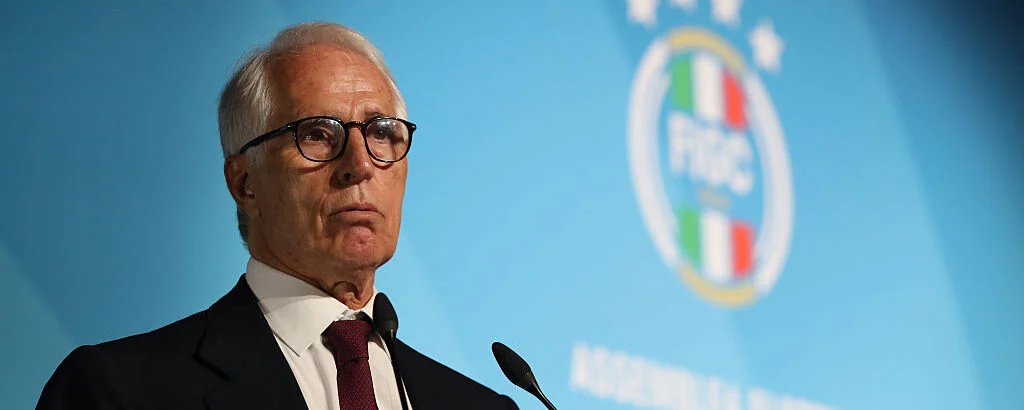
Giovanni Malagò is the new president of the FIGC, elected with 68.58% of the votes, beating Giancarlo Abete (29.17%) who chose not to take a step back, but who was aware of how the games were played before entering the elective assembly. Not the plebiscite that accompanied Gabriele Gravina’s latest victory, but still a solid consensus on which to build a path which, on the contrary, will be full of traps and difficulties in the attempt to reform Italian football.
“Alone I can do nothing, with you I can do everything” were his first words as president of the Football Federation. Also because a hidden war raged around his name for weeks, not even too much, with opposing forces in the field aiming to turn the commissionership around. Duel born in the days following the third consecutive failure to qualify for the World Cup, the night in Zenica which wiped out the top of the FIGC and not just the group leading the national team led by coach Rino Gattuso.
Malagò and the role of Serie A in his arrival on the pitch
Malagò had been called up by Serie A in those hours. His name had been mentioned by the owner of Napoli, Aurelio De Laurentiis, and then the president of Inter, Beppe Marotta, had spoken out for him. A diplomatic work thanks to which the former head of Italian sport and soul of the Milan Cortina Games had come to be indicated as the ideal candidate by almost all the major league clubs and, in turn, had then met with the favor of the majority of the members. Photography respected by the vote that gives him a solid mandate from which to start.
In his speech before the vote, Malagò had used a particular image to define his position: “I am not a black Pope, I am one of you, I am a son of the FIGC and I have only one aim, to make Italy great. I have heard all the speeches, I find it hard not to agree more or less with everyone, I have heard many cries of pain, structural problems, but it must be said that if I am here today it is only because Gravina has decided to resign”. And then: “Why did the members think of me? I asked myself, at the beginning I was sceptical, fresh from a very tough experience like Milan Cortina. Perhaps because I was president of the Aniene Rowing Club for 21 years, therefore part of the amateur world that I know by heart, I sang and carried the cross. Perhaps they thought that everything I did in other environments could be repeated in the FIGC. Even though I have never had anxiety, I feel the weight of responsibility very strongly.”
From the coach to the confrontation with politics: Malagò’s agenda
It will be a summer of intense work that awaits Malagò. The first challenge is to give a new coach to the national team which from September will approach the Nations League path and then will have to earn the pass for the 2028 European Championship on the field: not impossible but not to be taken for granted, as recent events demonstrate. The name is that of Roberto Mancini who has an enormous desire to return to the Azzurri bench and who had already done everything with Gravina to mend the rift of the escape in the summer of 2023.
After the dismissal of Luciano Spalletti the choice fell on Gattuso. Now Mancini is the man chosen to restart the project of the senior national team which must invest in young players, but he also has the obligation to get results quickly to avoid complicating his life when planning for the next big matches: making a mistake in the autumn in the Nations League (Belgium, Turkey and France as the opponents) would mean falling down in the FIFA rankings and dropping out of any seeded bracket in the qualifying group draws. A huge risk to avoid.
And then the double front, internal and external, at the Football Federation. From Via Allegri Malagò will have to find the right recipes to smooth out the edges between the various components, the only (very narrow) path through which to make the necessary reforms. The world of football lives on cross-vetoes that paralyze it and the new president will have to be diplomatic and innovative at the same time. The other big dossier is that of Euro 2032 for which Italian football arrives at the autumn deadline with shortness of breath: the situation of the stadiums is disastrous and there is always the fear that UEFA could take away the co-assignment, leaving the tournament only to Turkey with irreparable image damage for the entire system, not just the football one.
Malagò will need to collaborate closely with politics and here comes the most complex issue to resolve. It is indisputable that his entry into the field was not supported (euphemism) by the current government and by the Minister of Sport Andrea Abodi: whatever the motivation, now that Malagò is in office the dialogue must start and travel faster than what happened in Gravina’s last mandate. Who is right when he remembers the promises made and not kept, the legacy from which Malagò starts again.