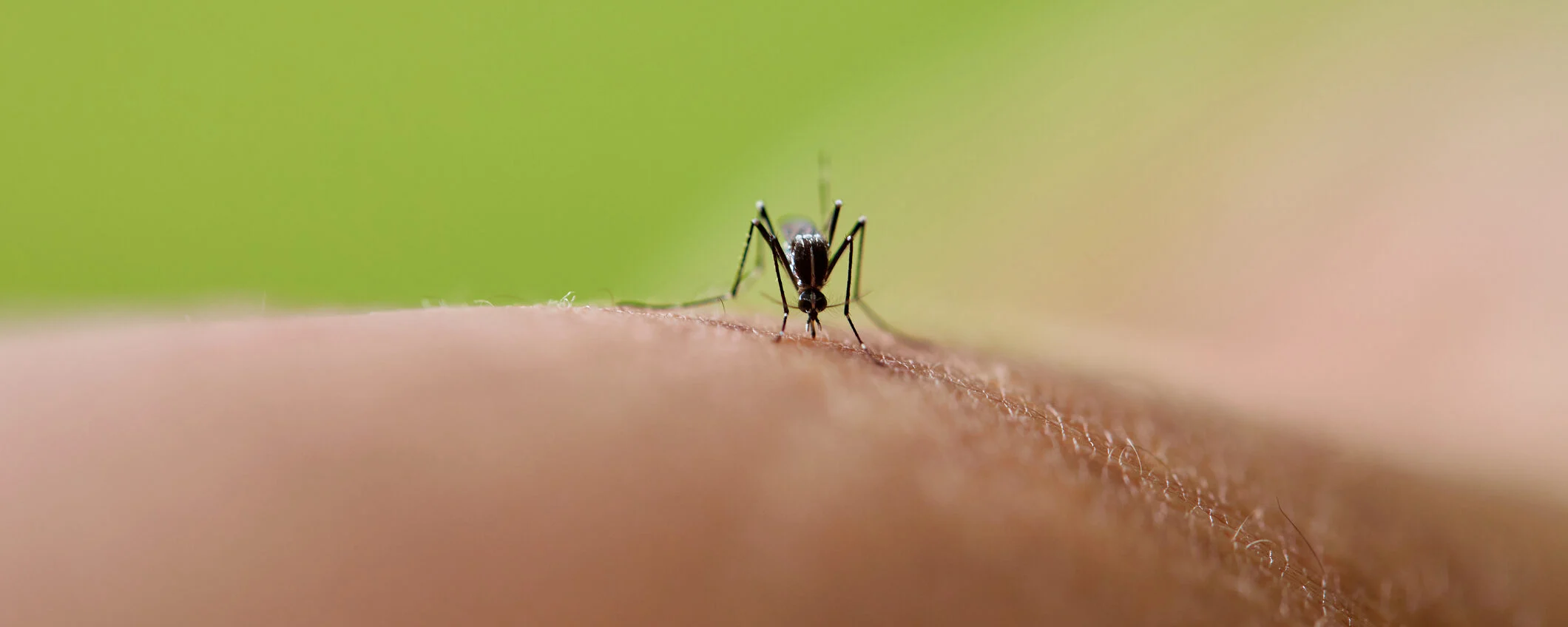
Google’s Debug program aims to stop mosquitoes with the Wolbachia bacteria. The strategy to stop births without using insecticides. But ecological doubts remain open.
It comes when the light goes out. First a buzzing near the ear, then silence, finally the itch that announces the sting. At three in the morning, mosquito extinction doesn’t seem like a moral dilemma but a reasonable political program. The news is that science has started to take it seriously. Not exactly the extinction of all species, but of the few that have transformed an insect measuring a few milligrams into the most dangerous animal for humans.
The latest local control project bears an unexpected signature: Google. With the program Debuggingthe company asked theEnvironmental protection agency US permission to release up to 64 million males of the species Culex quinquefasciatus in California and Florida over two years. They are not genetically modified organisms: they carry a strain of the Wolbachia bacterium which makes mating with wild females incompatible. The eggs are laid, but do not hatch.
From Hawaii to Italy: the strategy of incompatible males
It’s a war fought by adding mosquitoes to mosquitoes: laboratory males turn every mating into a biological dead end. In Hawaii another species, the Culex quinquefasciatusthreatens the last songbirds of the archipelago to which it transmits avian malaria, thus the “Birds, Not Mosquitoes” project was born, which uses drones and helicopters to free millions of males incapable of generating offspring.
Again: in the Washington metropolitan area, approximately 600 thousand males have just been released tiger mosquito (Aedes albopictus) made incompatible with females thanks to the aforementioned Wolbachia bacteriumto reduce the population without insecticides.
Italy has also started similar experiments. In 2025, in the Research Center Aeneas of Casaccia, on the outskirts of Rome, approximately 1.6 million incompatible male tiger mosquitoes were released on 53 hectares, reducing the production of fertile eggs destined to survive the winter by 88 percent. In 2026 the experimentation continued with earlier and more intense releases. In the municipality of Bologna, from May to October, around half a million sterile male tiger mosquitoes are released onto 48 hectares every week.
At this point the problem changes scale: from local suppression we think about the possibility of causing the global extinction of the most dangerous ones. No scientist proposes to indiscriminately exterminate the over 3,500 species of mosquitoes. But for some, even in the magazine Nature the possibility of extinction was discussed.
In the first place there is Aedes aegyptimain carrier of dengueyellow fever, Zika and chikungunya. Instead for the malaria the targets would be a few species: Anopheles gambiae, Anopheles coluzzii, Anopheles arabiensis and Anopheles funestus, responsible for much of the transmission in sub-Saharan Africa, as well as Anopheles stephensi, which is Asian but expanding in African cities.
The health threat and the leap towards the gene drive
In Italy there are two main killjoys. The tiger mosquito, Aedes albopictusblack with white stripes, stings especially during the day and reproduces in stagnant saucers and manholes. Having arrived in 1990, it is now widespread almost everywhere and can transmit dengue, chikungunya and Zika. The common mosquito, Culex pipiensis instead the nocturnal visitor of the bedrooms and one of the main European carriers of West Nile virus.
Of the sixty species present in Italy, only about ten are included in control programs due to their aggressiveness and ability to transmit diseases.
The reason for such audacity in thinking about extinction is in the health bulletins. In 2024, malaria caused approximately 282 million cases and 610 thousand deaths; 95 percent of the deaths were concentrated in Africa and three out of four victims were children under five. In the same year theWorld Health Organization recorded 14.4 million dengue cases and 11,201 deaths, the highest level ever. What kills is not the mosquito, but the viruses or parasites it transmits. Eliminating it means stopping the contagion.
Artificial infection with Wolbachiahowever, only allows local suppression: as long as releases continue, the population decreases; when they stop, individuals from other areas can repopulate it. Not only that, some Anopheles that transmit malaria are easily bred in the laboratory but do not host Wolbachia in a stable way. So, how to do it? Researchers study the gene drivesa technique of bioengineering which allows a genetic modification to spread rapidly, inherited by a share of descendants much higher than the normal 50 percent. It can transmit infertility or alter the sex ratio. In the laboratory, an entire population of Anopheles gambiae was achieved in experimental cages, causing its collapse in seven to eleven generations.
The ecological unknown and the ethical dilemma
The tool, therefore, exists and is very powerful. «The tiger mosquito and others that have recently arrived in Italy (for example Aedes japonicus and Aedes koreicus) are often making space to the detriment of local species and eliminating them would not be a problem for biodiversity», he explains Riccardo Morettiresearcher at the Agriculture 4.0 laboratory ofAeneas. “However, it is unlikely that we will be able to eliminate them completely.” Even our native Culex pipiens can be controlled in cities and epidemic zones, but it is not a plausible candidate for global extinction. For this reason theWorld Health Organization calls for gradual, transparent and shared assessments with the communities involved and, so far, no country has authorized releases into the wild.
«The genetic modification techniques being tested on one of the Anopheles malaria mosquitoes are working. But the field always hides unexpected events, so caution must be exercised in applications and never absolute optimism. We’ll see,” warns Moretti.
However, the question remains that no technology can answer: what do we lose by eliminating a mosquito? Larvae and adults are food for numerous animals and some species also contribute to pollination. Many predators could adapt, but we still know too little about them ecological networks to consider a global extinction harmless. This is where the problem changes nature. Reducing an invasive population on an island is health control; deciding that a species should no longer exist is another thing. An ethical analysis published on Science in 2025 admits thedeliberate extinction only in exceptional cases: enormous benefits, absence of less radical alternatives, acceptable ecological risks and a justifiable decision to the populations involved. In short, there is enough to discuss it further. For now, at three in the morning we will continue to swat a mosquito on the wall without thinking too much. But one morning we will have to ask ourselves not if we are capable of crushing it, but if we are ready to decide that we must never return to that wall again.