Here are the differences between Neapolitan and Roman pizza: dough, cooking, leavening. In Milan there is a place that puts peace between the two worlds
For both it is pizza, but in common (to tell the truth) there is almost only the name. Neapolitan and Roman represent two distinct philosophies, rooted in different histories and built on techniques that diverge from the first gram of flour.
Let’s start with Neapolitan pizza. A version that was born in the streets of Naples between the eighteenth and nineteenth centuries, as a product of the popular classes: quick to prepare, economical, nutritious. The symbolic turning point came in 1889, when the pizza chef Raffaele Esposito creates the Margherita in honor of the queen Margaret of Savoy: it is precisely from that moment that pizza begins to gain a social status that goes far beyond street food.
Much more recently, on 7 December 2017, UNESCO inscribed it in the intangible heritage of humanity, recognizing not only the product itself but the entire culture that revolves around it: the gestures of the pizza chef, the handed down techniques, the jargon, the collective ritual. An entirely identity-related, traditional question.
Roman pizza, however, has different roots. It developed in neighborhood bakeries in Lazio only after the Second World War, in an urban context that rewards practicality (those were times when people really suffered from hunger). The rectangular pan, the thin base, the quick consumption at the counter: everything contributes to making the “scrocchiarella” a product of the modern city. The “alla pala” version, which appeared in the 1990s, then takes this tradition to a more refined dimension, with highly hydrated dough and long leavening times.
The dough: where the pizza begins
The most decisive differences are played out at the start, in the dough. Soft wheat flour, water, yeast and salt are the basic ingredients of both. But the proportions, and above all what is added or omitted, change the result in a completely radical way.
In the case of the Neapolitan, we work with a hydration between 55 and 65 percent, without added fats. The dough is soft, elastic, and is rigorously rolled out by hand using the “slapping” technique: the pizza chef works from the center outwards, preserving the high, honeycombed edge, the so-called cornice. Leavening lasts from eight to 24 hours at room temperature. The specifications of the Traditional Specialty Guaranteed (Stg) do not leave room for large margins: zero or double zero flour, water, sea salt, brewer’s yeast. Nothing else can be used.
On the contrary, the Roman one introduces extra virgin olive oil into the dough, in a percentage between two and four percent of the weight of the flour. This contributes to a flakier texture and greater resistance during cooking. Hydration tends to be lower, around 55 percent, and leavening often occurs cold, at temperatures between four and six degrees, for a period ranging from 24 to 72 hours. In fact, longer times mean greater aromatic complexity and better digestibility: prolonged fermentation degrades proteins and complex starches and also improves the bioavailability of minerals such as iron, zinc and magnesium.
The weights of the blocks are also different. If the Neapolitan uses portions between 200 and 280 grams, the Roman works with smaller loaves, between 150 and 180 grams, spread on larger surfaces until they reach a thickness of less than a millimetre.
The other differences between Neapolitan and Roman pizza
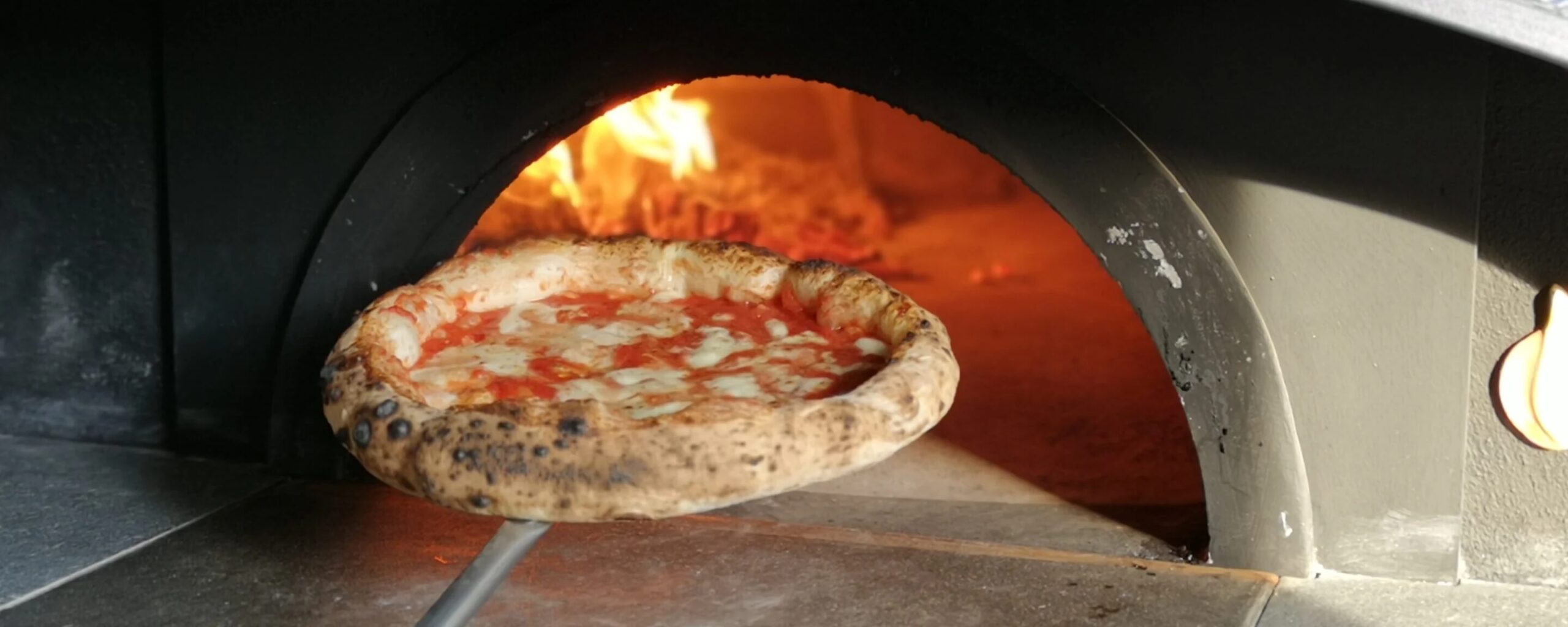
Cooking is the last step, but not the least important (indeed). The Neapolitan goes into a wood-fired oven at temperatures between 430 and 485 degrees, and comes out in 60-90 seconds. The extreme heat rises the crust quickly, keeps the center soft and moist, and the beech or oak wood contributes a recognizable flavor profile.
The Roman one cooks longer, between four and six minutes, at lower temperatures, around 300-350 degrees. The constant heat progressively dries the base, which becomes crunchy and crumbly. In modern electric ovens, precise temperature control also allows for uniform dehydration.
In short, two exactly opposite philosophies: softness and softness on the one hand, structure and crunchiness on the other. Two versions that have divided “consumer public opinion” for decades, giving rise to bitter infighting within the world of pizza.
The place that puts an end to the eternal conflict
But there is a pizzeria that tries to bring everyone together, to act as a peacemaker between these two gastronomic twins who are anything but identical.
From Ladybugin Viale Argonne 11 in Milan, everyone can choose the version they prefer without causing a stir but enjoying their own pizza. In fact, the restaurant offers both versions, Neapolitan and Roman, leaving the customer with total freedom to enjoy the one they want (even at the same table).
Ultimately, the preparation method is unique: what really changes is the weight of the dough, which determines the thickness, consistency and final character of the pizza. The important thing, then, is to eat what you like. Possibly, in good company.