Robert Bloch was someone who knew a lot about monsters. He was one of the greatest noir and thriller novelists in American history, but above all he is the man from whose mind Norman Bates emerged, protagonist of the 1959 novel Psycho, perhaps the archetype of all serial killers of the big and small screen, made immortal by Alfred Hitchcock’s 1960 masterpiece starring Anthony Perkins.
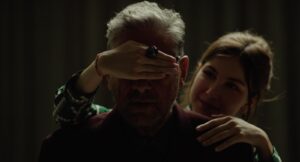
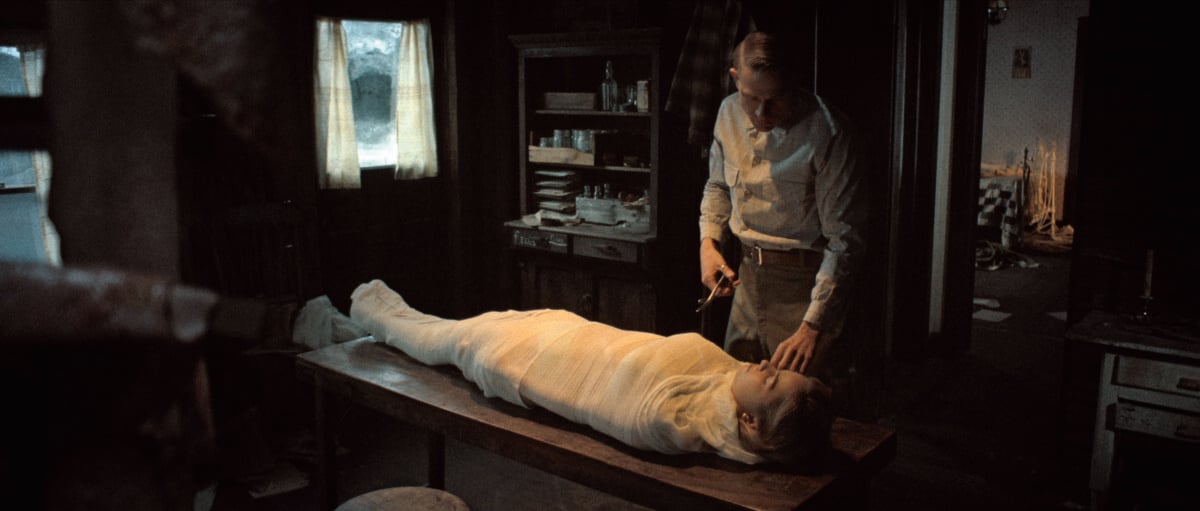
Bloch had a worry: they kept repeating that Bates hadn’t invented him, but had drawn him based on the figure of Ed Gein (1906-1984), one of the most famous, disturbed and disturbing murderers of all time. Even today, website and newspaper articles repeat the refrain: Bates is Gein with some variations. In fact, the overlap is also re-established by the third season of the Monster series created by Ryan Murphy and Ian Brennan, entitled The Ed Gein Story. It is certainly an effective, high-level work, capable of transmitting a profound sense of unease throughout. Some critics have noted, not without reason, that the two authors seem to want to abuse the viewer, as if to make him pay for his morbidity.
«Like the previous two episodes of the series, about Jeffrey Dahmer and the Menendez brothers», wrote Judy Berman in Time, «Ed Gein tells in gruesome – and largely fantastical – detail the legend of a notorious killer, with the aim of understanding what our collective obsession and the inevitable misunderstanding of each case says about society. By tackling Gein, Monster takes the opportunity to accuse the very audience that made it one of the most popular TV series.” As if to say that certain stories should not be told, yet we are all (or almost all) fatally attracted to them.
Robert Bloch was certainly also attracted to similar stories, and he certainly knew Gein’s story as well. In the Monster series, Hitchcock is seen at lunch with his screenwriter: the master of thrills devours chicken while he lists the monstrosities carried out by Gein, including the creation of a lamp lined with human skin. But it is probably a fanciful reconstruction. And again in a 1991 interview, Bloch insisted on repeating: «I didn’t use Ed Gein as the basis for Norman Bates; I used the circumstances, which were: Someone could live in a small town, where everyone knows everyone else’s business, and conduct a killing spree without anyone suspecting.”
The atmosphere, not the man. A hallucinated and suffering atmosphere that Murphy’s series conveys perfectly. Bloch kept saying it, but his version was not taken into account by the oral history of the West. “People don’t like it,” the writer said. «They like to believe the legend. When it comes down to it, Ed Gein didn’t run a motel. He didn’t kill anyone in the shower. He did not preserve his mother’s body. None of these things were part of Mr. Gein’s background. I invented a character, not having read the details at the time. Life magazine and some other publications later printed a lot of the material, but I wouldn’t have used it even if it had been available, because it didn’t meet my particular plot needs. But the legend persists and will continue to persist.”
To read something serious enough about Gein’s life, therefore, you shouldn’t browse Psycho, but rather Monster Psycho Killer by Harold Schechter, a notable true crime journalistic reconstruction. Or you can leave Gein alone and choose one of the many inhuman beasts produced by serial killer literature, it doesn’t matter whether it’s Bret Easton Ellis’s Patrick Bateman or Thomas Harris’s Hannibal. Variety, it must be said, is not lacking. You can opt for the black jewels designed by Joyce Carol Oates or for the – unfortunately – little-known protagonist of I’ll Find You by the extraordinary Shane Stevens, the killer Thomas Bishop. Or immerse yourself in the muddy depths of genre fiction, which every now and then offers small and shiny pearls (but also a lot of junk). Little changes, after all, because in the end the ancient question always remains pending: why do these stories attract us so much? And what does this attraction say about us?
One of the thousand possible answers is that serial killers are the concentrated and frightening version of evils that afflict all of us modern people. They are to all intents and purposes a product of alienated modernity. «The term serial killer was born in the United States. It was the FBI that categorised, between the 1950s and 1960s, that specific segment of murderers who, compared to others, stood out for certain characteristics” explains Gianluca Zanella, author of Serial Killer. The faces of evil (Diarkos).
«Among the main ones are the search, through murder, for sexual pleasure and rituality. The serial killer, with a few notable exceptions (think of our own Donato Bilancia), tends to repeat, perhaps enriching it, a precise modus operandi, full of widespread symbolism that is often understandable only to him. For many years, serial killers had to have killed at least three people to be defined as such. Today two victims are “enough”, as long as there is a period between one and the other that criminologists call “emotional cooling”, i.e. a detachment from what has been committed, before the impulse to kill takes over again. Naturally there can be many other characteristics and each serial killer has peculiarities that make him unique in his own way.”
Ed Gein was undoubtedly unique, and went down in history as one of the most brutal butchers. «Ed Gein is the archetype of the American serial killer, a bit like the monster of Florence is for Italy», says Zanella. «Gein shattered that apparent innocence of provincial America in the most blatant, brutal, transgressive way possible. He killed, he desecrated tombs, he dissected corpses to make furnishing objects in his home, and at the basis of it all there is an obsessive relationship with a mother who undoubtedly played a decisive role in the formation of the future serial murderer. As the TV series then highlights, cinema gave a notable impetus to the creation of the black legend: from Psycho to Texas Chainsaw Massacre, there are many directors who were inspired by the nightmare that shook the American and Western collective imagination in general.”
Hollywood has cradled the nightmares of entire generations, but serial killers have also been a particularly concrete reality for the United States. «I don’t think I’m wrong in maintaining that the American state most infested with serial killers over the years is California: Zodiac and Richard Ramirez (The Night Stalker) are the most famous, but there are others perhaps less well-known, but absolutely lethal, such as William Bonin, Samuel Little, Juan Corona», says Zanella. «Without forgetting the Manson Family, who committed the Cielo Drive massacre, where on the night between 8 and 9 August 1969 they murdered five people, including Sharon Tate, wife of director Roman Polansky who was eight months pregnant. I couldn’t say the reason, certainly cities like Los Angeles and San Francisco, large and dispersed, allow anyone to potentially make themselves invisible, but I doubt this is the only reason. The reality is that serial killers are the product not so much of a sick society, but of families often abandoned in their misery, isolated, dysfunctional. And California has probably had more situations like this than other American states.”
Peter Vronsky, scholar of serial killers and author of Sons of Cain (Nua editions) maintains that there was a “golden age” of American murderers that ran more or less from 1945 to the mid-1990s. “In the first five decades of the 20th century, the United States saw a slowly growing average of twenty to forty new serial killers per decade,” Vronsky writes. “But after 1960, the number by decade went viral.” We go from 51 in the decade 1950-60 to 692 in the decade 1980-90. Other scholars agree on the dates and some argue that all this is due to the absence of the father figure: the killers were mostly males who, due to the war, grew up without fathers or with violent or very problematic fathers. An evil of modernity, in fact. Monsters with human flaws, too human. Rural America produced Ed Gein, ripper idiot. Metropolitan California had its relentless and elusive Zodiac. As for us, we have novels, films and series to trap us. A sign that after all the nightmare of modernity is all too familiar to us.