Behind the sound of the large violins is the pau-brasil, an endangered tree that gave Brazil its name. That’s why his bows are worth a fortune.
When you think of Brazil, wood is certainly not one of the first elements that come to mind. Yet its importance for this country is such that even the name itself, Brasil, comes from the word pau-brasil name indicating the tree Paubrasilia echinata. The name of the country, therefore, derives from this tree.
A unique wood for the bow
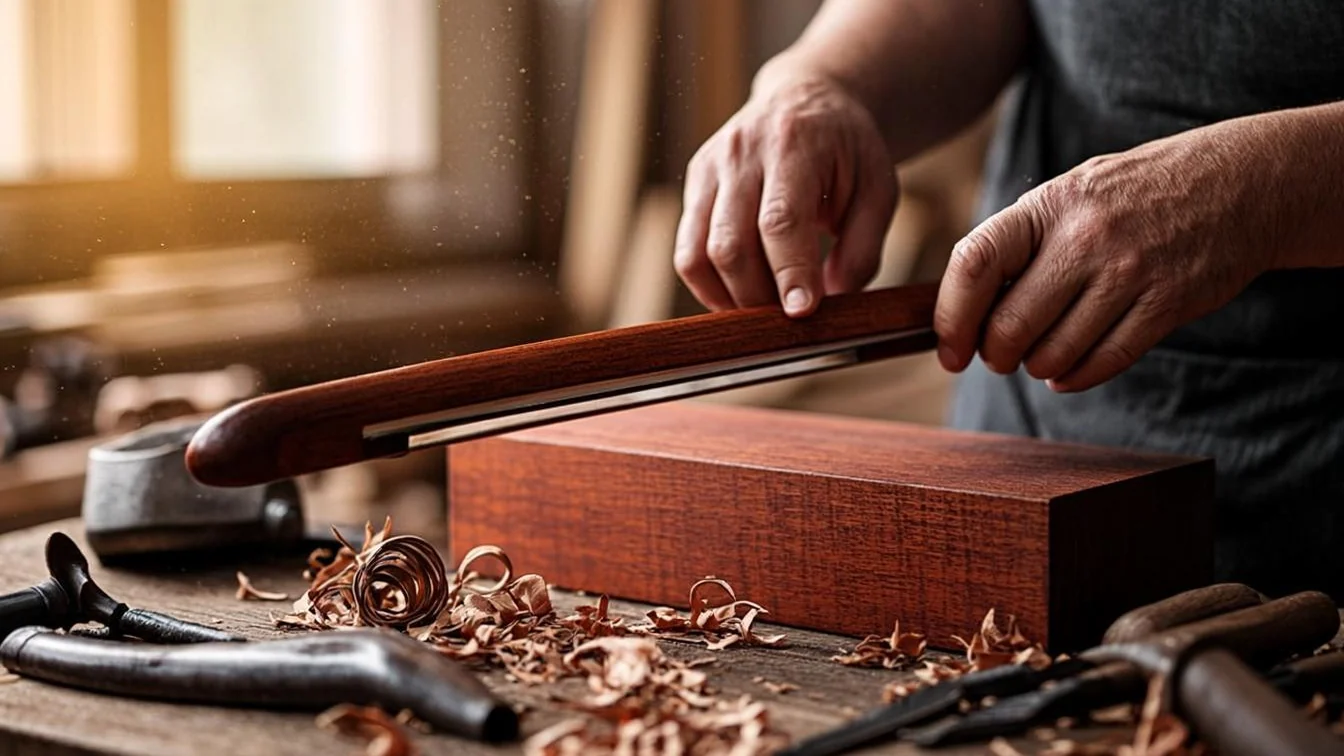
The pau-brasil is known in the world of violin making by the name of pernambuco. For over two centuries it has been the material of choice for the construction of violin, viola, cello and double bass bows.
Its superiority to other types of wood is not a question of tradition or aesthetic taste, but of unparalleled physical and acoustic properties. In fact, Pernambuco has a high densityaextraordinary elasticity and, above all, a low damping coefficient.
This means that the wood dissipates very little vibrational energy and gives the bow an immediate, precise and nuanced response. It is this combination that allows musicians to make those technical movements – the so-called “bow strokes” – which are less effective with other materials.
The speed of sound propagation along the fibers, used by bowmakers to select the wood, is the parameter that best summarizes the quality of a wand: the higher it is, the more “snappy” the bow is and capable of bringing out the entire harmonic range of the instrument.
The restrictions in force
The species, however, is in danger of extinction. It is estimated that around 84% of wild pernambuco has already disappeared. For this reason, since 2007, wood has been protected by the CITES (Washington Convention).
In 2025, Brazil asked for a tightening of the measures, proposing the transition from Appendix II to Appendix I, which would have effectively banned the trade and transport of all pernambuco bows, including historical ones and those already in use.
After a long international mobilization, the COP20 in Samarkand (December 2025) reached a compromise: pernambuco remains in Appendix IIbut with strengthened discipline.
The new rules provide for ban on harvesting new wood from natural forests (while the use of wood from plantations and that harvested before 2007, adequately documented, remains permitted) and, above all, theexemption from CITES certifications for non-commercial transport of the bows by the musicians.
In other words, a violinist can continue to travel with his or her bow without the nightmare of disproportionate permits, while the international trade of raw wood and semi-finished products remains tightly controlled.
The price
On the market, the cost of a pernambuco bow varies enormously depending on the quality of the wood, the craftsman’s skill and the state of conservation.
We start from a few hundred euros for studio or intermediate-range bows (with examples around €150–300 for basic models, up to around €600–1,000 for good lutherie instruments).
However, for high school bows – particularly those signed by renowned historical or contemporary master bow makers – prices can reach and exceed 25,000 euros when sold in Europe or the United States.
The growing scarcity of the raw material is also affecting the value: with the new restrictions on wild harvesting, pernambuco wood of legal origin and of superior quality is destined to become an increasingly rare and contested commodity.