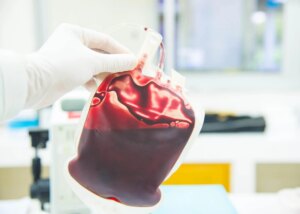
The organ, altered with ten genetic modifications to reduce rejection, functioned for weeks, showing unprecedented results. A pioneering step towards a future in which compatible animal organs could save human lives awaiting donations.
A 71 year old manaffected by a inoperable liver tumor and from a serious liver impairment, he became the protagonist of an event destined to enter the medical books. In Chinaa team of First Affiliated Hospital of Anhui Medical University has implanted in his body a genetically modified pork livercreating one of the very first liver xenografts never attempted on one living patient. The surgery, performed on May 17, 2024used a pig organ they had been in three genes eliminated related to rejection e added seven human genes to promote immunological compatibility and correct blood coagulation. In the hours following the operation the patient has started walking againthe organ has started producing bile and doctors observed no signs of hyperacute rejectionone of the most feared complications in this type of procedure. After about 38 days but they have developed clots in the small vessels of the transplanted liverforcing surgeons to remove the auxiliary organ. Despite this, the man lived 171 days after surgeryand the case was considered by all to be one milestone: for the first time, a modified pork liver it worked in humans for a prolonged period, confirming the clinical feasibility of xenotransplantation.
This result, despite its limitations, marks a decisive step in research that aims to overcome one of the most serious emergencies of modern medicine: the shortage of organs for transplantation. Only in China are they esteemed over 300,000 new cases of liver failure every yearbut human donations cannot meet demand. For this reason the possibility of using genetically modified animal organs is being studied as a bridging solution: a way to temporarily support liver function in patients who cannot wait for a human organ or for whom traditional surgery is no longer feasible. The case of the Chinese patient showed that a porcine liver can reproduce essential metabolic functionsfrom the production of bile to the regulation of coagulation, up to protein synthesis. It’s an encouraging sign: it shows that, at least for a limited period, a animal organ can integrate in a human body maintaining complex physiological activities.
However, there remains a long list of scientific and clinical challenges. The duration of operation still remains limited, i clotting problems and of chronic rejection are frequent, and the risk of viral transmission from animals to humans remains under close observation. Furthermore, the ethical boundaries of these experiments are the subject of intense debate: who decides when an experimental intervention can be authorized, and under what conditions? In China the protocols are approved by hospital committees, but in Europe and the United States the regulation is much more stringent. However, scientists agree on one point: lo Liver xenotransplantation is not yet a therapybut a research frontier that can, over time, transform into clinical option. If the technology can guarantee safety and durability, it could one day become a real alternative to human transplants, reducing the waiting lists and saving thousands of lives every year.
Because exactly the pig? Because his anatomy and physiology they are surprisingly similar to those of humans, and their genetics can be modified with great precision. The new techniques gene editinghow CRISPR-Cas9allow us to deactivate the genes that trigger rejection and insert human genes that promote immune tolerance. In the case of the Chinese patient, the changes made the liver capable of resisting the immune response for more than a month, an achievement that was unthinkable until a few years ago. «This is a pioneering result – the researchers commented – but the road is long: a lot of research is still needed before these transplants become feasible on a large scale». For the international scientific community, the objective is now twofold: on the one hand transfer the experimentation into controlled clinical protocols; on the other, guarantee global ethical and safety standards. In the United States, the National Institutes of Health and the FDA are evaluating common guidelines for xenotransplantation, while in Europe the debate involves transplantology and bioethics societies. Everyone agrees that we cannot talk about the replacement of human organs, but about temporary supporta “bridging therapy” capable of keeping the patient alive until a definitive transplant.
The case of the Anhui patient is therefore not just a scientific curiosity: it is the first concrete step towards a new paradigm in transplant medicine, in which genetic technology, surgery and bioethics they meet. If the last century made it possible to replace a heart or a kidney, the next one could make it possible to create custom-made compatible organsno longer donated but built and adapted.