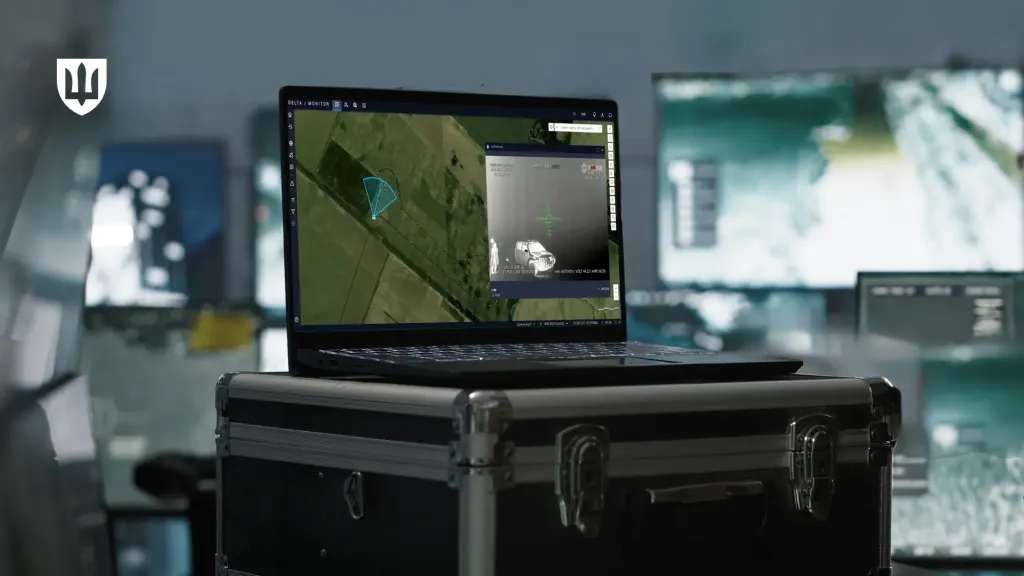
The United States and Israel are looking with interest at the Delta system created by Kiev, a formidable tool for making the most of drones. By the same admission of Secretary of State Marco Rubio
The Ukrainian armed forces are now the leading European power and the United States, together with Israel, are seeking to finalize new arms supply agreements to integrate Ukrainian drone technology into their respective Armed Forces. Moreover, excluding French nuclear deterrence, no other army has undergone such a radical transformation as Kiev’s due to the war against Russia. Just think of the fact that Zelensky’s forces went from being equipped with vehicles dating back to the last years of USSR production to the most modern weapons available and to gaining operational experience first-hand. It is therefore not surprising that last week senior White House officials publicly praised the Ukrainian armed forces as superior in terms of capacity than all those of the European allies and, in some cases, even ahead of the United States itself.
Ukraine’s armed forces are “the strongest and most powerful in all of Europe,” Secretary of State Marco Rubio said last week, citing a report on Russian army losses and battlefield adaptation calculated since the start of the Ukrainian reaction to the invasion. “The need to fight the war,” Rubio said, “has pushed the Ukrainians to develop new tactics, equipment and technologies that are creating a kind of hybrid asymmetric warfare.” To reinforce his words, those of US Army Secretary Dan Driscoll, who declared to the Senate Armed Services Committee that Ukraine has integrated drones, sensors and weapons into a single command network that extends along the entire front, while US Army systems remain “compartmentalized, isolated and ineffective against modern threats.”
How Kiev’s data network works
Driscoll pointed out: The common Ukrainian operating system called Delta for command and control is open architecture and is absolutely incredible. Fully integrate every single drone, sensor or shooting platform into a single network. Ours not yet.” This admission is historic, also because it is the exact opposite of what the Trump 2 Administration was saying shortly after its inaugurationmeaning that Kiev had no cards to play. Not only that: Washington claimed that it did not need Ukrainian help for defense against drones and that the US knew more about remotely piloted systems than anyone else, having the best drones in the world at its disposal.
What was not understood, however, is that large armed drones operating over long distances and at very high altitudes are one thing, but a completely different scenario is that of small UASs fighting in urban scenarios or in trenches. The inspector general of the Ukrainian Ministry of Defense and the official who oversaw the development of Delta, Yuri Myronenko, told the newspaper Military Times: “Delta is one of the best systems because, from the beginning, it was created for this drone warfare: integrated with electronic warfare systems, detectors, artillery. And then we have all the data that we learn from. It has become the data war.”
In early May, the US Army and a coalition of US defense companies, including Anduril, Boeing, Lockheed Martin, Perennial Autonomy and Rtx, announced that they had built open systems around the same Delta architecture that allow the Ukrainian system to integrate new tools as engineers develop them. Several of these companies have already tested their systems on the Ukrainian front, where war has become the most important testing ground for Western drone and anti-drone technologies.
For the USA a lesson in humility
What is happening is a real reversal of the situation compared to how it was portrayed until recently, when Defense Secretary Pete Hegseth reiterated to the European allies that the defense of the continent was their problem and not Washington’s and that NATO was a debtor of the United States rather than a partner. The reality turned out to be very different: already last year the Pentagon was acting in the opposite direction: US forces deployed a Ukrainian anti-drone system to intercept Iranian Shahed attacks against an American installation in Saudi Arabia, and Ukrainian military officers went there to train their American colleagues in the use of this technology.
Today, Ukraine’s offensive operations surpass those of Russia along the front. This sentence was pronounced last week by the commander in chief, General Oleksandr Syrskyi, who underlined how the losses suffered by Moscow’s army are now far greater than those of Ukraine. Since 2024, the Delta system has become the first Ukrainian combat system to pass a cybersecurity audit according to NATO standards. Since then, Kiev has integrated a mission control module into the battle ecosystem that records each drone sortie: type, launch point, route, mission and outcome, sending the data to commanders and recording and analyzing all information. The platform now has 270,000 registered users and is being refined daily to make it easier to use and better integrate it with front-line tools.
Video link: https://youtu.be/SerHyei8sqc?si=Ph2ILBVlQ7CXKhET