Inflation, skyrocketing energy costs and raw materials: collective catering is in crisis. The pricing issue in public procurement
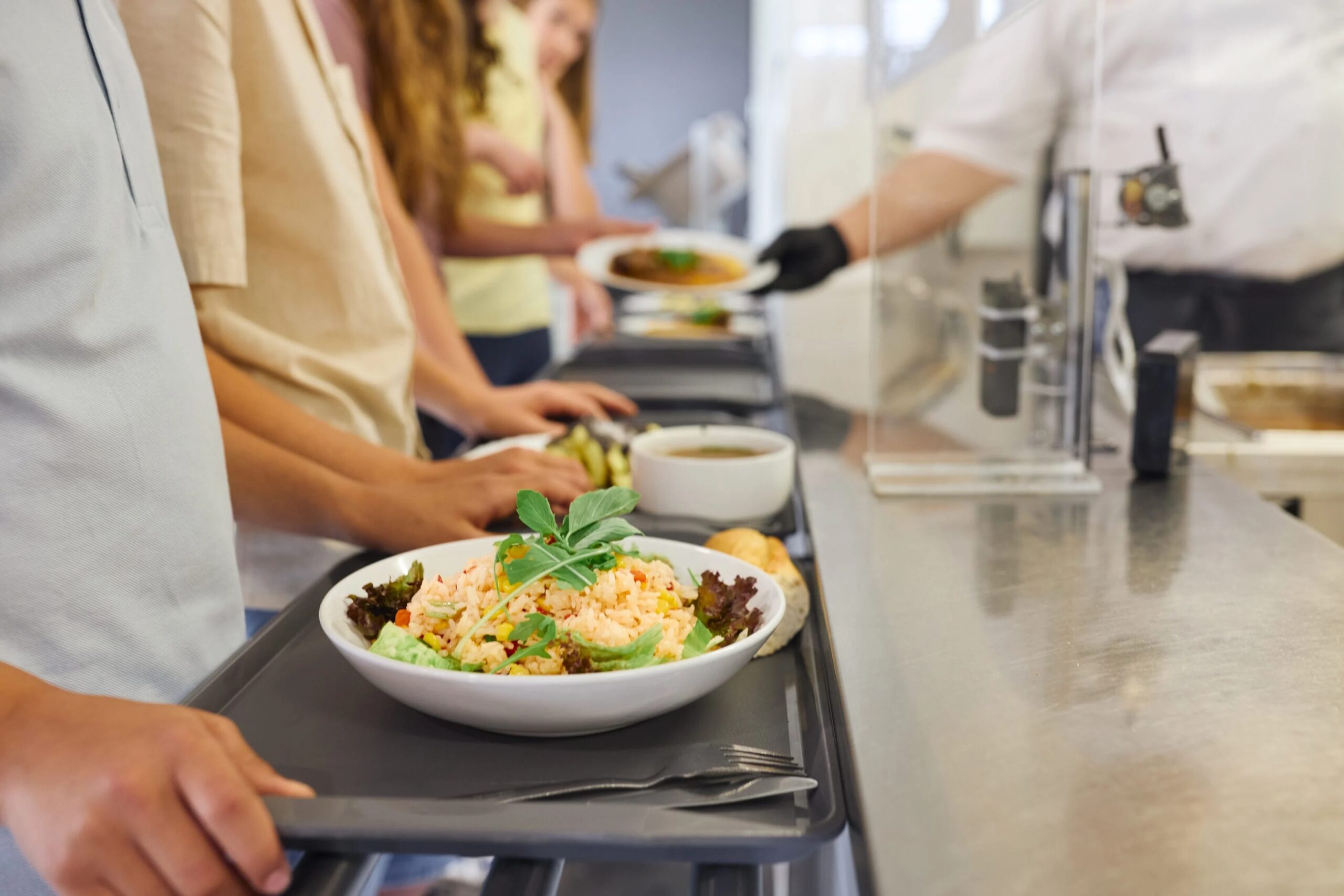
Every day, in Italy, someone brings a tray to a child in the canteen, to a patient in the ward, to an elderly person in an RSA. Considering the entire system, collective catering guarantees around 800 million meals a year and employs 100,000 people, 85 percent of whom are women and 89 percent of whom work on permanent contracts. Numbers that tell of an invisible but truly essential sector, which supports a concrete portion of Italian welfare.
And the average price of a meal in school canteens is just over five euros. A figure which, read together with the inflation of recent years, already offers a rather clear snapshot of today’s context. These numbers come from a preview of the Nomisma research for Oricon, presented at the Fourth Collective Catering Summit, organized by CIRFOOD and held at the CIRFOOD District of Reggio Emilia. The theme chosen for the 2026 edition was, as they say, burning: «Between rights and duties, how can we continue to guarantee the quality of services»?
The real short circuit of collective catering
The question hides a very current paradox that concerns anyone who has a child at school or a family member hospitalized.
On the one hand, public administrations are asking for increasingly higher standards: organic products, short supply chains, minimum environmental criteria, balanced menus, traceability. On the other hand, procurement contracts often remain anchored to prices established years ago, well before inflation on energy and raw materials radically changed production costs.
The result is a clearly impossible equation: if oil, pasta, electricity and wages increase, how can a meal in the canteen cost the same amount without cutting back on portions or quality? No, he can’t. And this is precisely the issue that companies in the sector are denouncing with ever-increasing urgency.
Franco Mosconiprofessor of Industrial Economics, described this contradiction as an economic pressure capable of “compromising the stability of companies”. These are not mere corporate complaints: it is, in fact, an equation whose result does not add up.
Current Italian legislation
Italy already provides for the tool of price revision in public contracts. In theory, contracting authorities should periodically update the economic values of contracts to keep pace with real costs. In practice, however, this mechanism is not applied in a systematic or timely manner.
Mariangela Di Giandomenicolawyer from the international law firm Orrick and public procurement expert for the European Commission, underlined, in this regard, that “the regulatory provision must translate into its effective application by the contracting authorities”. Existing on paper is simply not enough.
On the political front, the Forza Italia deputy Raffaele Nevi he hoped for specific intervention on price revisions already in the next Budget Law, recognizing the systemic importance of the topic.
The concrete risk for school and hospital canteens
There is a consequence that risks being overshadowed in the technical debate, but which is perhaps the most relevant for citizens. If margins in the public sector continue to compress while in the private sector contractual conditions are more negotiable, then collective catering companies could progressively disinvest from public services, bringing skills and resources to the private market.
And it is exactly the same mechanism already observed in healthcare: when the public is unable to compete on economic conditions, it loses professionals and quality. Chiara Nasipresident of CIRFOOD, made the stakes clear: «It is not possible to ask companies to continue to bear ever-increasing costs and responsibilities without providing adequate tools to guarantee their economic sustainability over time».
The solution cannot be to lower quality expectations. Contracts need to be aligned with cost reality. Otherwise, whoever sits at that table will pay the bill.