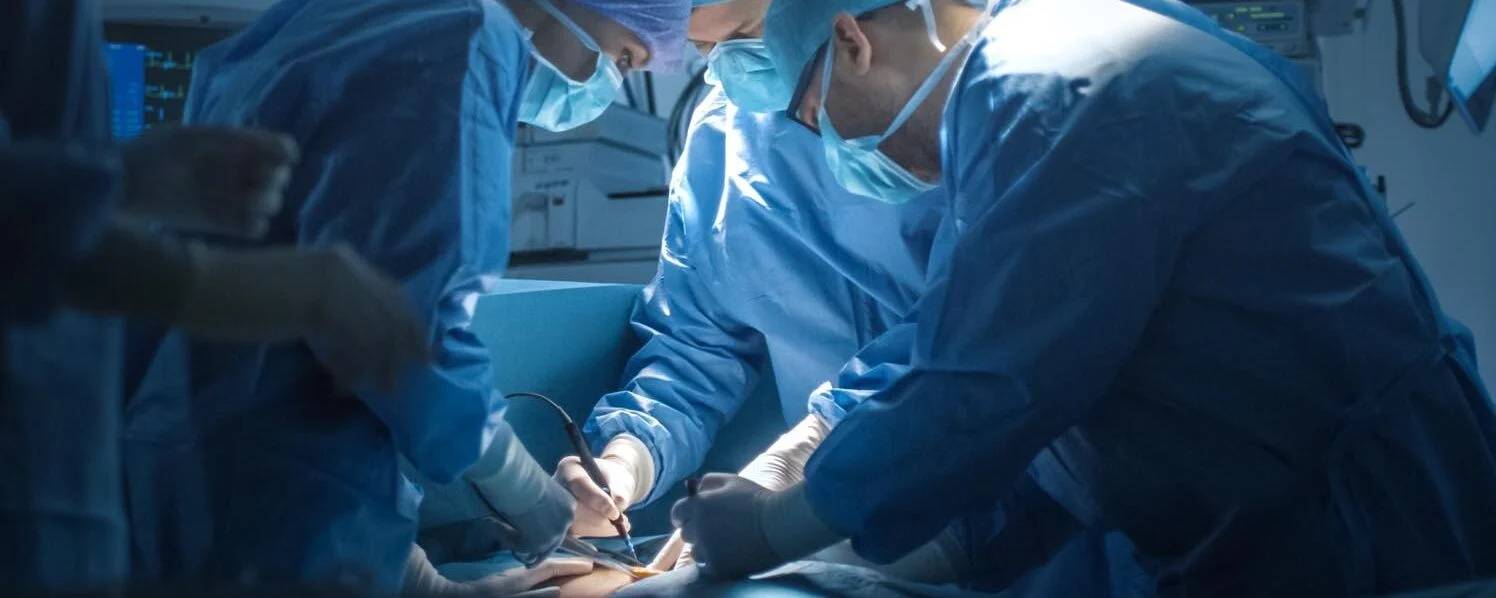
More than half of hospital general surgeons are over 60, while graduate schools struggle to attract new doctors. The NHS could lose around 1,500 specialists by 2030. Backbreaking shifts, disputes, expensive insurance and technological delays keep young people away from operating rooms.
In Italy the shortage of surgeons is no longer just a prediction. It is a crisis that is measured in the specialization positions left empty, in the age of the professionals and in the difficulty of convincing young doctors to choose this discipline. If the trend does not change, within five years several areas of the country could find themselves without a sufficient number of specialistswith direct consequences for patients: longer waits, more demanding journeys and interventions that are difficult to guarantee in the necessary time.
The signal also comes from the United States. According to a study just published on Journal of the American College of Surgeons and presented at the meeting of the American College of Surgeonsconcluded in recent days in Washington, 15 million Americans live in counties without a general surgeon. Italy does not have an equivalent analysis on the territorial distribution of the surgical workforce, but the data on the training and age of professionals outline a worrying scenario.
“Many areas risk being left without surgeons in a few years,” he warns Maurizio Docimopresident of the Italian Society of Surgery and professor of general surgery at the Vanvitelli University of Naples. The vocational crisis, he explains, has become structural since 2021, when unassigned specialization contracts began to represent a constant phenomenon.
In 2026 they remained discovered 193 contracts out of 646 advertised in General Surgeryequal to 30% of the total. The figure is a slight improvement compared to 37.8% in 2025, but almost one in three positions still does not find a candidate. The national average hides marked territorial differences: in L’Aquila no contract was awarded, while in Udine and Genoa almost nine out of ten places remained empty.
In Cosenza, Sassari, Campobasso and Perugia the occupied contracts do not exceed 20%. According to estimates by the Italian Society of Surgery, approximately 10% of doctors could abandon their specialization before completing five years of training. A further 10% of specialists would orient themselves towards foreign or private sectors. Furthermore, among the first thousand classified in the competition, only nine chose general surgery.
By 2030 there will be a shortage of around 1,500 surgeons: one in ten operations is at risk
The crisis also affects those who are already in service. According to Eurostat data referred to in the press release, more than half of Italian general surgeons working in hospitals are over 60 years old. The share is 32% in Spain and 44% in France and Germany. A gap that makes generational change particularly urgent.
Projections from the Italian Society of Surgery indicate that by 2030 around 2,800 of the 6,500 surgeons currently employed in hospitals could leave the service. Stress, workloads and insufficient resources contribute to making it difficult to remain in the public system. Meanwhile, based on contracts covered in graduate schools from 2022 to today, new specialists may not reach 1,300.
The balance would be negative for approximately 1,500 surgeonsa void that public hospitals may struggle to fill. The availability of personnel influences the organization of operating rooms, the possibility of planning interventions and the ability to respond to the care needs of an aging population.
According to estimates reported by Docimo, over the next five years the workforce could be reduced by 20%, while the demand for surgical care is expected to increase by 12%. The forecast takes into account demographic trends, patterns of use of health services and the relationship between surgeons and the population. The result is a growing gap between the demand for services and the ability to provide them.
In Italy approximately 650 thousand general surgery operations are performed every year. In this context, warns Docimo, one in ten interventions could encounter greater access difficulties. This is a projection, not a count of already canceled transactions. For patients, the risk is that of longer waits and more travel to reach a facility capable of intervening, especially in the southern areas.
Disputes, exhausting shifts and few technologies: why young people no longer choose the scalpel
To understand why general surgery has lost its appeal we need to look at working conditions. Heavy shifts, high responsibilities and financial rewards deemed insufficient they add to the fear of medical-legal litigation. “The reasons for the dramatic shift away from surgery by young people are to be found in the exhausting work shifts compared to an inadequate economic recognition, among the lowest in Western Europe”, says Docimo.
The absence of a definitive reform of professional responsibility is also a factor. According to data cited by the Company, medical-legal litigation has increased by 150% in ten years. Docimo underlines that many proceedings would prove to be unfounded, but would still produce economic consequences. Professional insurance can have a heavy impact on the incomes of young specialists. Added to this picture are attacks against healthcare personnel.
Then there is the technological question. The updating of equipment does not proceed with the same speed everywhere, especially with regard to robotic procedures. For a young surgeon, being able to acquire advanced skills is an integral part of training and professional prospects. If these opportunities are missing in Italy, the possibility of moving abroad becomes more attractive.
The contradiction is evident: the country trains professionals who can find recognition outside national borders, while public structures face a growing shortage. To reverse the trend, according to Docimo, we need a program capable of making general surgery attractive again, with greater economic incentives, more legal protections and greater access to new technologies.
The most awaited chapter concerns the professional liability reform and the so-called criminal shield. The bill presented by the Minister of Health Orazio Schillaci in November 2025, according to the press release, is being examined by the Social Affairs Commission of the Chamber. The Italian Society of Surgery requests the approval of the reform and the related implementing decrees by 31 December 2026. «Our request is to limit and reduce criminal liability, making the so-called shield structural», explains Docimo. The objective is to give decisive weight to compliance with the guidelines, maintaining the criminal relevance of the serious error in cases where these have not been respected. Legal protection, however, cannot replace sustainable working conditions, adequate wages and technological investments. The challenge is to prevent the crisis in general surgery from translating into healthcare at different speeds, in which the possibility of being operated on increasingly depends on the place where one lives.