He was shot by an Irishwoman (who grazed his nose) and an anarchist (with a bullet who “pinched” his collar). Another threw a bomb at him with the timing wrong. But the first, just one hundred years ago, hatched a conspiracy that was an open secret. Their mistakes helped strengthen the regime. A new book remembers them
At first, they imagined shooting Benito Mussolini, to kill him, at the celebrations of the third anniversary of the March on Rome (28 October 1925). But, by changing the program, the Duce decided that the anniversary would be celebrated in Milan and the conspirators were forced to delay the date of the ambush by a week. They would have struck, in similar circumstances, on 4 November 1925 – just one hundred years ago – with the memory of the victory in the Great War.
The protagonist of the attack was Tito Zaniboni, who came from socialist militancy and made no secret of the intolerance he felt for the Black Shirts.
In an opaque context of self-interested turncoats and disorderly bunglers, of spies in the pay of the highest bidder and of romantic idealists, the plot failed in the bud and served the regime to increase the burden of repression.
The reconstruction of the episode (and three other similar attempts) is due to the research work of Mimmo Franzinelli who, in 452 pages, significantly entitled Hitting Mussolini, revisited the profiles of these events, recovering the political climate of the time between the libertarian demands (of a few) and the convinced adhesion to fascism (of the many).
In 1924, Zaniboni experienced a few weeks of notoriety between the days of the kidnapping of the Honorable Giacomo Matteotti (10 June) and the discovery of his body (16 August). In that period, he managed to gain credit as the author of a parallel investigation from which it emerged that the socialist deputy had been killed and “buried in the Verano cemetery, in grave number 24 of camp 51” intended for the dead without family. He had arrived at these certainties – he claimed – from the examination of traces of soil, from the analysis of tire marks and from the comparison of testimonies. She also had the “visions” of a sorceress and the sensations of a diviner.
The pressure exerted by the newspapers (still tepidly free) forced half a dozen tombs to be uncovered. With the result that those poor carcasses could not be compared to the figure of Matteotti. And when the MP’s body was found in the Quartarella woods it clearly emerged that the “revelations” were fantasies. Some were convinced that they were the work of a mythomaniac, some were convinced that they were the work of a fraud.
It is not necessary to bother psychology to understand that Zaniboni the investigator was replaced by Zaniboni the avenger of himself. Killing Mussolini would have redeemed him.
He didn’t have a clear plan. According to the historian Sergio Luzzatto, he thought of exploiting Margherita Farelli who, at the theatre, appeared on stage as Noli da Costa. The newspapers had highlighted her “large bleached hair” and the two Pekingese dogs that accompanied her. He was – at the same time – a lover of Zaniboni and Mussolini. The first hypothesis was to convince her to mix poison in a drink to offer to the Duce. But then he fell back on a project that involved him directly. He had to be the one to pull the trigger. He contacted the men of “Italia Libera” who represented the only anti-fascist association with a reasonable level of organization. He spoke with the Freemasons. He attempted to acquire alliances in the underworld of the marginalized and the deluded. The honest ones warned him and left. The Marranos took advantage of this to ask him for money and obtain more money from the fascists to whom they were telling the details of the plot. Therefore, there remained two true accomplices. One was Angelo Ursella, a Friulian from Monte Croce, who procured a Mauser sniper rifle “with periscope” and two “dum dum” expanding bullets. The other was Luigi Capello, a general in disgrace for being indicated as one of those responsible for the defeat at Caporetto, who lent an ear to Zaniboni’s tyrannicidal intentions. In the disasters of the First World War, he had many responsibilities, but he asked that the faults of others also emerge. He deluded himself that fascism would do him justice and took part in the first demonstrations, parading in a black shirt, with his chest dripping with medals and decorations. Initially, Mussolini seemed inclined to rehabilitate him, but then political correctness advised him to let it go, increasing Capello’s desire for revenge. Who used his savings and financed Zaniboni with a thousand lire.
The conspiracy was unraveling with the circumspection of an open secret. The papers document it in every step and reveal the names of the deep throats: the dentist from Alessandria Giuseppe Mascioli, Raimondo Sala, who according to the documents is simply “police informer”, Marisa Romano “film actress” and the student Carlo Quaglia who, a victim of gambling, was easily enlisted by the secret services. Quaglia, like an orderly on actual duty, joined Zaniboni, staying close to him until his arrest.
On the eve of November 4th they reserved three rooms in the Corso, Moderno and Dragoni hotels which were opposite Palazzo Chigi from where Mussolini would appear to celebrate the anniversary of the victory. With questionable imagination, they booked in the name of Lieutenant Colonel Angeli, Major Cherubini and Major Silvestrini.
After the inspection, they determined that the Dragoon offered the best visibility. Room number 90, overlooking Via del Tritone, opposite the balcony intended to host the Duce. About eighty meters away. Zaniboni couldn’t be wrong. He played around for a few hours, savoring the adrenaline of audacity and the value of the decisive challenge. At 9, at the moment of the “grand gesture”, the commissioner of the political team, Enrico Belloni, entered, with his handcuffs already open. Zaniboni was arrested three hours before the attack, together with General Luigi Capello.
The Zaniboni conspiracy anticipated other attempts by those who wanted to do away with the Duce. On April 7, 1926 it was the turn of Irishwoman Violet Gibson. He came from an aristocratic family with the coats of arms of nobility. His father – Edward – enjoyed the rank of “Sir”, inherited the title of First Baron of Ashbourne and enjoyed the role of Lord Chancellor of Ireland.
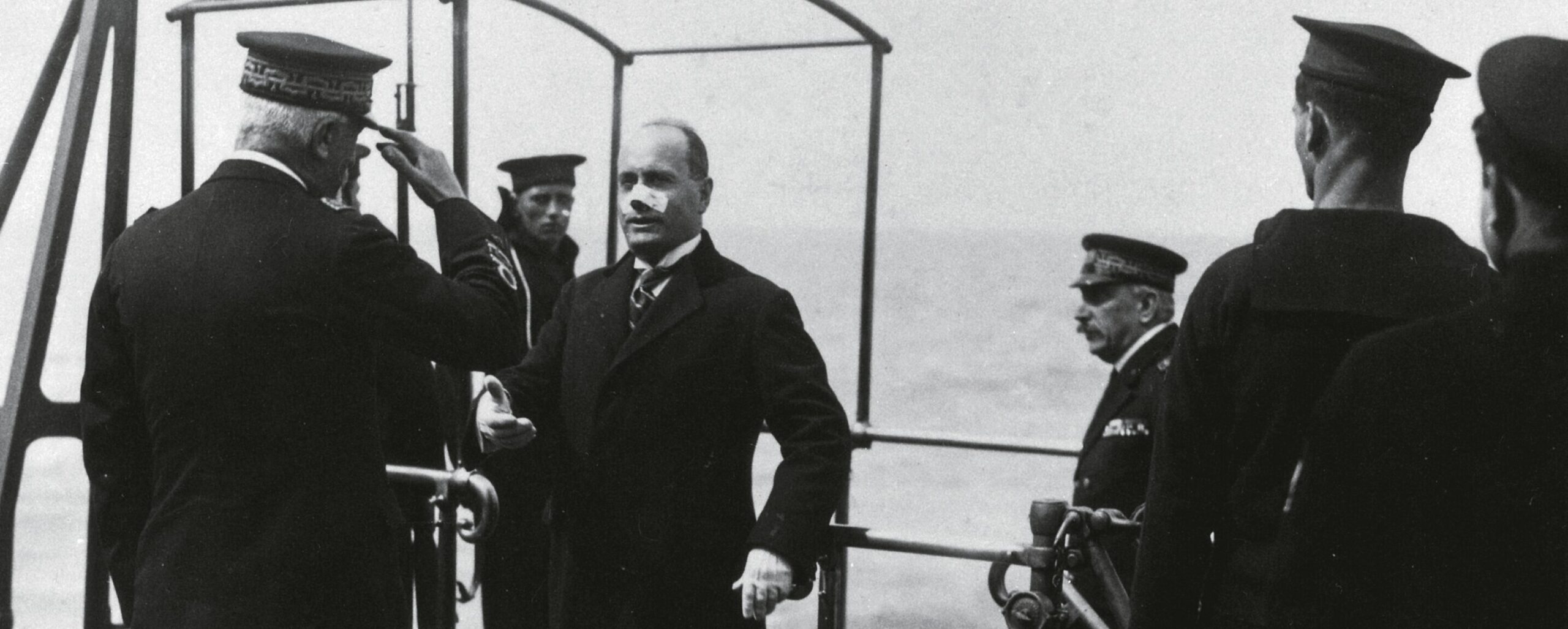
She had arrived in Italy. She had even sophisticated studies behind her but her head was in turmoil, asking her to create something sensational. In the midst of the crowd, without accomplices and without planning a plan, he fired a point-blank shot at the Duce who was descending the steps of the Capitol after inaugurating a surgery congress. Sixth sense? Just as the gunshot went off, Mussolini suddenly raised his head to greet a group of university students who were cheering him. The bullet, instead of opening his head, grazed the tip of his nose. There was no need for emergency room. The best specialists looked after him and when he reappeared – dark jacket and bowler hat – it was understood that the doctors had not bothered to save on the gauze.
Mussolini appeared protected from the afterlife even when Gino Lucetti (11 September 1926) threw a bomb into his car. The attacker was an anarchist from Carrara, who fled to France to avoid fascist reprisals and returned clandestinely to “do justice”.
He believed that the best place for the attack was the Porta Pia square, at the intersection of Via Ancona and Corso Italia. The preparation had been sloppy and the weapon inappropriate. The bomb exploded in time, which means that, with that variable, it was necessary to take into account the speed of the car arriving and the speed of the device heading towards it. He had the same chances of success as someone who wanted to win the New Year’s lottery with a ticket. The bomb bounced off the vehicle and exploded a few seconds later on the ground, injuring some passers-by.
Nor did the young Zamboni’s attempt in Bologna (31 October 1926) work. The attacker came from a family of anarchists who called their son Atheist but who, at school, to avoid an explicitly anti-clerical appeal, enrolled him by adding an “year” to make him become Antaeus.
The Duce was in the car alongside the mayor Umberto Puppini. In via Indipendenza, at the entrance to the avenue towards the station, a revolver grazed Mussolini’s collar. A matter of seconds was enough for the attacker to be lynched. Italo Balbo emerged from the crowd of fascists with a dagger dripping blood. «Duce» he shouted towards him «justice has been done!».