The Milan Cortina 2026 Olympics become a development accelerator for the Alpine territories: strategic electrical infrastructures in Livigno, Arabba and Cortina: underground networks, innovative distribution cabins and a new energy model that will remain beyond the Games
The Milan Cortina 2026 Olympics and Paralympics are not just a major sporting event, but a testing ground for infrastructure, territories and long-term vision. As often happens in major international events, the most important legacy is not what is seen live on television, but what remains afterwards. Enel’s plan fits into this scenario, which has transformed the Olympic need into a structural opportunity for development for some of the most delicate and strategic mountain areas in Italy.
The objective was not only to guarantee energy to the Games facilities, but to permanently strengthen the quality, safety and resilience of the electricity grid in complex territories, with a high tourist and naturalistic vocation, intervening in record times and with cutting-edge technological solutions.
Livigno, the highest primary cabin d‘Italy
In Livigno, at 2,177 meters above sea level, Enel has built the highest primary substation in Italy. A symbolic and substantial work at the same time: not only an infrastructure serving Milano Cortina 2026, but a strategic node for the entire Alta Valtellina.
The cabin is completely underground, dug into the rock and integrated into the Alpine landscape, with particular attention to reducing the visual impact and returning the mountain environment to its original form. A choice that speaks well of the philosophy of the intervention: advanced but invisible technology.
Inside the cave there are two high-power transformers of 40 MVA each. The entire system is digitized and can be managed remotely, allowing real-time interventions on the network and timely control of energy flows. However, the primary cabin is only the heart of a much larger project.
Around this central node, E-Distribuzione, an Enel Group company, has laid 60 kilometers of new underground lines, demolished 18 kilometers of overhead lines, and built 16 secondary substations: four completely new and twelve modernized with technologically advanced components. An intervention that affects around 20,000 customers including homes, commercial activities and tourist facilities.
All completed in just two years, from design to commissioning, thanks to close collaboration between companies, local institutions and regional administrations.
Arabba and Cortina, a network designed to resist
The second major chapter of the plan concerns Arabba, where E-Distribuzione has built a second primary substation from scratch. Here too, the attention to the context is evident: architecture inspired by local huts, technical surfaces covered by a grassy lawn during the summer season, fences reminiscent of mountain fences.
Around the primary cabin, in the Cortina area, 13 secondary cabins were built and eight others were upgraded. Over 26 kilometers of medium voltage lines were laid and approximately 30 kilometers of overhead lines were decommissioned. Much of the electricity grid is now underground, with clear benefits in terms of safety, visual impact and resistance to extreme climatic events, from snowfall to summer storms.
A key element is redundancy: each supply point is served by at least two power lines, guaranteeing continuity even in the event of faults. A crucial choice in territories where the interruption of service can have immediate effects on residents, tourism and essential services.
A paradigm shift for Olympic facilities
For the first time, the Olympic facilities will be powered directly by the electricity grid, overcoming the traditional model based on temporary generators. A paradigm shift that marks a leap in quality also from the point of view of sustainability and efficiency.
The powers at play are anything but marginal. The Cortina bobsleigh track alone requires around 4.5 megawatts to keep the ice temperature constant and ensure night lighting. Added to this are the ice stadium, the curling field, the Olympic village and all the related infrastructures: logistics areas, media spaces, kitchens, medical centers.
A complex energy ecosystem, which must function without margins of error.
Working in the mountains, against time
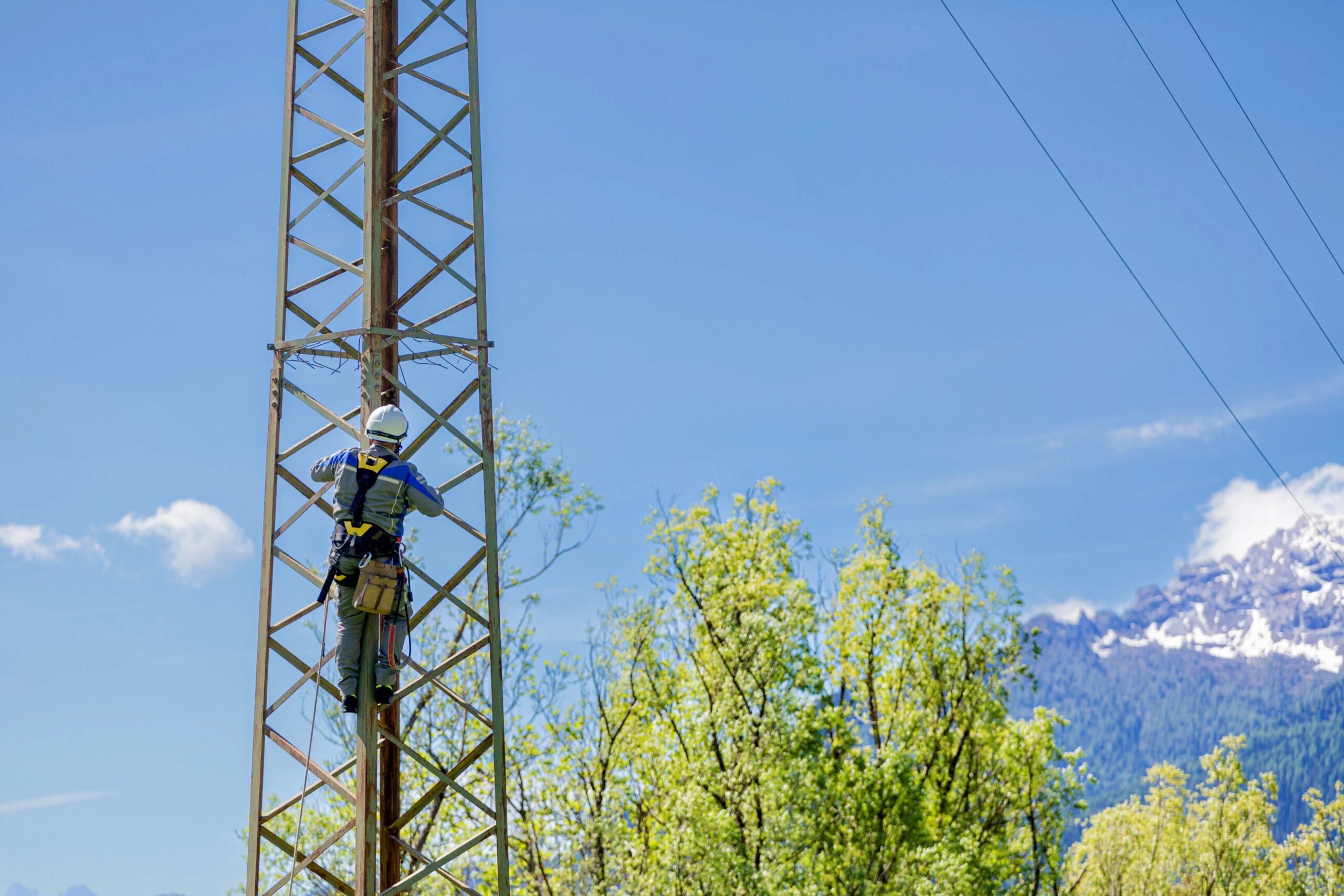
The environmental conditions made the project even more challenging. Working at high altitude means concentrating activities in a few months of the year: winter is dominated by snow, summer by tourism. The transport of materials and equipment required special vehicles and, in some cases, the use of helicopters.
A logistical and engineering challenge faced with tight organization and extraordinarily fast execution times.
THE‘inheritanceof the Games
Between Livigno, Arabba and Cortina, the result is a more powerful, safe, resilient and sustainable electricity grid. An infrastructure designed for the Games, but designed to last well beyond 2026.
Milano Cortina thus becomes not only a global sporting event, but a laboratory of intelligent infrastructure and territorial development. And for the Enel Group, called to guarantee energy with continuity and safety in one of the most complex scenarios in Europe, a truly champions’ effort, with record speed.