Six square meters built with rice waste, two hives and propolis instead of pollutants. Hexa is the architecture that heals
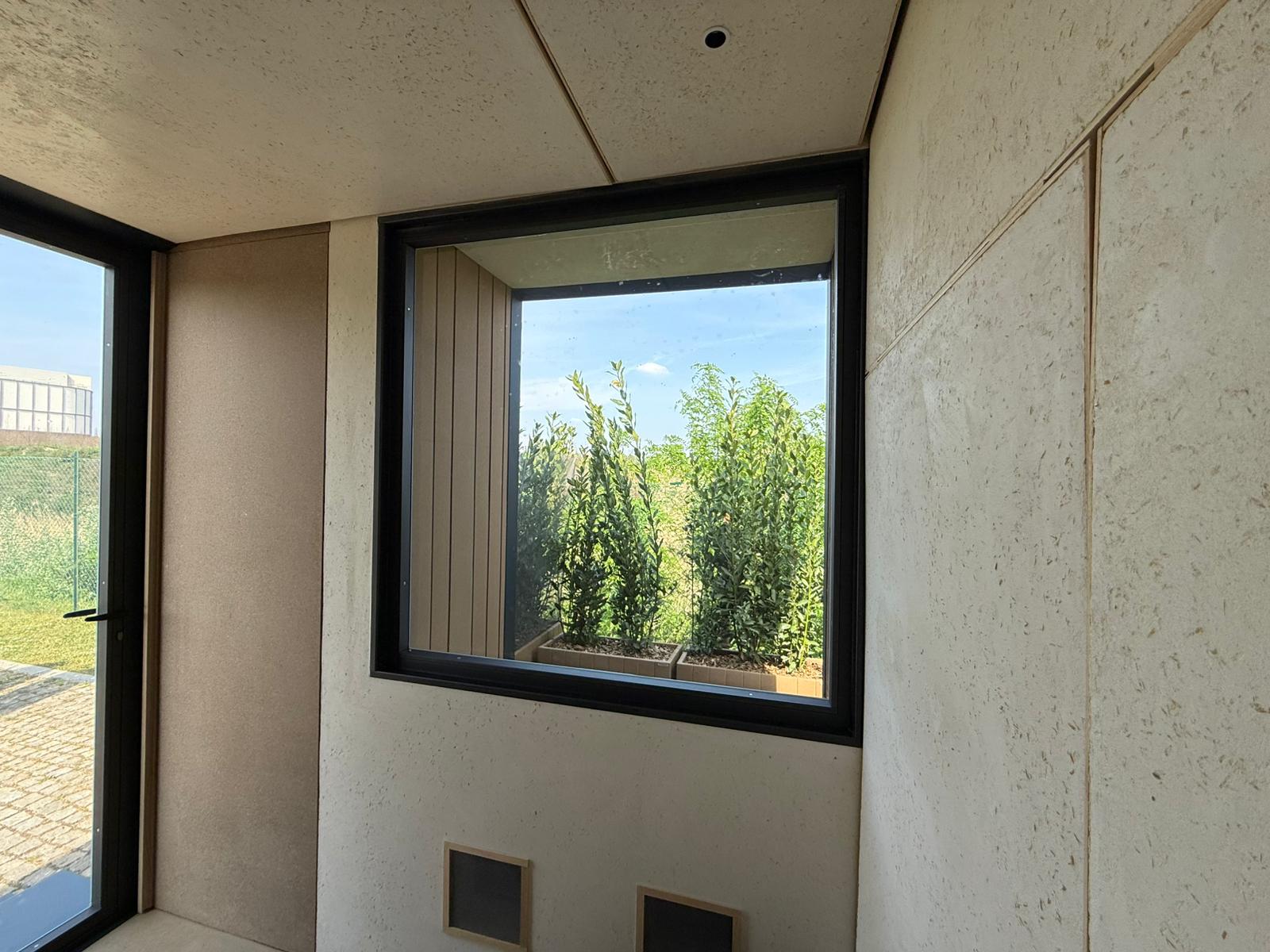
A thin thread connects a rice field in the Piedmont plain to a beehive in the middle of Milan. Tiziana Monterisi, architect and CEO and Co-Founder of Ricehousethat thread transformed it into a project: Hexa, a six square meter micro-architecture built entirely with waste from the rice supply chain, capable of sequestering 2.29 tons of CO2 and becoming saturated with propolis thanks to the connection with two live hives.
It is not an exercise in “green” style, nor is it yet another “low environmental impact” house. Hexa is something deeper: a space that it doesn’t just reduce the damage, but provides a benefit. To the environment, to the city, to the people who enter it. Inaugurated in Milan on 17 April 2026, at the UpTown Cascina Merlata Park, with the participation of the green councilor Elena Grandi and Giuseppe Manno, founder of Apicoltura Urbana, the project was born from the meeting between two realities that share a common vision: building something for the future.
Monterisi tells how the project took shape and substance: from the discovery of straw and rice husks in eighteenth-century Piedmontese farms, to the challenge of industrializing agricultural waste until it became a certified building material, an alternative to conventional construction. A long journey, made up of research, failures and the belief that green architecture should not remain a niche.
From agriculture to construction
As the CEO of Ricehouse explains, we must start from the concept that “Italy is the leading European producer of rice”. Every year, from its processing, they are generated more than two million tons of agricultural waste. For decades burned in the fields or disposed of. Ricehouse collects them and transforms them: insulating panels, closing sheets, bricks, plasters. Thirty certified products, usable by any bricklayer without the need for masks, without health risks.
Over the last fifty years, homes have been filled with invisible and harmful pollutants. Hexa goes in the opposite direction. And it does so with a material that «exists in the Piedmontese farmhouses of the eighteenth century, reinterpreted with the technologies of the present» to meet the needs of contemporary construction.
Because it could be the home of the future
The key word is not “sustainable”, a term that is now worn out and overused. It is “regenerative”. The distinction is substantial. Hexa, in just six square metres, sequesters 2.29 tonnes of CO2: the equivalent of 90 trees planted in that area. As the rice plant grows, it absorbs carbon dioxide. Ricehouse does not burn that waste, but transforms it into construction material, storing that CO2 permanently.
The process is circular on multiple levels. The farmer continues to grow rice, a fundamental food for the world’s population. The waste is not wasted. The building does not emit, but absorbs. And the hygroscopic properties of the husk and straw, rich in lignin and silica, promote healthy indoor air, capturing the carbon dioxide breathed by bees and humans inside the structure.
Urban apitherapy, a treatment for everyone
The most original component of Hexa is its therapeutic function. Apitherapy, a discipline that exploits the products of the hive (honey, propolis, royal jelly, bee venom) for healing purposes, is still not widespread in Italy. Hexa instead aims to bring it to the beating heart of cities.
The two hives integrated into the structure are not decorative, but entirely functional to the micro-architecture. The bees enter, work, produce propolis which slowly saturates the internal air. Anyone who sits inside for 20 minutes breathes in an environment naturally enriched with substances with antibacterial and antioxidant properties. The documented benefits concern the immune system, cardiac function and relaxation.
The model designed for the future resembles that of water houses, but with a further evolution: a cabin in a city park (or even in schools and squares), bookable with an app, accessible to anyone. Not only to the guests of a luxury hotel, but also to ordinary citizens who want to relax after a long and stressful day at work. Furthermore, no building permit would be necessary, because under six square meters the structure is classified as outdoor furniture. Installation times would vary from six to eight weeks from fabrication, with the aim of always having ten units ready for delivery.
Monterisi closes with a reflection that best represents Hexa’s vision: «In such a complicated historical and geopolitical moment, it is important to become more aware that our daily lives, on certain things, with small changes, can instead have a positive impact on the entire community. Today we often just look at the price and forget about the hidden cost: the one about our environment and our health, and that of those who produced it.”
It is possible to live the experience by booking at the following link: https://hexa.ricehouse.it/cascina-merlata?utm_campaign=Totem%20cascina%20merlata&utm_source=Totem