No longer just a place to live, but a space that tells who we are. From sustainability to multifunctional furnishings, Anne-Marie Gaultier reveals how homes and the desires of those who live in them are changing.
In recent decades the house has profoundly changed its meaning. From a functional place intended mainly for domestic life, it has transformed into a fluid space that reflects identities, aspirations and new lifestyles. Today the walls of the home welcome work, free time, socializing and the need for well-being, while design is called upon to respond to increasingly complex needs, including personalization, sustainability and versatility.
We talked about it with Anne-Marie Gaultier, Executive Brand Director of Maisons du Monde, to understand how our homes are changing and what trends will influence the way we experience spaces in the coming years.
In thirty years of history, how has your idea of home changed and what were the most significant turning points for the brand?
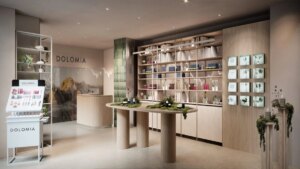
Over the last thirty years, the role of the home has changed radically. In the nineties it was a static space, to be furnished according to rather defined codes; today, however, it is no longer just a place to live or a simple address, but a true extension of the personality, a mirror of one’s lifestyle. Consequently, customer expectations have also evolved: they are no longer looking for standardized furnishings, but objects capable of telling a story and adapting to different contemporary ways of living. Without ever betraying the DNA of the brand – made up of inspiration and accessibility – we have transformed our model to respond more and more precisely to these new desires and needs. The most significant breakthrough was the ability to evolve from a network of physical stores, built over time, to a complete omnichannel ecosystem. The expansion of digital and the launch of the Marketplace have represented fundamental milestones, allowing us to offer unprecedented choice and increasingly personalized services, such as interior design consultancy. Our stores have also transformed: today they are no longer simple points of sale, but places of experience and inspiration, designed to accompany the customer on an immersive journey into the world of the brand.
The concept of democratic design is often associated with your offering. Today, what does it really mean to make design accessible without sacrificing quality and aesthetic research?
Accessibility has always been at the heart of Maisons du Monde’s DNA. From the beginning, the brand’s mission has been to democratize design, starting from a precise belief: living in a home capable of representing and inspiring those who live in it should never be a question of budget. For the brand, beauty must be accessible to everyone. But accessibility has never meant — and will never mean — sacrificing style or quality. Each team works with this objective: to offer products at a fair price without compromising aesthetic research, design care and durability over time. From Maisons du Monde’s in-house designers, who create original and recognizable collections, to the quality teams committed to constantly improving the durability of the products, to the buyers who build strong and lasting relationships with suppliers, every step of the process is designed to find a balance between inspiration, durability and accessibility.
Maisons du Monde has always proposed different styles, from boho to industrial to the revisited classic. How do you build a coherent identity while maintaining this variety?
The multi-style approach has been part of Maisons du Monde’s DNA for over thirty years. In a sector where many brands choose to identify with a single aesthetic universe, the brand decided from the beginning to celebrate diversity, bringing the spirit of travel and cultural contamination into homes. Collection after collection, Maisons du Monde has built a language capable of crossing different worlds – from classic to contemporary, up to ethnic influences – offering each customer the possibility of finding something that truly reflects their personality, regardless of age, taste or furnishing style. The common thread remains the idea of travel as an aesthetic and sensorial experience. Each collection is inspired by a destination, but, just as happens between different cultures, it is designed to naturally dialogue with the others. Shared color palettes, transversal materials and recurring details create connections between styles, giving life to a coherent but never rigid whole. More than proposing predefined environments, Maisons du Monde offers objects with their own identity, capable of coexisting harmoniously in the domestic space. It is this freedom to combine, mix and reinterpret elements that makes the brand’s DNA unique: providing inspiration without imposing rules, leaving everyone the possibility of building a home that authentically reflects their own history and way of life.
Design today increasingly dialogues with sustainability. How has this theme influenced your collections and your production choices?
Reducing the environmental impact of its products has long been one of Maisons du Monde’s central commitments. The brand develops its collections following the main principles of the circular economy: use of sustainable materials, attention to durability, possibility of repair and a design designed to extend the life cycle of objects. Today, 40% of the offer already meets sustainability criteria, thanks to the use of certified and recycled materials or production made in Europe. A path that the brand further strengthened in 2023 with the launch of the “Second Chance” project, dedicated to the sale of products with slight imperfections or customer returns at reduced prices, thus promoting a more responsible and circular approach to consumption. The environmental commitment goes hand in hand with the work of the Maisons du Monde Foundation, which for over ten years has supported organizations involved in the protection of trees and forests around the world, intervening in the areas where the need is most urgent. Since 2015, 236,000 hectares of forest have been preserved and over 7.5 million trees planted. Alongside environmental sustainability, the brand also carries out a concrete social commitment, supporting women in fragile situations through the creation of welcoming and comfortable living spaces: over one hundred environments have already been furnished as part of these solidarity projects. For Maisons du Monde, in fact, a truly beautiful home is a home that respects people and the planet at the same time.
The home has become a hybrid space, between work, relaxation and socializing. How has this transformation affected your furnishing proposals?
The home has become the new center of gravity of contemporary life. Today it is, depending on the moment, an office, a gym, a restaurant, a place for sharing but also a personal refuge. A fluid space, which continuously transforms following daily rhythms and needs. To respond to this evolution of living, Maisons du Monde has developed increasingly versatile and dynamic furnishing solutions: dining tables also designed to accommodate work moments, folding desks, modular sofas designed to offer maximum comfort and easily adapt to the different uses of the space. The objective is no longer simply to propose furniture, but to imagine real lifestyle solutions, capable of accompanying the different functions of the home and the many moments of the day.
For summer 2026, what are the guidelines of your proposal in terms of colours, materials and atmospheres, and how do they reflect the new ways of inhabiting spaces?
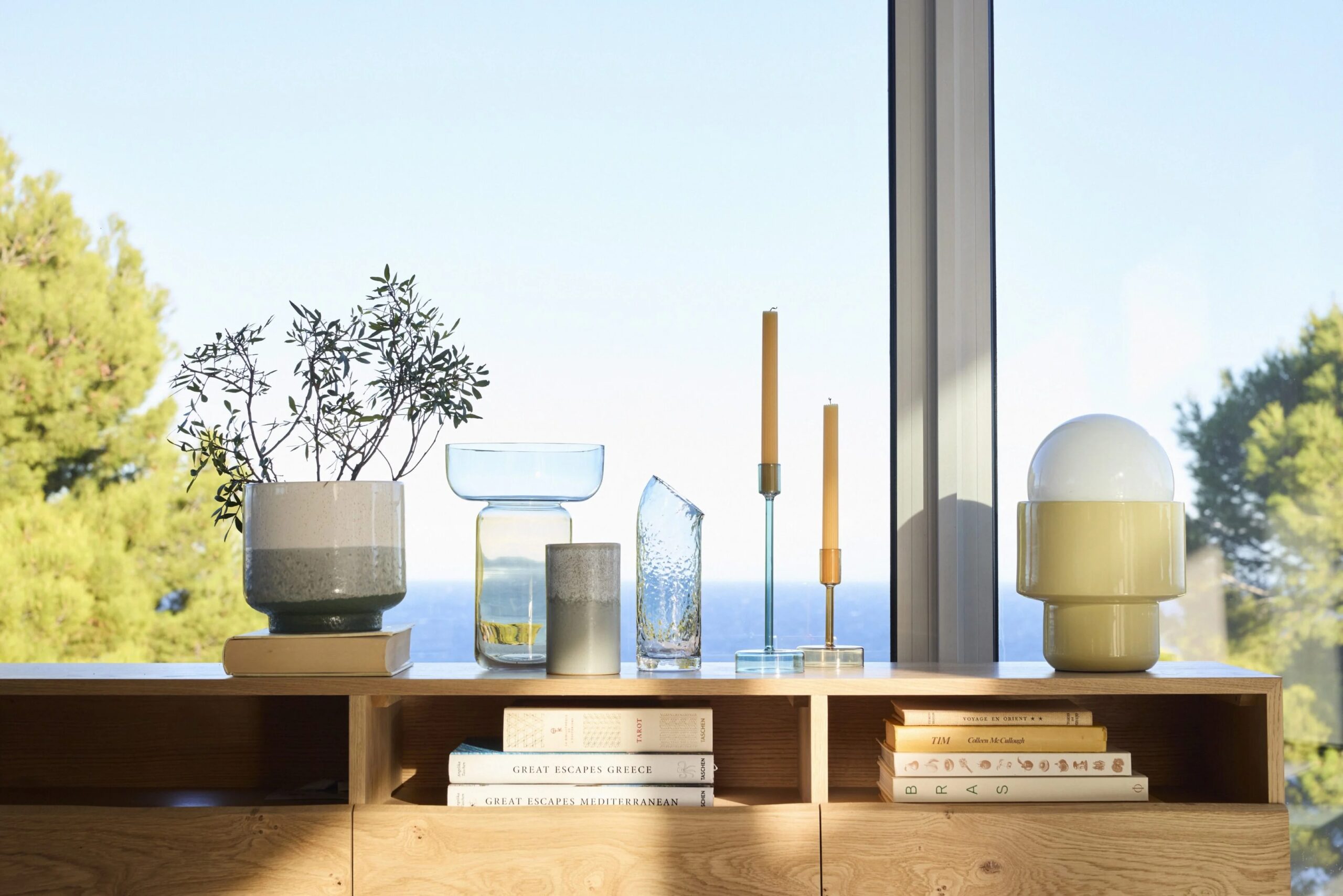
The Spring-Summer collection was conceived as a real summer trip. In an increasingly fast-paced and often tension-filled world, this season translates into an invitation to indulge in a parenthesis of lightness, softness and escape. The collections thus guide a journey through different imaginaries and destinations: from Ethiopia, evoked through raw and authentic materials, to winter gardens inspired by nineteenth-century greenhouses and lush nature, up to Milan with a proposal with a strong Art Deco character, and again to the South of France, recalled by shapes inspired by the Sixties and Mediterranean tones. The highlight of the season, however, is the exclusive collaboration with the French designer Sarah Poniatowski. The 31 pieces born from this meeting are a tribute to travel and Moroccan craftsmanship, capable of bringing accents of color and plays of light into domestic spaces – internal and external – that transform the atmosphere with natural immediacy.