A shared strategy emerges from the International Tourism Forum: promoting food and wine tourism, strengthening urban security and supporting small municipalities with new resources
From the stage of the third International Tourism Forum, which focused on the theme of undertourism and the valorisation of internal areas, the synergy of the Ministry of Tourism with that of Agriculture and the Interior was announced on Saturday. Among the initiatives to support the internal territories, PDO tourism is also included, without forgetting that it is essential to guarantee the safety of the major tourist cities.
Tourism and Italian PDO excellences
There is no doubt that Italian Dop/Igp products constitute an important driving force for enhancing the internal areas and villages, attracting more and more visitors. And in this regard, the Minister of Tourism, Daniela Santanchè, announced: «We are ready to launch, together with Minister Lollobrigida, a new initiative that enhances tourism in its union with the PDO excellences of Italy». Furthermore, “the recent UNESCO recognition of Italian cuisine” could have a direct impact on tourist flows. «Over the space of two years», declared Santanchè, there could be «an increase in tourist flows of up to 8%, equal to approximately 18 million additional overnight stays». Both the Ministry of Tourism and that of Agriculture agree on the fact that «enhancing food and wine specialties means discovering local productions, rural villages and regional culinary traditions, creating a strong link between catering and the valorisation of small destinations».
In a video message shown during the Forum, the Minister of Agriculture, Francesco Lollobrigida, recalled that our country “boasts an absolute record in Europe, with 897 certified agri-food products”. And “the production value of the Dop economy is 20.7 billion euros, continuously growing”. Furthermore “it contributes 19% to the total turnover of the sector, with exports reaching 12 billion out of the 70 that our nation is able to guarantee”.
A part of the tourist tax will be allocated to video surveillance
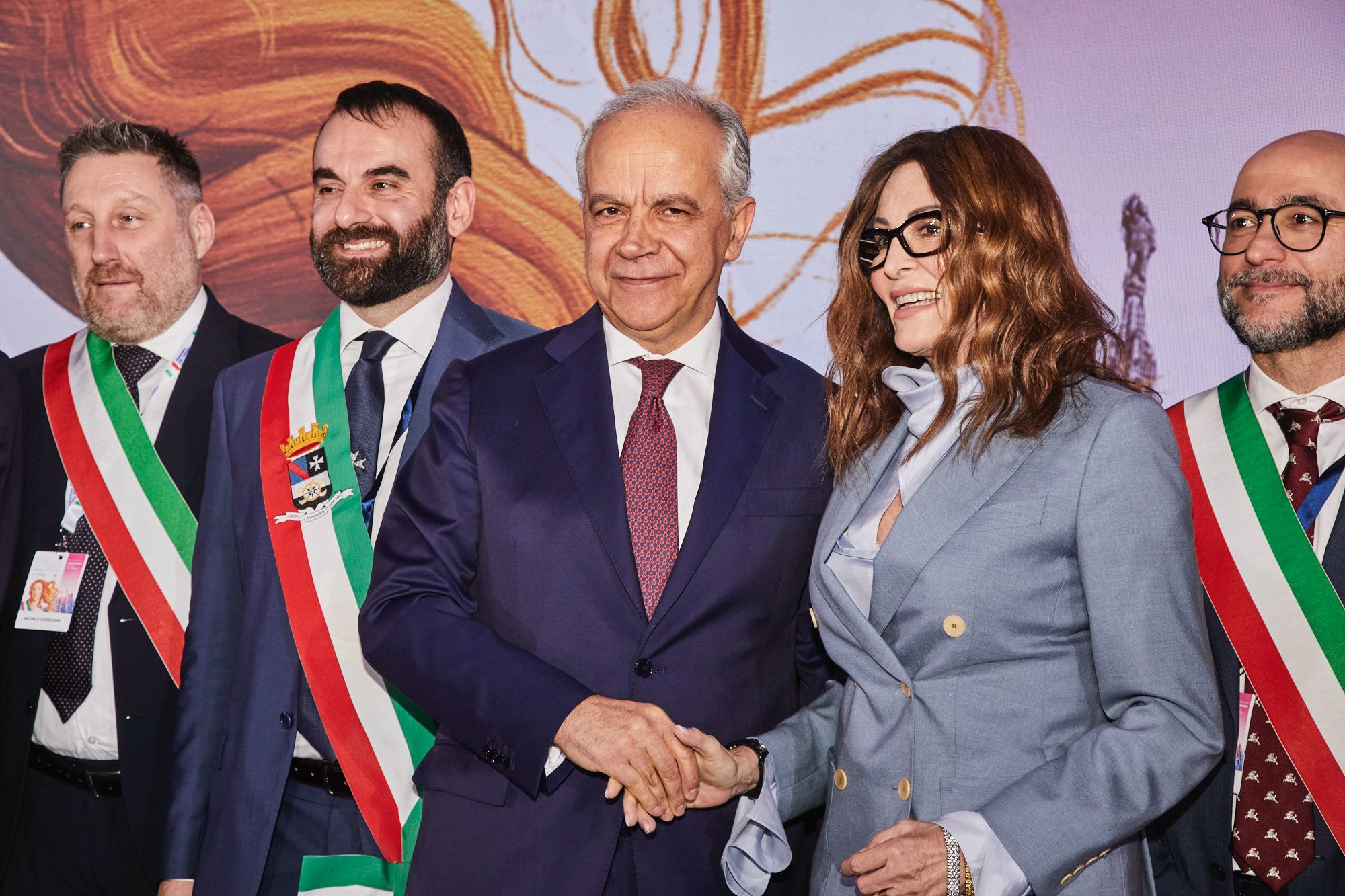
The safer a place is, the greater its attraction for tourists. With the aim therefore of increasing security, Santanchè, alongside the Minister of the Interior, Matteo Piantedosi, announced: «We are working with the Minister of the Interior, to include in the new decree a rule that allows Municipalities to allocate part of the proceeds of the tourist tax to finance the installation of video surveillance systems». The measure fits into the context of the “targeted use of public resources to guarantee the safety of cities”. Piantedosi explained that: «By the end of the month or the following week we will have to get the decree approved by the Council of Ministers». And in the framework of the Forum, the two ministers, together with the mayors of the participating municipalities, signed the Amalfi Charter aimed at developing sustainable tourism. With the establishment of the inter-institutional table, coordination will be strengthened to manage tourist flows in a safe and sustainable way, protecting the most exposed places.
The centrality of small towns in EU projects
The Executive Vice President of the European Commission, Raffaele Fitto, was present at the Forum via video link to illustrate the European Union’s next plans relating to tourism, with particular attention to the valorisation of villages. With the tourism sector having become a “central subject of the Commission”, Fitto declared that “in the coming weeks, a European tourism strategy will be launched”. He then recalled that «in the Pnrr plan, there is an allocation of one billion two hundred million euros for small villages which has created attention for those realities that have a greater need to implement choices that can enhance these territories while also diversifying the tourist offer». Recognizing the problem of “depopulation in internal areas”, given that “three quarters of European citizens live in large urban areas”, he announced that in the coming months “the Right to Stay strategy” will be approved to strengthen “rural and internal areas”.
«Tourism must be considered as an industry»
The president of Confindustria, Emanuele Orsini, during the video link, said he agreed with the proposals put forward by the Minister of Tourism, “from fiscal activity to training”. In particular, it is important “to be able to aggregate our businesses” also because tourism “cannot be considered just services, but must truly be considered as an industry in all respects”. Among the priorities, therefore, is the creation of “an industrial plan for tourism”. Orsini then also expressed his opinion on Mercosur: arguing that “in a geopolitical moment like this Europe must demonstrate its compactness”, he added: “The capacity for reciprocity is fundamental and closing oneself is short-sighted”. Among other things, the president of Confindustria also shared his expectations for the near future: «I expect that after Mercosur there will be India and increase the markets of Saudi Arabia because we can be attractive there too».
Support for small municipalities
The president of the Anci, as well as mayor of Naples, Gaetano Manfredi, underlined that tourism «is an important lever to keep alive the centers that today suffer from depopulation phenomena and the loss of young people» because «tourism means bringing economic activity». Furthermore, many small municipalities “are connected to large food and wine deposits” and are also the land of origin of many foreign tourists, which is why root tourism should be “fuelled”. However, he recognized that it is necessary both to “create a system of services that allows” these territories to be “accessible” and to strengthen “the administrative culture of these places which have structures reduced to a minimum”. In this regard, Minister Santanchè recalled that small municipalities often “do not have the human resources even to participate in a tender”. Precisely for this reason he highlighted the help that the Ministry of Tourism is providing to these territories: «We have made resources available, in the latest budget law, to help human resources with skills».