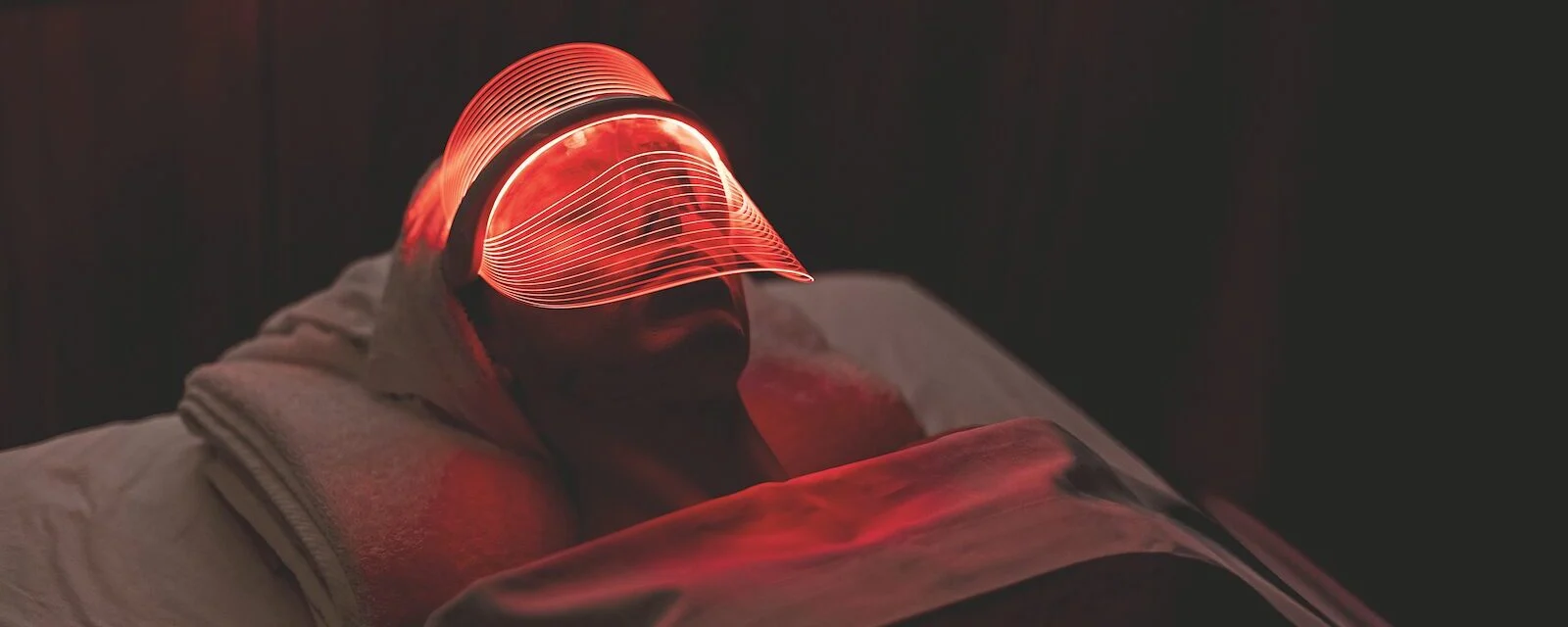
From light masks to clinics: Red Light Therapy conquers well-being. Here’s what the science says and why Hollywood stars are using it
From dermatology to gyms, from wellness centers to home living rooms: a technology once confined to the margins of medicine is gaining space in the new wellness ecosystem. It’s there red light therapywhich promises to improve the quality of the skin, accelerate the muscle recoveryreduce inflammation and even slow down the signs of aging.
It is a form of photobiomodulation which uses specific wavelengths of red light. Historically used in the medical and physiotherapeutic fields, it is now experiencing rapid “consumerisation”: no longer only in specialist practices, but increasingly widespread through home devices – LED face masks, body panels, hats and helmets, portable devices – which have become a symbol of do-it-yourself wellbeing. There Food and drug administration (Fda) has approved several red light devices for beauty and personal care, for hair regrowth and for home anti-aging treatments, marking a key step towards mass diffusion. Celebrities are obsessed with it.
Luminous biohacking between algorithms and laboratories
The global market, today around 533 million dollarsis destined to double by 2033. Medicine is not the main driver, but aesthetics, which represents around 60% of the sector: wrinkle reduction, improvement of skin texture and acne treatment are the most widespread promises. Also contributing to driving this growth are social media: on TikTok, content dedicated to red light therapy have surpassed tens of millions of views. A technology that therefore grows both in laboratories and in algorithms.
But what does science really say? «At the basis of photobiomodulation is the action of light on mitochondriathe energy centers of the cells”, he explains Leonardo Longoendocrinologist and director of the Institute of Laser Medicine in Florence. «Red and near-infrared wavelengths activate biological reactions: in healthy cells they increase energy production, in damaged ones they favor rebalancing processes or, in the most serious cases, their elimination, paving the way for regeneration». This mechanism translates into concrete effects: collagen stimulation, tissue regeneration, reduction of inflammation.
Not surprisingly, the therapy is already used in dermatology and it is in sport that the scientific consensus appears most solid with several studies highlighting benefits in the reduction of musculoskeletal pain and healing. It is fundamental, however, to distinguish between technologies: between spontaneous photobiomodulation with lamps, LEDs, pulsed light, diodes, and laser photobiomodulation. “THE laser they allow precise dosing and directed radiation, while LEDs and lamps are less controllable”, he underlines Longo.
From skin care to new neurological frontiers
«Spontaneous red light therapy is especially useful in the psychiatric field, for asthenia, anxiety, depression, and as an anti-inflammatory for dermatitis and abrasions, as well as for glucose metabolism. With lasers, however, the field expands to rheumatic diseasesto sports traumatology, to dermatology to treat acne, ulcers and scars and in neurology to treat brain and spinal injuries.” Early studies conducted on patients with dementia also showed significant improvements in cognitive function.
Meanwhile, the industry accelerates: increasingly sophisticated devices, multi-wavelength systems, wearable and digital integrations for personalized treatments. An evolution that reflects growing demand, but also raises questions. The risk is that the market runs faster than science. “There photobiomodulation it is a consolidated technique for various indications, we have been using it for example in diabetes since the 1990s, but research is proceeding slowly and the risk that trade will outstrip evidence is real, especially in aesthetic medicine”, he warns Longo.
«Home devices represent the future, provided that truly effective tools are developed. The potential is wide: from pain management to chronic pathologies, up to complex applications such as neurological lesionsstill little explored”. In this scenario, red light therapy moves on a thin border: between therapeutic innovation and the construction of a new narrative of well-being. From the Stanford Medicine at Harvard Health, up to the analyzes of social trends, the consensus is increasingly clear: the red light is not a passing fad, but seems to be a technology destined to grow. The real challenge will be to distinguish what is already clinically solid from what remains, at least for now, a promise.