In the Middle Ages there were castles, in the modern era there are large hotels. In fact, looking at the majesty of certain buildings intended to welcome tourists and travellers, one has to say that the comparison is quite apt.
Even the style and rituals of luxury hotels, approved throughout the planet, and of an unmistakable Swiss and British style, refer to the protocols of ancient nobility. Italy, due to the grand tour already in vogue since the sixteenth century (Montaigne traveled among the ancient beauties of the Peninsula), is full of dream hotels, in pleasant and spectacular places, sea or lake coasts, urban centers, lush gardens.
A book published by Il Mulino, written by Stefano Pivato, tells of its birth, glories, decline, sometimes resurrections. It’s called Going to Grand Hotel: a sort of Baedeker – the brand at the origin of all the guides – to move in the present with an eye on the past. We no longer see, perhaps, what struck Federico Fellini: «On the terraces, protected by curtains of dense plants, we could glimpse the bare backs of women who seemed to be made of gold, entwined by male arms in white tuxedos, and a perfumed breeze occasionally brought us syncopated music, languid enough to faint».
The director outlined the Grand Hotel in Rimini, inaugurated in 1908. Today a five-star luxury hotel, with a spa dedicated to the Dolce Vita, the Grand Hotel has been a national monument since 1994. The syncopated tunes, or jazz, still resonate if there are parties, concerts or events. Fellini’s charm remains unchanged: it arouses languid “amarcord” in tourists, even if they are high-spending Americans, not rascals from Romagna who dream of the exuberant breasts of a tobacconist.
Let’s go back to Venice, loved and hated, magnet for restless souls, artists, movie stars. Among the many hotels, the Danieli, of the Statuto Group, owner of some of the most famous luxury hotels in Italy, has great fame. The hotel, which will reopen shortly after a major renovation that preserves its charm, is now managed by Four Seasons. It joins the others of the brand present in Milan, Florence and Taormina, with the San Domenico Palace.
To photograph, with a quick incursion (it will be allowed), the famous entrance staircase, crossed by glittering names: nobles, magnates, singers, actresses, writers. Danieli’s roll of honour, erected in the mid-nineteenth century in the sixteenth-century palace that was the residence of Doge Enrico Dandolo, is as tall as this: Gabriele d’Annunzio, Eleonora Duse, Maria Callas, Greta Garbo, Marcel Proust and a hundred others. It has been the setting for blockbuster films, such as one of the first OO7 (From Russia with Love).
Venice, of course, is not just the Danieli Four Seasons, but the Gritti, on the Grand Canal, also in a doge’s palace, a hotel since 1895. At the Gritti, now part of the Marriott International Group, Ernest Hemingway completed novels (“it takes nothing to write: you just sit down, tap the keys and bleed,” he said).
The gateway to international tourism was the Western Ligurian Riviera, chosen by European aristocracies as early as the mid-nineteenth century, when the lakes, with their milder climate, were the masters in the transhumances of the elite.
In competition with the already established French coast (called the Azzurra with a successful ante litteram marketing coinage) and taking advantage of the recent arrival of the railway, Sanremo, Bordighera, Ospedaletti and Alassio became a destination for “hivernants”, high-class Europeans who wintered in Liguria. To escape in summer: sea bathing is too vulgar, it is never necessary to undress.
Today everything has changed. Liguria, of the West and the East, has not yet found a way to make the sea fruitful in winter, while it explodes in summer. Of those distant glories, of the conversations, of the gallant entanglements, little remains.
Many sumptuous hotels, pioneers in bringing new fashions to Italy, such as tennis, have been transformed into residences, or have been demolished. To get an idea of the golden times, all you need is a cocktail at the Royal di Sanremo, dating back to 1872, now a five-star luxury club in The Leading Hotels of The World. Mobbed by paparazzi during the song festival, he rediscovers his chic calm at other times.
Demanding travelers have never stopped frequenting the lakes, where they have always found an up-to-date welcome. Opposite Isola Bella, on Lake Maggiore, stands the magnificent Grand Hotel des Iles Borromées, to which time, as happens with classy women, gives a patina of further charm. Founded in Stresa in 1863, it was a geopolitical salon for a long time, with kings and ministers of the world at war seeking peace (nothing ever changes…). Among the curiosities, learn about the Russian Grand Duchess who, in 1870, engraved her name on a stained glass window with a large diamond.
How many stories could flow from the silent walls of grand hotels. How many lives and secrets they saw, while the waiters served menus inspired by the genius of Auguste Escoffier, who gave a French imprint to hotel cuisine, which is still decisive today. But in 1913, in the wake of nascent nationalism, some hotels finally proposed a menu of food at least written in Italian.
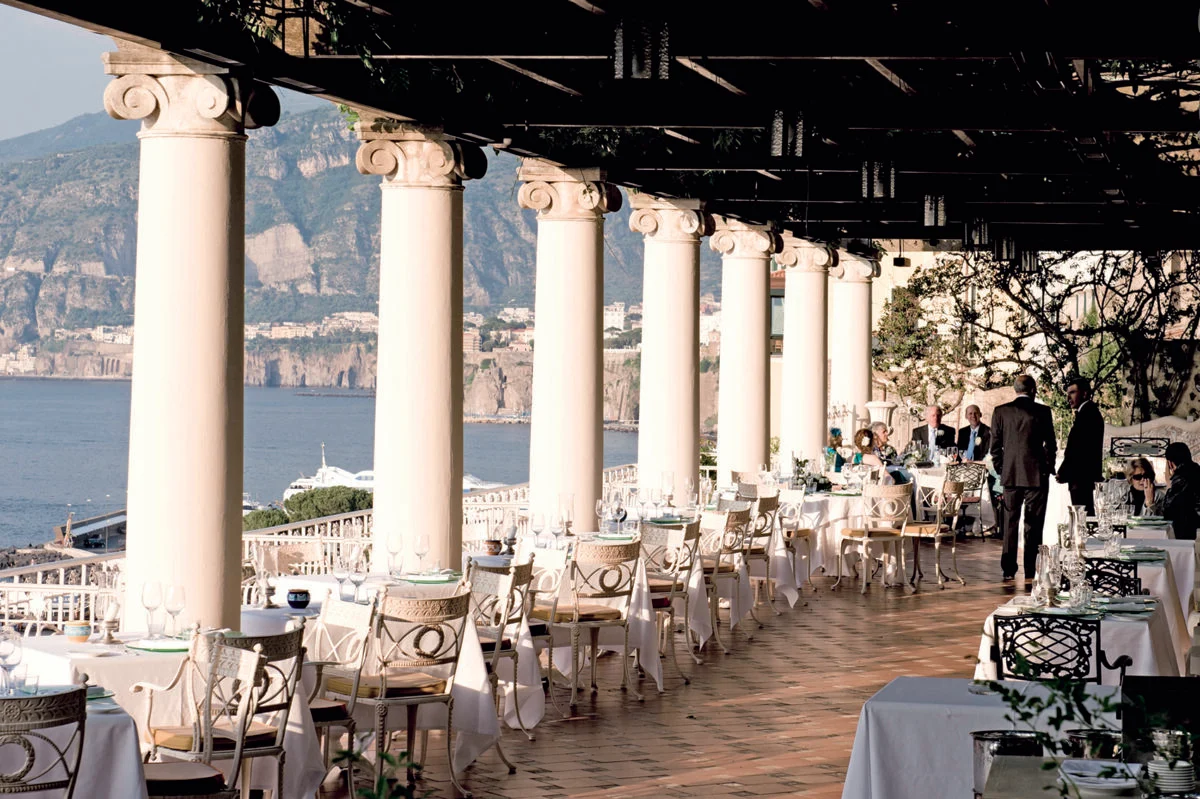
The Hotel de la Poste in Cortina, built in 1804, did not suffer any detriment even from the movie buffs who, starting from Vacanze di Natale, the progenitor of the genre, chose it as a set. And what about establishments like the Grand Hotel Excelsior Vittoria in Sorrento, with the Caruso Suite, which inspired Lucio Dalla? Or the Roman De Russie, or the Milanese Grand Hotel et de Milan, with the room of Giuseppe Verdi, who lived and died there? Or majestic realities such as Villa d’Este, in Cernobbio (154 years old), which hosts the Ambrosetti Forum and the Concorso d’Eleganza of historic and design cars (next: 15-17 May).
Memory chests, Aladdin’s lamps that fulfill wishes: grand hotels are a fascinating world apart. From today a book about history and culture makes them familiar to us.