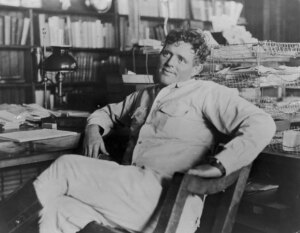
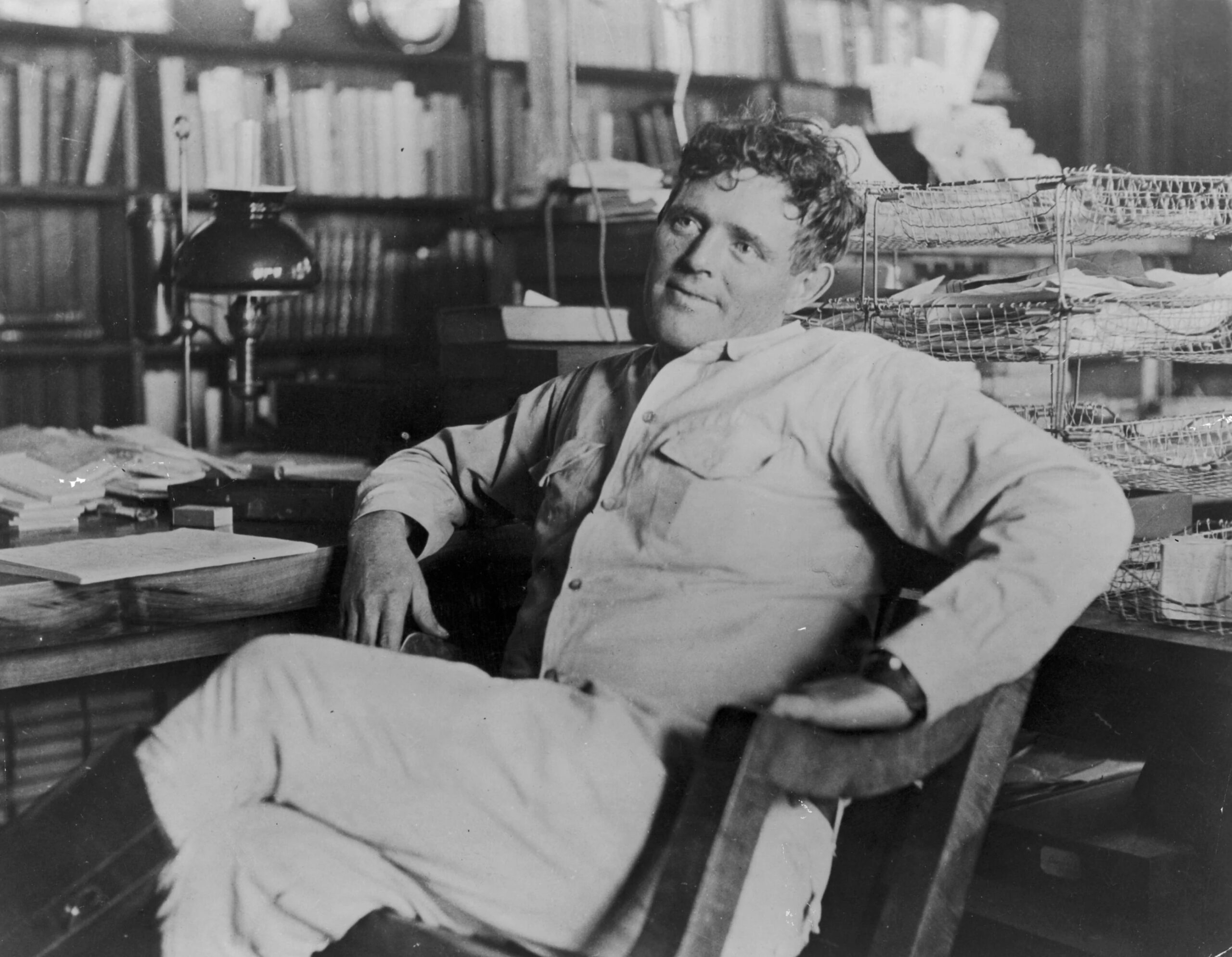
150 years after the birth and 110 years after the death of the American writer, three novels to explore his literary universe, between wild nature, ambition and the desire for freedom.
Sailor, gold digger, worker, journalist and, of course, writer. In his forty years of life, Jack London has collected experiences that would have been enough to fill several existences, transforming them into the raw material of one of the most fascinating literary productions of the early twentieth century. Born in San Francisco on 12 January 1876 and died on 22 November 1916, the American writer is the protagonist of a double anniversary in 2026: 150 years since his birth and 110 years since his death.
Associated above all with adventures among the ice of the Great North, London was in reality an author who could hardly be traced back to a single literary genre. Self-taught, a passionate reader of Darwin, Nietzsche and Marx, he recounted the contradictions of American society, economic inequalities, the struggle for survival and the ambitions of the individual. His production coexists with a fascination for uncontaminated nature, criticism of capitalism and even forays into the metaphysical dimension.
Over a century after his death, his novels continue to question questions that are far from outdated: the meaning of success, the relationship between man and nature and the need to escape the constraints of society. Here are three books to rediscover its surprising modernity.
Martin Eden (1909)
Among Jack London’s most autobiographical works, Martin Eden tells the story of a young sailor of humble origins who, after falling in love with Ruth Morse, a girl belonging to the Californian bourgeoisie, decides to bridge the cultural and social distance that separates them. Through incessant study, he builds a literary education and cultivates the dream of becoming a writer, clashing with the indifference of publishers and the incomprehension of the people around him.
When success finally arrives, Martin discovers how ephemeral the recognition of a society that had until then scorned his talent. Through the events of the protagonist, London questions the American myth of self-made manexploring the contradictions of social mobility and the relationship between talent, fame and money.
The Call of the Wild (1903)
Inspired by the writer’s experiences during the Klondike Gold Rush, The call of the wild It is the novel that established Jack London on the international literary scene. The protagonist is Buck, a dog accustomed to the comforts of a Californian estate who, kidnapped and sold, is transported to the Great North to be used as a sled animal.
Forced to deal with a hostile environment, the brutality of men and the implacable laws of survival, Buck progressively rediscovers the instincts dormant by generations of domestication. His journey thus takes on the value of a reflection on the fragile border between civilization and wild nature.
The Star Wanderer (1915)
Published a year before the writer’s death, The star wanderer it is one of the most singular works of his production. At the center of the narrative is Darrell Standing, a former university professor sentenced to life in prison for murder and subjected to brutal punishments in San Quentin prison. During the endless hours spent immobilized in a straitjacket, man develops a mental technique that allows him to escape physical suffering, reliving existences belonging to other eras.
From antiquity to the Far West, the protagonist passes through centuries of history, taking on different identities in a narrative that intertwines fantastic elements, spiritual suggestions and denunciation of prison conditions.