No longer just beaches, cities of art and mountain paths. Among the trends that are redesigning summer holidays there is also astrotourism, or the desire to reach dimly lit places to witness the most spectacular celestial phenomena.
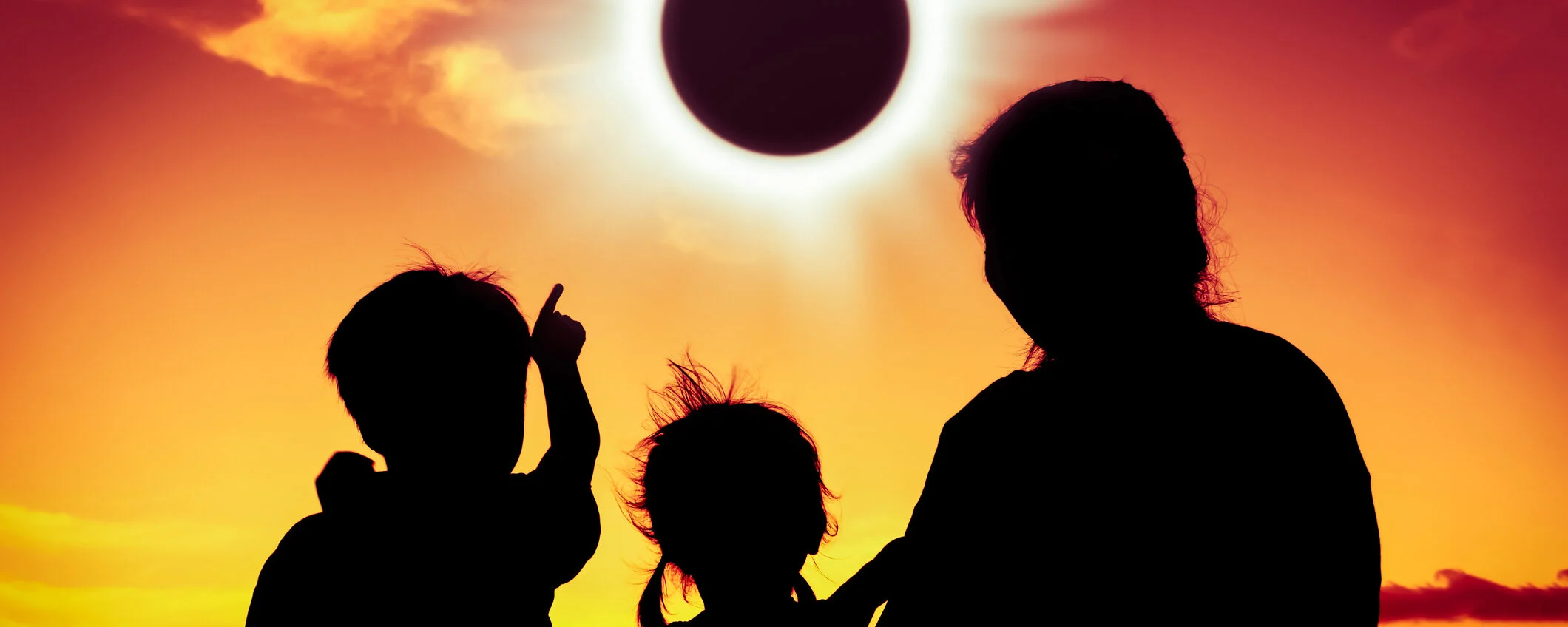
A form of travel that invites you to slow down, move away from the light pollution of cities and rediscover your relationship with the sky. The summer of 2026 will offer a particularly rare opportunity: on August 12, a total solar eclipse will cross Greenland, Iceland, a part of northern Russia, the Atlantic, Spain and a small area of Portugal. In much of Europe, including Italy, the phenomenon will instead be visible as a partial eclipse.
A few hours later it will be the turn of the Perseids. The famous meteor shower, popularly known as “Tears of San Lorenzo”, will reach its maximum on the night between 12 and 13 August. In 2026 observation will be favored by the new Moon, which will leave the sky particularly dark.
An astronomical coincidence that transforms campsites, glamping and structures immersed in nature into privileged observation points.
The “black sun” arrives in Spain
The absolute protagonist of the astronomical summer will be Spain. The band of totality will cross much of the northern half of the Iberian peninsula from west to east, passing through numerous cities and provinces, from Galicia to the Balearics.
The phenomenon will occur in the hours preceding sunset. The Sun will therefore be very low on the horizon and, in some areas, will set while still partially obscured. To observe the eclipse it will be essential to choose a place with a completely unobstructed view towards the west, without mountains, buildings or vegetation covering the solar disk.
The wait has already had an impact on bookings. According to data collected by Pitchup.com, a platform specializing in outdoor holidays, requests for campsites and open air accommodation grew by 327% in Asturias, 300% in Castile and León and 277% in the Valencian Community.
Among the structures selected by the platform to witness the phenomenon there are three located along the trajectory of the total eclipse.
Natura Resorts, the eclipse among the vineyards of Rioja
In the heart of Rioja Alta, Natura Resorts is located on the outskirts of Casalarreina, a medieval village surrounded by hills, vineyards and mountain ranges.
The property offers independent and sustainable villas with a private terrace. The flat terrain and the position along the band of totality allow for a broad view of the western horizon, a decisive feature considering the reduced height of the Sun during the main phases of the eclipse.
The result is a natural observatory immersed in one of Spain’s best-known food and wine landscapes.
Centro de Vacaciones Ligüerre de Cinca, the sky above the Pyrenees
Moving north-east, in the Aragonese province of Huesca, the “black sun” meets the profile of the Pyrenees.
The Centro de Vacaciones Ligüerre de Cinca is located in an ancient medieval village, not far from the El Grado basin. Cobbled alleys, olive groves, vineyards and mountain landscapes alternate around it, in an environment far from large urban centres.
The position offers a suggestive setting to witness the darkening of the Sun and, once the eclipse is over, remain outdoors waiting for the first Perseids.
Camping Regio, between astronomy and history
To combine astronomical observation with the discovery of one of the most fascinating cities in Spain, Pitchup suggests Camping Regio, in the province of Salamanca.
The property is located in Santa Marta de Tormes, along the Tormes River and a short distance from the monumental center of Salamanca. The large flat pitches and grassy spaces allow you to sit outdoors with a good view of the sky.
This area will also be crossed by the band of totality, becoming a possible base for those who want to organize a trip dedicated to the eclipse without giving up culture, architecture and gastronomy.
How to watch the eclipse without risk
Even during an eclipse the Sun cannot be observed directly with the naked eye. During all partial phases it is necessary to use specific eclipse glasses or certified solar filters: normal sunglasses, tinted glasses and improvised tools do not protect the eyes.
Only those who are in the band of totality can temporarily remove protection in the brief moment in which the Moon completely covers the solar disk. In Italy, where the eclipse will only be partial, protection must be maintained for the entire observation.
In Italy the show continues with the Perseids
From our country the eclipse of August 12th will be visible only partially and in different ways depending on the geographical position. However, the main show will arrive during the night, when the sky will be crossed by the Perseids.
The meteor shower is active from the second half of July to the end of August, but the best time to observe it will be the night between 12 and 13 August. In ideal conditions and away from light pollution, the theoretical rate could reach around one hundred meteors per hour, although the number actually visible will depend on the quality of the sky, the horizon and the observation point.
No telescopes needed. The advice is to choose a dark area, leave your eyes at least twenty minutes to get used to the darkness and observe a large portion of the sky, possibly from late evening until the hours before dawn.
Pitchup has identified three Italian structures immersed in nature where you can spend the night of shooting stars.
Forest Camp Val di Gresta, sleeping with the roof open
In the heart of the Trentino woods, Forest Camp Val di Gresta brings the concept of an astronomical observatory directly inside the accommodation.
In fact, the structure has a Starsbox, a small wooden shelter with a fully opening roof. Guests can thus observe the sky while lying in bed, surrounded by the silence and darkness of the Alpine woods.
An essential and suggestive solution, designed to eliminate the distance between the traveler and the celestial landscape.
Podere del Vescovo, the stars above the Langhe
In Piedmont, the Podere del Vescovo Country House rises among the hills of the Langhe, in a dominant panoramic position.
The farmhouse, in the past used as a summer residence by the bishops of Asti, also houses a mini chalet characterized by large glass surfaces. A solution designed to maintain continuous contact with the landscape and the night sky.
Far from the most intense lights of the inhabited centers, the farm allows you to observe the meteors surrounded by the soft profiles of the hills and vineyards.
Villa Yucca, a glamping site between the Apennines and the Adriatic
The latest proposal is located in Abruzzo, just outside the village of Torano Nuovo, in the province of Teramo.
Villa Yucca is a glamping site surrounded by vineyards, in a panoramic position suspended between the Apennine mountains and the horizon of the Adriatic Sea. The wooden pod offers an intimate refuge in the heart of the countryside, where the absence of city lights makes it easier to distinguish even the dimmer trails.
A destination that combines the silence of nature, the rural landscape and the possibility of spending a night gazing up at the sky.
The campsite becomes a natural observatory
Astrotourism does not necessarily require large expeditions or professional tools. Often it is enough to choose the right place: a campsite far from the cities, a terrace open to the horizon or a small refuge immersed in the woods.
The total eclipse on August 12 and the subsequent peak of the Perseids make summer 2026 an ideal time to experience this new form of travel. An opportunity to sleep under the stars, rediscover the authentic darkness of the night and discover how spectacular the sky can be when the city lights finally go out.