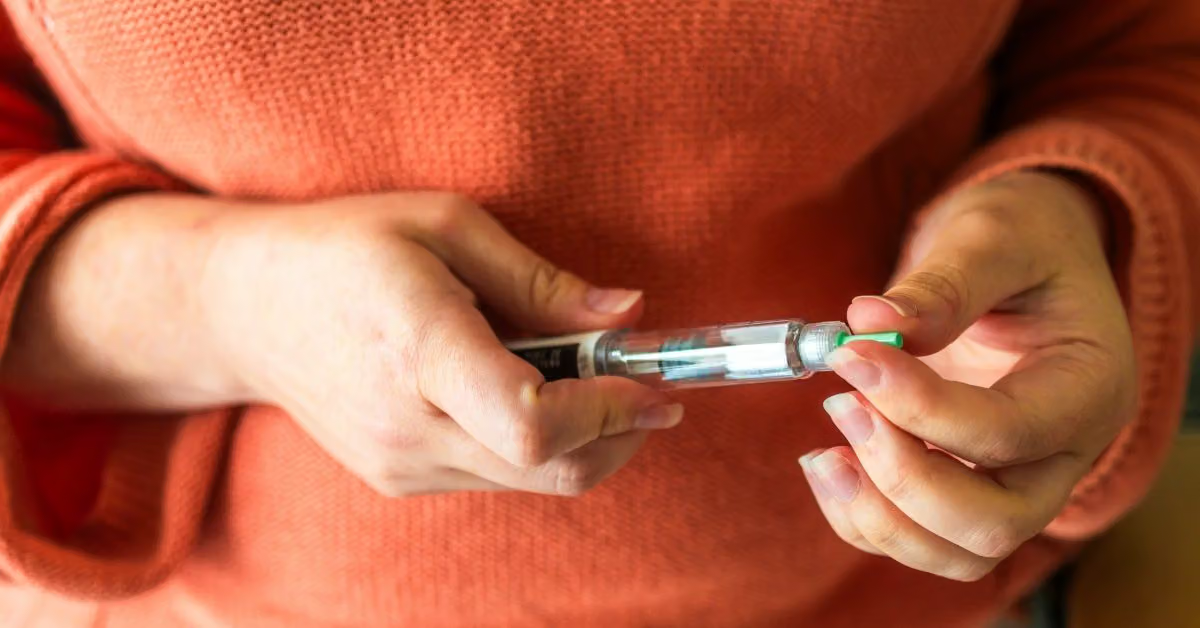
- Glucagon-like peptide-1 (GLP-1) receptor agonists are medications that can assist with weight loss, but many people who use them ultimately discontinue them.
- One concern after discontinuing GLP-1 medications is regaining weight.
- One study suggests that structured support, such as a wellness app, may help minimize weight regain that can occur shortly after stopping GLP-1 medications.
A recent
As noted in the current study, many people discontinue these medications, and weight regain is common afterwards.
The study found that participants who ate meals specifically developed by a dietitian or used a wellness app experienced less weight gain than participants in the control group.
2 possible strategies to minimize weight gain
For this study, participants were individuals who had recently stopped taking GLP-1 medications but had experienced more than 10% weight loss from taking GLP-1 medications. The average weight loss participants had experienced was just over 18%.
Researchers divided the 39 participants into three groups. The first was a control group, which received the typical care for maintaining weight loss. The second was provided with medically tailored meals, which the study describes as meals prepared specifically by a dietitian. Participants received ten of these meals each week. The third group used the Noom app for at least 15 minutes each day. This app helps with managing things like overeating and “social and environmental eating cues.”
The study lasted 4 months. The main focus of the research was to examine how well participants adhered to the two interventions and their satisfaction with them. Researchers also focused on how well the groups maintained their weight loss and diet quality. Participants filled out questionnaires at the beginning and end of the intervention timeframe, and weight data were collected every 30 days and before the intervention started.
Overall, participants’ perceptions of adhering to intervention recommendations were similar between groups. Scores were similar for participants’ responses regarding effectiveness, convenience, and satisfaction. All groups also had similar scores for diet quality and participants’ perceptions of diet and health quality.
However, the diet quality scores were slightly higher in the wellness application group than in the other two groups. The authors suggest this may show a trend in this group toward higher diet quality.
However, there was a difference in the amount of weight regained between the groups. The wellness application and medically tailored meal groups were both associated with lower total weight gain.
The wellness application group only had an estimated 3.60% weight regain, and the medically tailored meals group had 3.58% weight regain, compared to a 10.75% weight regain in the control group. Rates of weight gain were also lower for the intervention groups. Each month, the control group had a 2.94% weight gain, while the other groups experienced less than a 1% weight gain each month.
Study author Kelseanna Hollis-Hansen, PhD, MPH, explained the findings to Medical News Today:
“People who stopped taking a GLP-1 weight-loss medication were better able to maintain their weight loss over the next 4 months if they received additional support, such as a nutritious home-delivered meal program or access to a digital wellness app.”
“The findings suggest that what happens after people stop these medications matters. Rather than assuming weight gain is inevitable, providing behavioral tools and tangible nutrition support may help people navigate this transition more successfully,” she said.
What the study may have missed
This study had a small number of participants, so it can only provide limited data and indicates the need for more research. The authors note that it wasn’t “powered by definitive efficacy testing.” As such, the areas where they found insignificant effects may reflect limited statistical power. Because of the goals of this study, researchers also did not establish a benchmark for adherence to interventions.
The sample presents other limitations as well. A lack of diversity limited the application. For example, participants were from only two regions in Texas, over 80% were women, and most had stable finances.
The trial also can’t establish a causal relationship between the factors studied. The intervention timeframe only lasted four months, so it cannot speak to long-term effectiveness. The trial was fully remote, which could have influenced several factors and differed from how things would have been with in-person visits. The use of technology could also have affected who participated in the study.
Exclusion and inclusion criteria may have affected the study sample and the researchers’ ultimate selection of participants. Furthermore, researchers had limited data and findings because of relying on participant reporting.
The findings may also have been limited by the questions researchers chose to ask and other components of data collection. Use of questionnaire data can only show so much, and the researchers suggest that objective measurements may be a helpful component of future research. Blinding was fairly limited in this study, and there may have been variation in the care the control group received.
Participants who used the Noom app reported using it, on average, just under three days a week, which could also have affected the results. The authors note that using the app requires consistent effort, whereas using medically tailored meals reduces the effort required. Researchers also suggest several factors that could have affected the diet quality scores, such as the need for a longer time frame for self-report results to appear.
What does this mean for maintaining weight loss after GLP-1s?
As noted in the study, post-discontinuation support for GLP-1 RAs is important. Hollis-Hansen noted the following:
“The results suggest that healthcare providers should plan for what comes next when patients may need or choose to stop taking GLP-1 medications. Clinicians and patients can work together to develop a transition plan that includes behavioral support, ongoing follow-up, and discussions about other treatment options if needed.”
“Rather than viewing medication discontinuation as the end of treatment, it may be more helpful to think of it as a new phase of weight management that often benefits from continued support,” Hansen added.
This study should also be viewed within the broader body of knowledge on GLP-1 RAs, as medical professionals don’t recommend discontinuing them.
Mir Ali, MD, bariatric surgeon, bariatric medicine specialist, and medical director of MemorialCare Surgical Weight Loss Center at Orange Coast Medical Center in Fountain Valley, CA, who was not involved in the study, noted:
“If patients discontinue these medications, alternative forms of structured support will likely be necessary to help them maintain their weight loss.”
“This research demonstrates that providing alternative support upon discontinuing GLP-1 medications improves the likelihood of weight maintenance. However, continuing GLP-1 medication long-term remains the most effective strategy at this time.”
— Mir Ali, MD
It’s important for people to work closely with medical professionals for weight loss and obesity management, including the use of GLP-1 medications. People can get relevant medical advice when starting these medications and when discontinuing them.