The legacy left to Italy by Milan Cortina 2026. The accommodation for athletes transformed into rooms for students, the arena designed to host large events and the installation of advanced healthcare equipment for emergencies
Which then, and it is understandable, many people care little about bobsleigh, and even less about ice hockey. Yet, there is an aspect of Milano Cortina 2026 that concerns everyone, regardless of any organizational patch that will be sewn on the fly or just in time, at the last minute.
It is about what the Olympics will leave behind, about their legacy, what in pompous English is defined as “legacy”: concrete traces and others less tangible, however full of meaning. Enrichments of the territory, not only linked to the sporting universe, but rather capable of transcending it. To involve crucial areas such as housing, health and, of course, entertainment in the broadest sense.
A first example concerns the Lombardy capital, with the Olympic and Paralympic village, in the Porta Romana area, in an area full of post-industrial buildings such as the Prada Foundation, among the most popular cultural institutions in the city.
The primary function is the obvious one: to give hospitality to the athletes, to make approximately 1,700 beds available to them, to accompany the reception with areas equipped for refreshment and training. However, after mid-March, when the competitions are over and the last medals awarded, everything will not be dismantled, every trace will not be erased as often happens in conjunction with major events.
The entire complex will become a student residence, responding to a demand for accommodation which in Milan, especially for young people, is always growing and does not find an adequate offer. With an eye to sustainability, given that part of the energy is produced with solar panels and extensive reuse of water discharged by atmospheric agents is envisaged.
Furthermore, a portion of the rooms will be rented at a discounted rate, catering to young people with less financial resources.
Also in Milan, a lot of attention (and some controversy due to the delay in completing the works) was captured by the Santa Giulia arena, the venue for the hockey competitions: a temple of ice, which after the Olympics will be transformed into a multifunctional center for events and live shows.
Put in a more prosaic way, it will be a concert hall and large surroundings, with a capacity of 16 thousand seats, counting those standing. A way to make the most of a project that shines for its acoustics and visibility from every seat. For a city like Milan, where there is not an abundance of places worthy of large national and international productions, this is a great gain, well beyond the current events and urgencies of the Games.
Remaining in Lombardy, we look at pragmatism: the hope is that each race will take place without hitches and with maximum serenity for the public and the athletes, but some medical emergencies are a variable that must be taken into account. Thus, at the Casa della Sanità in Livigno, a crucial hub of the calendar (acrobatic competitions such as snowboarding are planned), latest generation machinery has been installed to carry out CT scans, MRIs and other clinical investigations. An endowment that will remain at the service of the Alta Valtellina community, creating a benefit for residents and tourists.
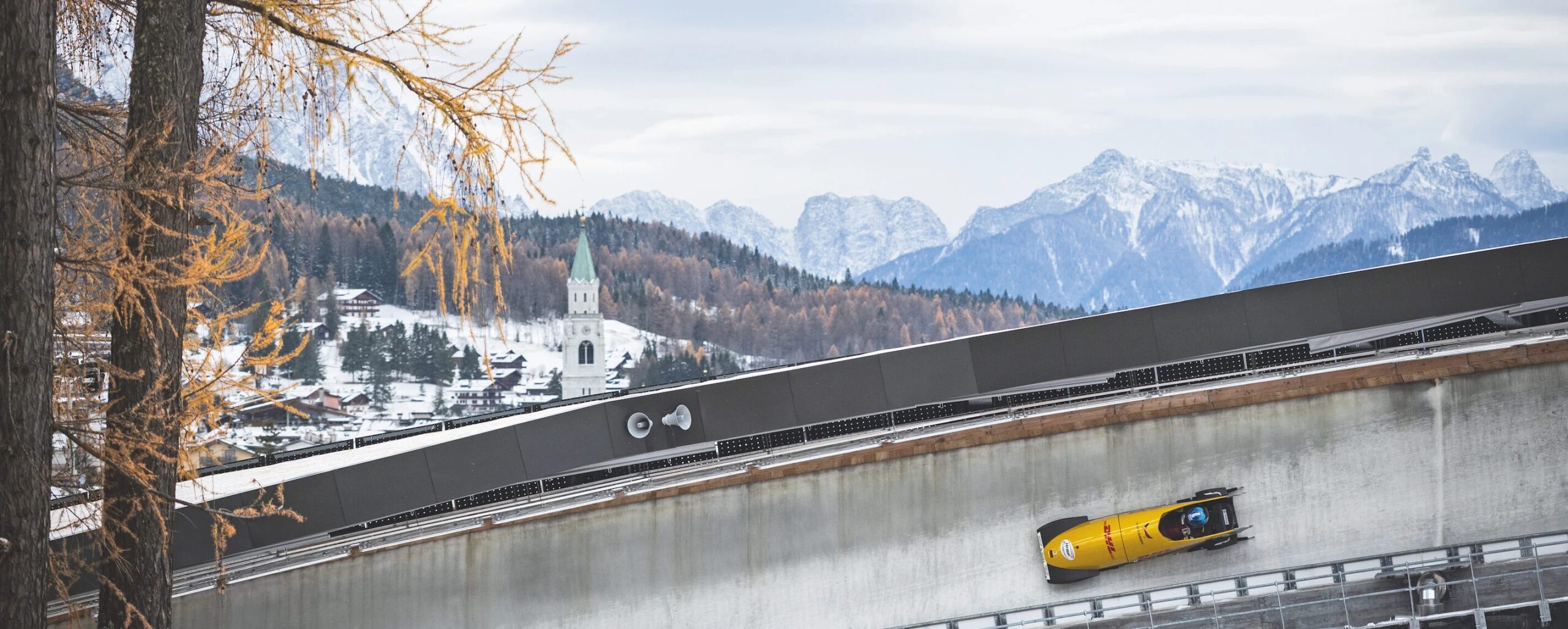
In Cortina, the second central hub of the event, the protagonist is the bobsleigh, skeleton and luge track: the “sliding centre” takes up a mythical track named after the champion Eugenio Monti and projects the Ampezzo tradition in sliding sports forward, leaving a structure capable of hosting many other competitions.
It is not a promise or a vague purpose, there is already an event on the calendar: the “Dolomiti Valtellina 2028” Youth Olympic Games, reserved for athletes under 18. For Italy it will be a debut in hosting this umpteenth international event.
Then there is the much less obvious, yet significant: the strengthening of the access roads to the races, the widespread commitment to urban and mountain regeneration. And the invisible, no less central: the development of skills and abilities linked to the management of an event of global scope, which attracts the eyes of the world. A further leap in level for destinations that already have a strong tourist vocation. «The Games», the official website of Milano Cortina 2026 reminds us, «are transforming Italy, promoting the practice of sport». And to think that the Olympics haven’t started yet.