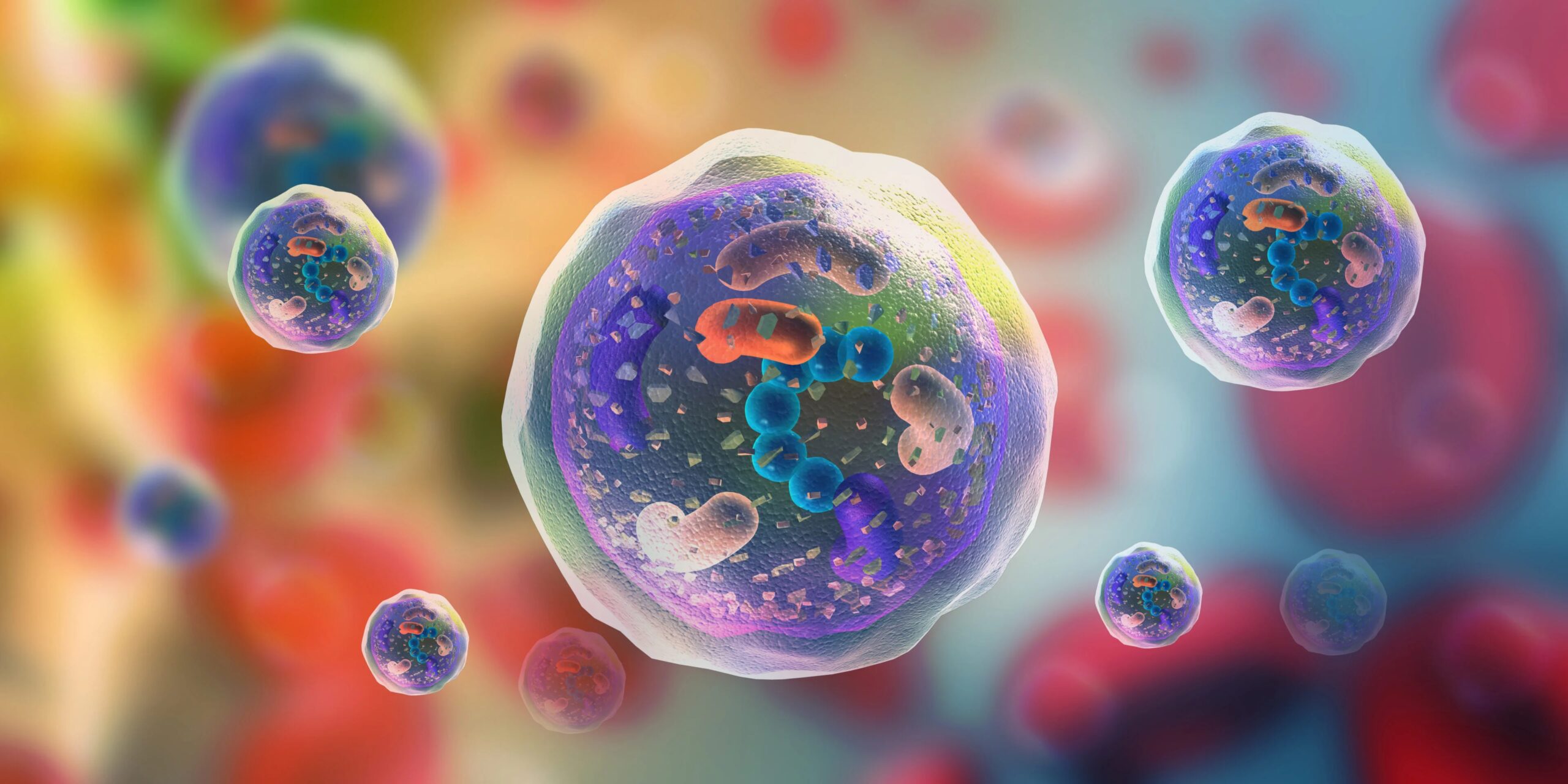
What if tumor cells, under certain conditions, could be “re-educated” and brought back to normal?
It came out on April 17th Reversion by researcher Andrea Pensotti, a book that marks the first international systematization study in this field, spanning over one hundred years of research on tumor reversion. Many luminaries have positively reviewed his work. Topic explained in a fluent and engaging style even for non-experts.
Every page and every anecdote arouse curiosity and push you to read up.
Graduated in Chemistry and Pharmaceutical Technologies, he is working on his doctorate on tumor reversion with Professor Mariano Bizzarri, with whom he has signed some pioneering studiesisolating and patenting a group of microRNAs that have provided very promising evidence.
“This line of research is a hundred years old – Pensotti says – every time I analyzed the literature, looked for an article or a quote, I never stopped coming across extraordinary discoveries, such as discovering that spontaneous regressions of tumors were already being witnessed in the 19th century or that in the 1940s, a plant biologist from Rockefeller University had induced a reprogramming of tumor cells from the tobacco plant. I became passionate about examining these studies, animated by a true spirit of inquiry, entering into the lives of the protagonists. And I realized that no one had grouped and organized these precious notions.”
Notions that you explained in a clear and fascinating way in your book “Reversion”
“My book was born with the intention of making this research known to the widest possible public. It’s paradoxical: such solid and promising data are almost unknown not only to the general public, but to the entire scientific community. With my doctoral research I had the opportunity to systematize them and create a cultural basis to share with other researchers. So much so that I was invited to the National Cancer Institute in the United States to present them. But it is dissemination that can make the real difference: to attract funding in this area we must first raise awareness publish. My dream is to create a foundation that coordinates and supports this research. The resources needed would not even be very high: consider that one day of war finances ten years of research. The difficult thing is not to undermine a certain mentality.
The mentality, as you explain, of seeing cancer as a disease caused only by genes
“After the great discoveries on DNA, paradigms were built that implicitly conditioned scientific thinking. Cancer could not be thought of in any other way than as an irreversible disease caused by a series of irreversible genetic mutations. The only way, therefore, was to wage war on it. Yet the results speak clearly: studies such as those by the American oncologist Tito Fojo have shown that drugs targeting tumor genes have extended average survival by weeks, not years. Something in the paradigm does not add up. The challenge is cultural; bringing this to light line of research with scientific and empirical tools. If we consider cancer as a disease, the obligatory strategy is to eliminate the diseased cell. But if we shift attention to the environment in which that cell lives, to the entire network of relationships that make up a tissue, we can prepare the context to re-educate it. The goal is not necessarily total recovery, but chronicity: transforming cancer into a manageable disease, as we do today with diabetes or hypertension.”
Your studies place extreme importance on the cell’s environment
“Classical pharmacology is fundamental, but it considers the body in a mechanistic way, as if it were a machine to be repaired piece by piece. Our organism, however, is an extraordinarily complex system; we need to change our vision a little.
One of the most relevant discoveries is that genes and context influence each other in a constant and dynamic way. Nature knows how to generate life; our task is to learn to use that same wisdom to regenerate a diseased organism. Don’t eliminate the tumor, but re-educate it.”
Could it not be considered irresponsible to come out with a popular book describing cancer as something reversible?
“It is the main risk that for some time has held me back from working on a popular text. But then I made an observation: every time I talk about these topics, even with professionals and academics, they all seem to fall out of the clouds. The most urgent gap is therefore not on the level of scientific publications, but on the popular level. In the book I was careful not to convey false expectations, but a hope based on a line of research that deserves attention. We are faced with very encouraging data: the time has come to coordinate the knowledge accumulated so far at an international level. We must join forces and move away from the individualism of research, building a virtuous model of collaboration.
Meanwhile, with Professor Bizzarri you have patented a product to support traditional treatments
“During our research we have recorded very interesting data on how an extract of trout eggs can help improve various metabolic parameters of tumor cells and inflamed cells, such as energy metabolism. We have thus created a supplement to support traditional treatments. Let’s be clear: we are not proposing any cure, no cure, I would like to specify this. This preparation helps to recover the appetite and helps to counteract some side effects of the treatments; which is no small feat. Often it is precisely those side effects that debilitate the patient to the point of requiring the suspension of the therapies.
Our research group works on two parallel tracks: research on tumor reversal, with the aim of developing a future drug, and research on how to support the patient during treatments. Keeping them distinct is not a formal matter, it is a responsibility towards the patient.“
PROFESSOR BIZZARRI’S CONTRIBUTION
Director of the Systems Biology Laboratory and Space Biomedicine Laboratory of the La Sapienza University of Rome, oncologist and essayist, Professor Mariano Bizzarri is above all a man who passionately loves his work, human life and research.
He was Andrea Pensotti’s doctoral tutor and for years has been conducting pioneering research on the fight against cancer and on the creation of a preparation based on microRNA, capable of paving the way for new therapeutic possibilities.
Prof. Bizzarri, how did this research come about?
“Until twenty years ago we were convinced that the condition of cells was fixed once and for all. Over the last twenty years we have discovered, however, that cells can follow different paths, to the point that in 2012 Shinya Yamanaka received the Nobel Prize for demonstrating that cell differentiation can change upon stimulation, with certain molecular factors.”
And should this also apply to tumor cells?
“Tumors can also be considered forms of pathological cellular differentiation and can therefore be induced to regress towards a functional state similar to normal. This is the theoretical framework.
Each cell carries with it a set of instructions that supports it in choosing what its destiny will be. We called this set of signals and instructions the stamisome. A component of stamisomes are microRNAs, small segments that act like switches: they turn on or off signals activated by the genome, by DNA.”
What was your job?
“We isolated these factors from stem cells taken from the chicken, or rather from the egg, and from different types of fish eggs including trout, and we found that these signals were actually able to change and reverse the fate of the tumor phenotype, reducing the ability to metastasize, that is, to invade tissues and migrate.
We have already managed to patent a specific mix of microRNAs capable of inducing the reversion of tumor cells.
This opens the way to a radically new therapeutic strategy.
There are tumors that today have cure rates between 80 and 98 percent with conventional therapies; then there are tumors such as those of the pancreas and liver, for example, which unfortunately do not have the same response. Indeed, often, by “waging war” on diseased cells, we obtain the effect of making them more aggressive. For this we must build new strategies.
We say quietly that the possibility of modulating the behavior and differentiation of the tumor can be another important aid in this fight.”
As Professor Bizzarri reminds us, we are more than our genes: there is never such a banal mechanistic correspondence. If that were the case we would have solved everything. Reality is complex. Surroundings and surroundings matter. A lot of. And the world is beautiful precisely because it is complex.