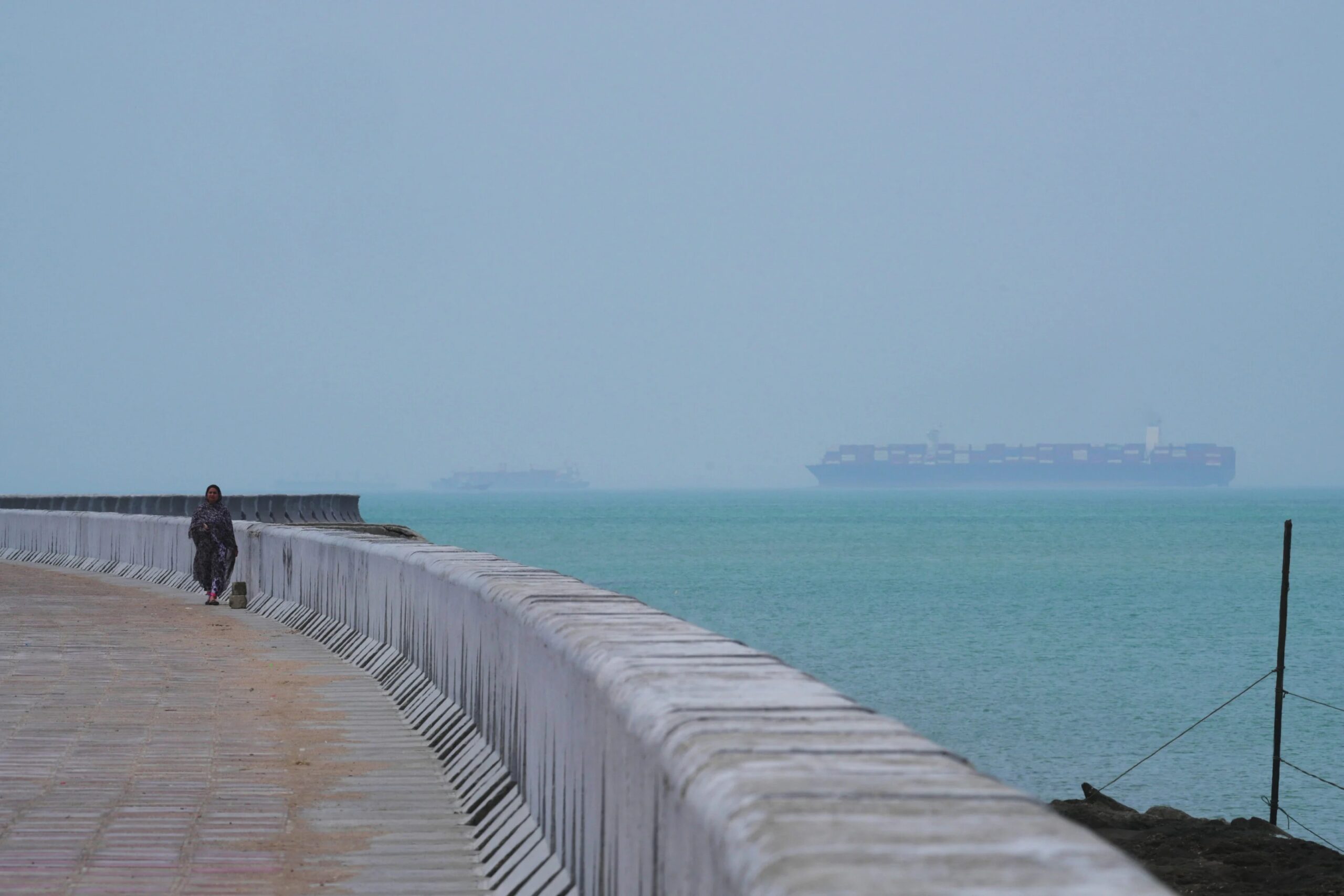
With Hormuz blocked and energy skyrocketing, Europe risks record bills, fuel unavailable and industry on its knees.
The world market lacks 220 billion cubic meters of gas per year and, every day, 11 million barrels of crude oil and five million barrels of petroleum products. These few numbers are enough to understand that what was created with the blockade of the Strait of Hormuz, and as a consequence of the sanctions against Russia for the invasion of Ukraine, is the worst energy crisis of all time. The EU, however, accelerates with the plan to abandon fossil fuels and rejects any request to limit the increase in fuel prices with budget deviations, without realizing, however, that it is dancing on the edge of the precipice.
Every year the global supply of cubic meters of gas amounts to approximately 4,100 billion; therefore, the war in Iran, and the consequences of the one in Ukraine, have removed 5 percent of world production from the market, with effects on bill prices that are unlikely to be mitigated in the short term. As for crude oil, the situation is even worse. In fact, 11 million barrels less per day are more than 10 percent of the total and, even in this case, given the continuation of the blockade of the Strait of Hormuz, the repercussions on prices seem inevitable. The few alternative routes to the waters controlled by Tehran, unfortunately, are not able to fill the gap created by the conflict, as a result of which 15 percent of global crude oil exports (equal to 5 million barrels per day of petroleum products) and 20 percent of natural liquid gas exports (equal to 120 billion cubic meters) remain blocked.
Can such a shortage of energy products needed for industry and commerce (but also for families) be compensated for by solar panels and wind turbines? Obviously not. Because increasing the production of so-called renewable energy takes time and time is precisely what is missing in a Europe already in crisis due to competition from China, the development of artificial intelligence and the effects of globalisation. Furthermore, the lack of fuel for vehicles and airplanes certainly cannot be solved by greater production of wind and solar energy. Here, cars and trucks that don’t have an internal combustion engine are a very small fraction of the total. Just to clarify, out of six million heavy vehicles circulating in the Old Continent, those that run on batteries represent less than two percent. As for the cars, the ratio is slightly better. Out of approximately 250 million vehicles, electric ones are calculated at 6-7 million and, therefore, we are talking about 3.6 percent of the total. And battery-powered planes, for now, are a dream.
Are you wondering where I’m going with this avalanche of numbers? To a simple conclusion: if we don’t act quickly, that is, if Ursula von der Leyen continues to dawdle without addressing the problem, we risk not only having the most expensive bills in the world, but also being left stranded, without petrol and diesel to keep cars and trucks going. And if we could fill up, we would pay an arm and a leg for it. As for the aircraft, they would simply remain on the ground.
As a result of the wicked European choices, in recent years 30 refineries have been closed on our continent (including six in Italy), with an overall decrease in production of almost 20 percent. The reduction of refining plants, in addition to the stringent environmental policies imposed by Brussels, which have resulted in additional costs for companies in the sector, is due to the price of bills and the European tax on CO2 emissions, the infamous ETS. Result: Before the Russian-Ukrainian conflict, Europe imported 20 percent of its diesel from Moscow, the Middle East and Asia, and 35 percent of its aviation kerosene needs. But the Gulf crisis has precipitated the situation and, today, it is difficult to find petroleum products on the market, in particular diesel, jet fuel and even crude oil. Not to mention that global demand leads several operators to export refined products to the rest of the world, obtaining better prices due to tensions. In short, petrol, diesel and jet fuel go to those who pay the most.
And what about us Europeans? We would need a Commission not led by bureaucrats and capable of making courageous decisions. Which? Well, since we cannot put an end to the war in Iran (or even the one in Ukraine), there is only one way left: start buying gas and oil from Russia again. As, in truth, other countries are already doing, see Great Britain, France and Spain. Who verbally condemn Putin, but deep down they continue to finance his war by buying liquid gas and other things. Because politics is made up of counter-current choices, but also of a lot of hypocrisy.