The Bisceglie apricot variety and the first fig fruit are two pieces of Southern culinary DNA. They cannot be exported far away, nor can they be reproduced, under penalty of deterioration. Therefore they are considered the gastronomic “black boxes” of Terronia, a hymn against the globalization of the palate at all costs
When you read these lines, the object of this writing of mine will have already disappeared, it will be the sweetest memory of a fleeting bliss. It all happened on a magnificent evening in June, after a literary event in Bisceglie, with the finalists of the Strega prize fighting over Michela Murgia. We were sitting in the courtyard of the Le Vecchie segherie bookshop, when its owner, Mauro Mastrototaro – the names of the deserving should always be highlighted for public praise – with a radiant face handed out the entrance ticket to Paradise from his hands. In a small basket there was a rare and legendary fruit, unobtainable, which I had been sighing for I don’t know how long and hadn’t seen, hadn’t tasted, for a long time. I’m talking about the food of Paradise, a fruit that is known and harvested only in the countryside of my country, thanks to single rare trees; trees in danger of extinction, with fruits of ephemeral and delicate life, to be picked and consumed on the fly, so rare is the opportunity. They tried but they can’t be planted outside our countryside. The food of Paradise resembles an apricot, but is not one; it has something more and different, it is larger than an apricot, smaller than a peach, soft, fleshy, sweet, a vague pineapple flavour, an ineffable colour, between yellow and grey, pink and beige. A unique experience, returning from the sea and eating food from paradise.
When I mention it everyone is amazed, and when I describe it, thinking that it just has a different name elsewhere, they are amazed or consider me a bit crazy. In our country it is confidentially called food but its extended term honors its noble origin, “food from Paradise”. Eden was located in the countryside of Bisceglie and the inhabitants did not know it, they continued to toil and shed their blood to live, with peasant humility. The tree you were reaching for…
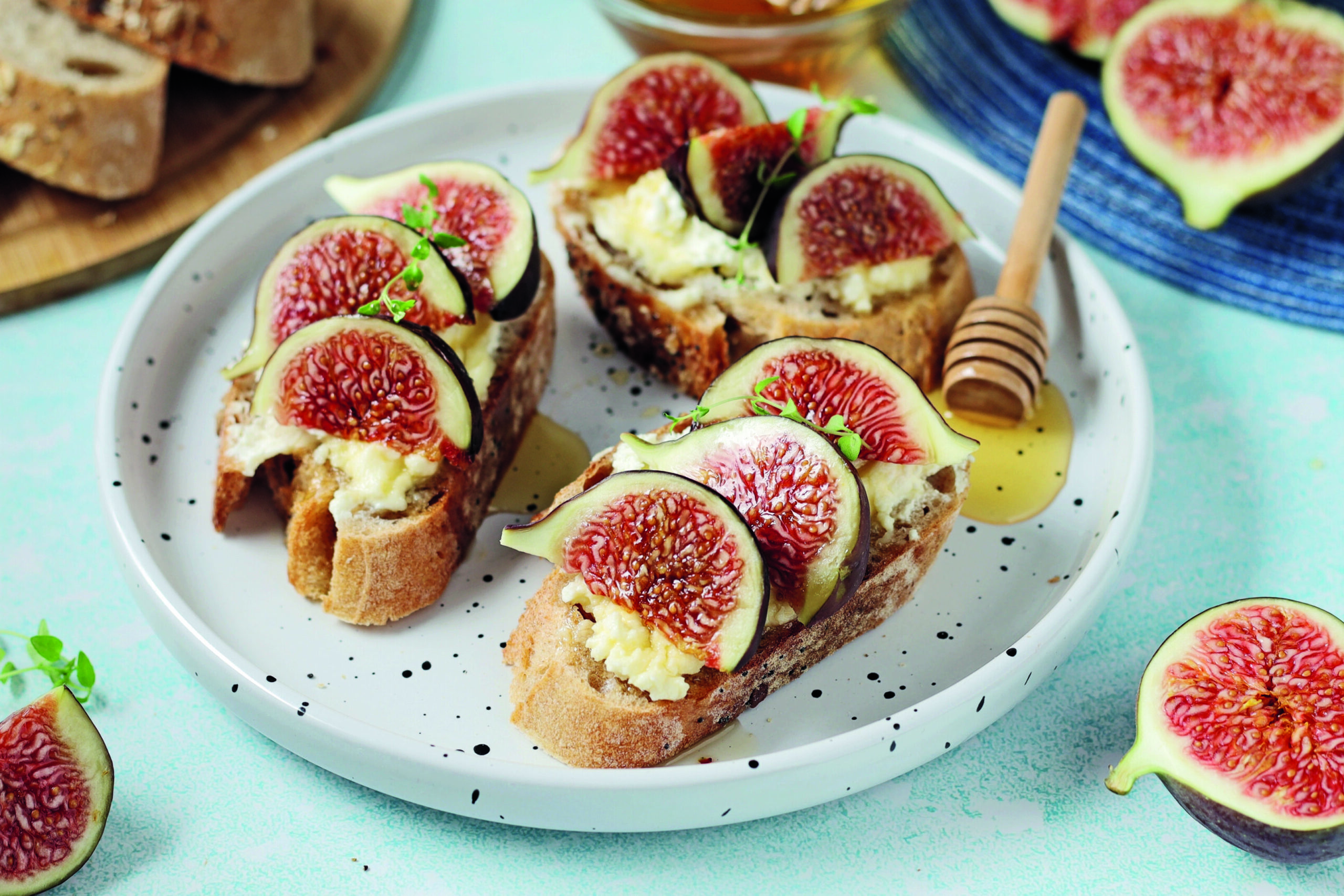
If the food of Paradise is the ticket to Eden, the fiorone fig is the fruit of sin that gets you kicked out of the celestial garden; fruit of perdition, soft and lascivious, delicious. Adam and Eve in the Apulian version were expelled from Paradise because they were caught eating flowers from the tree of the Eternal Father. The apple of sin concerns Trentino, Northern Europe, the rest of the world. The bone of contention will be Sicilian or Romagna, like the lotus. Here the forbidden and delicious fruit is the fiorone fig. For its voluptuous softness that invades the mouth and smears the surrounding area, for its sinful sweetness, for the allusive drop of milk that accompanies it.
Its fruit is a white colony of spermatozoa on a carpet of excited pink papillae. It is no coincidence that for the ancients the flower was dedicated to the god Priapus, a symbol of sexual power and fertility. The fruit which in many local dialects is declined in the feminine form, indicates the erotic matrix of life, the female organ, what we define with sublime poetry as Nature, understood as Mother Nature, seat of the nativity. The flower is the announcement of summer; its better-known, narrower and more concentrated relative, the fig, arrives when it comes to an end. Summer is a parenthesis between two figs. «Quannu rria the cunt lu melon hangs», Salento proverb. The fig is the Mediterranean tree par excellence, uniting the countries at risk of expulsion from the European Union, extreme fruits of Greek, Roman and Christian civilization. Even Judas hanged himself on a fig tree, nicknamed the traitor tree. In classical Athens, sycophants were originally those who denounced the illegal smuggling of (sometimes sacred) figs. Over time, the term expanded to include those who were paid to file lawsuits or support false accusations. Fig leaves were humanity’s and Eve’s first panties, a kind of nature’s vice to cover the pudenda. To me, however, as a child, the fig leaves seemed like the protruding ears of the summer countryside.
The fig tree was a formidable measurer of female fortunes. According to a local proverb «La ielte cogghie u’ fiche, la vasce cogghie u’ marite», that is, tall women can pick the figs, short women can pick their husbands. The proverb alludes to nature’s compensation – it gives fruit and stature to one but leaves it “vacantina”, that is, unmarried; to the other it gives a husband and therefore a “luck” – and to the greater ability and determination of short women to win a husband. In my childhood I met serial fiorone eaters, there was one of their promoters who accompanied his delicious commercial with an inviting and onomatopoeic cry: «Chilumme, chilumme aooop» and swallowed the delight in a single bite (the stage name of the fiorone was “colombo” or chilumm).
The fiorone is the genetic summary of the local dolce vita, in the true sense of glucose, and is perhaps the black box in which life in Terronia is recorded. The fiorone, like food, is difficult to remove because it is delicate, therefore irremediably linked to the territory, zero kilometer, not reproducible by the usual Chinese, not relocatable like manufacturing industries, sedentary. This is why it is damned Southern, and if it goes outside the South it suffers uprooting to the point of deteriorating. The flower and the food of Paradise are proof that not everything is global, not everything travels and can be moved and reproduced. They are Parmenidean fruits, in their spherical roundness, foods of being that cannot tolerate movement and becoming. Fleeting but eternal.