The holiday lying in the sun, with the phone in airplane mode and the only program of the day marked by breakfast, beach and dinner, does not disappear, but it loses the monopoly of the summer imagination. In its place comes a new idea of travel, more active, more curious and above all more identifying: leaving not only to rest, but to learn something, return with an additional skill, discover a passion, get your hands dirty, literally or metaphorically, and transform free time into an experience capable of leaving a more lasting mark than a magnet bought at the airport.
Mastercard calls it “skilliday”, portmanteau between “skill” and “holiday”, and describes it as one of the new trends of summer 2026. According to a European research conducted on over 27,000 travelers in 28 countries, more than half of Italians, 53 percent, now aim to acquire a new skill during a trip, in line with the European average.
The data is even more interesting if you look at the bookings already made: 40 percent of Italians have already organized a learning-oriented holiday, whether it be learning a language, practicing a sport, taking a cooking course or even learning survival techniques. The phenomenon is mainly driven by younger people, with 57 percent of young people between 18 and 24 years old and 52 percent of 25-34 year olds having already planned a trip dedicated to developing new skills during the year.
The souvenir is no longer enough
The logic is simple: material memory loses weight, while the value of the experience grows. The traditional souvenir, the one you take home to demonstrate that you have been in a place, is progressively replaced by something more personal: a technique learned, a recipe that can be replicated, a language spoken a little better, an artisanal gesture tried with one’s own hands, an activity discovered during the trip and perhaps destined to continue even after the return.
According to Mastercard research, 54 percent of Italian travelers say that traveling is more meaningful when you learn something new, while 55 percent believe that the skills acquired are more valuable today than souvenirs as travel memories.
It is the transition from a holiday to be consumed to a holiday to be incorporated. It is no longer enough to see a territory, photograph it or cross it quickly: you want to enter its culture through a gesture, a practice, a local knowledge. It is also the sign of a broader transformation in consumption, where experiences continue to gain ground compared to material goods and where travel becomes a form of emotional and personal investment.
The new experience economy
The skilliday does not only concern tourists, but also opens up new opportunities for small and medium-sized businesses in the tourism sector, especially those capable of offering authentic experiences, rooted in the territories and managed by local people. Half of Italians, 50 percent compared to 42 percent of the European average, say they are willing to spend more on a trip that offers the possibility of acquiring new skills.
The data is relevant because it shifts the value from the simple destination to the content of the experience. A location can become more attractive not only because it is beautiful, famous or easily accessible, but because it allows you to learn something that you couldn’t experience in the same way elsewhere: making wine in a production area, working with wood in a village, cooking with a local chef, learning ceramics where that tradition is still alive, approaching permaculture in a rural context.
“Today’s tourists are looking for travel experiences that leave a lasting impression, that help them create memories and, increasingly, real muscle memory,” comments Natalia Lechmanova, Chief Economist Europe for the Mastercard Economics Institute. “From winemaking to carpentry, from ceramics to painting, up to permaculture, travelers are willing to invest in experiences offered by local businesses capable of offering authentic contact with the culture of the area and skills that go beyond the duration of the trip”.
What Italians want to learn while travelling
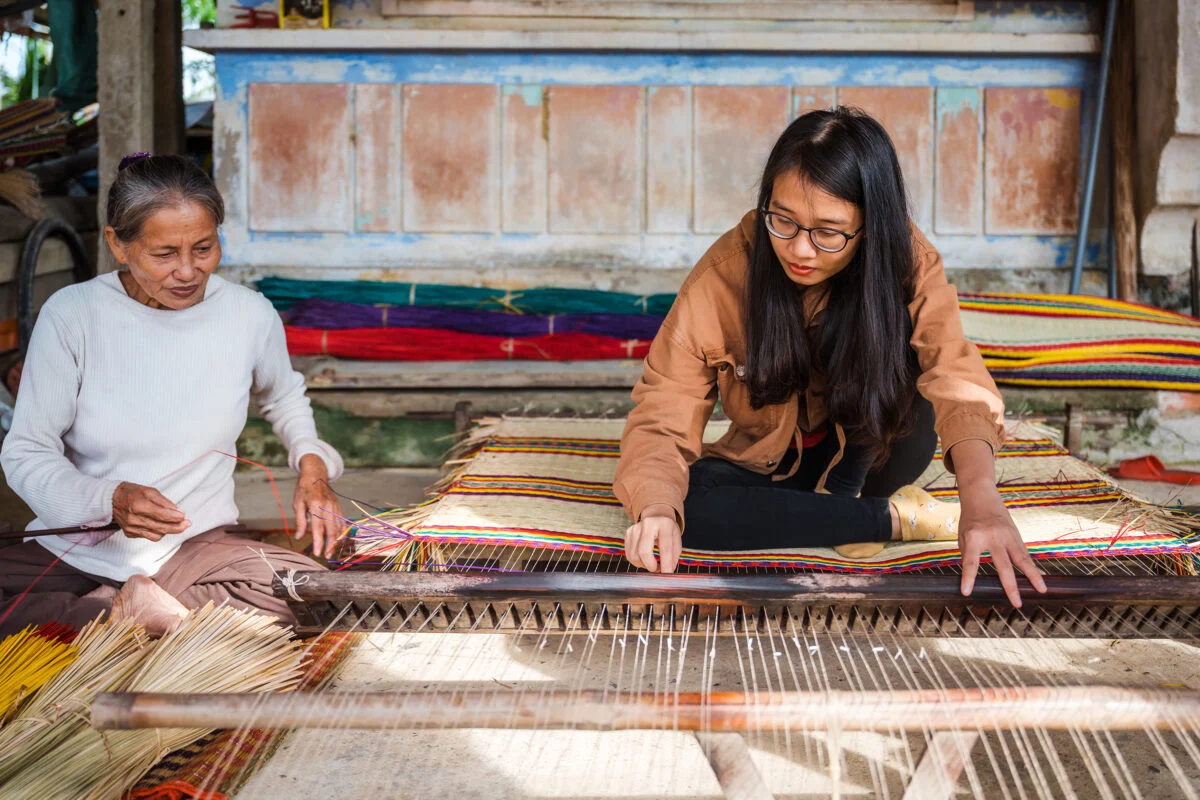
Among Italians, above all, a preference emerges for skills linked to cultural heritage and know-how. At the top of the ranking is traditional craftsmanship, chosen by 31 percent, with activities such as pottery, weaving, carpentry and textile processing. This is followed by cooking and gastronomic workshops with local chefs, at 29 percent, and foreign languages, at 28 percent, considered a way to really come into contact with the cultures of the countries visited.
The top ten describes the new geography of tourist desire well. After crafts, cooking and languages, come wellbeing and movement, with yoga, meditation, dance and martial arts, indicated by 26 percent; food & beverage production, such as winemaking, cheese and craft beer, at 25 percent; creative arts, including photography, painting and writing, at 23 percent. This is followed by sports, outdoor activities and survival techniques, art crafts and traditional techniques, all at 15 percent, while sustainable lifestyles, from permaculture to environmental conservation, stop at 11 percent.
It is a ranking that also says a lot about the relationship between tourism and authenticity. The most extreme experience does not necessarily win, but the one that promises contact, manual skills, local identity and the possibility of returning home with something that remains.
From villages to local cuisine, travel becomes more widespread
One of the most interesting effects of this trend concerns the distribution of tourist flows. Learning-based holidays can in fact take travelers away from the most crowded destinations, favoring villages, rural areas and less popular periods, with a more balanced distribution of the benefits of tourism.
In a Europe increasingly grappling with overtourism, from large capitals to cities of art, skills tourism can become a concrete response to the saturation of the most popular places. It does not eliminate the charm of iconic destinations, but offers a reason to explore lateral territories, laboratories, farms, ateliers, small towns and local communities that can transform traditional knowledge into a contemporary tourist proposal.
It is no coincidence that, according to the Mastercard note, the Priceless.com platform also offers learning experiences in collaboration with the Most Beautiful Villages in Italy: in Italy you can learn a new culinary skill thanks to a cooking lesson with a chef in Furore or create a personal memory with woodworking in the atelier of a local artist in Castel di Tora.
Holidays as personal capital
Skilliday intercepts a very recognizable contemporary need: using free time not only to disconnect, but also to feel enriched. It is a trend that can be very popular with Gen Z, used to building identities through experiences, skills, contents and stories, but which also speaks to an adult audience, increasingly interested in less passive and more meaningful journeys.
In this scenario, travel is no longer just a break from work, but almost becomes an extension of personal training. We leave to rest, of course, but also to learn how to cook a local dish, take better photographs, speak a few sentences in a new language, do yoga in a different context, meet a craftsman, understand how a wine is made or get your hands on a material that tells the story of a territory.
It’s the holiday as personal capital: something you spend, experience and then take inside. Not just relaxation, not just consumption, not just destination. But a skill, small or large, that makes the journey more memorable because it transforms it into an active experience.
And perhaps this is the point: in a world where everything can be photographed, shared and replicated, learning something becomes one of the few ways to make a holiday truly your own.