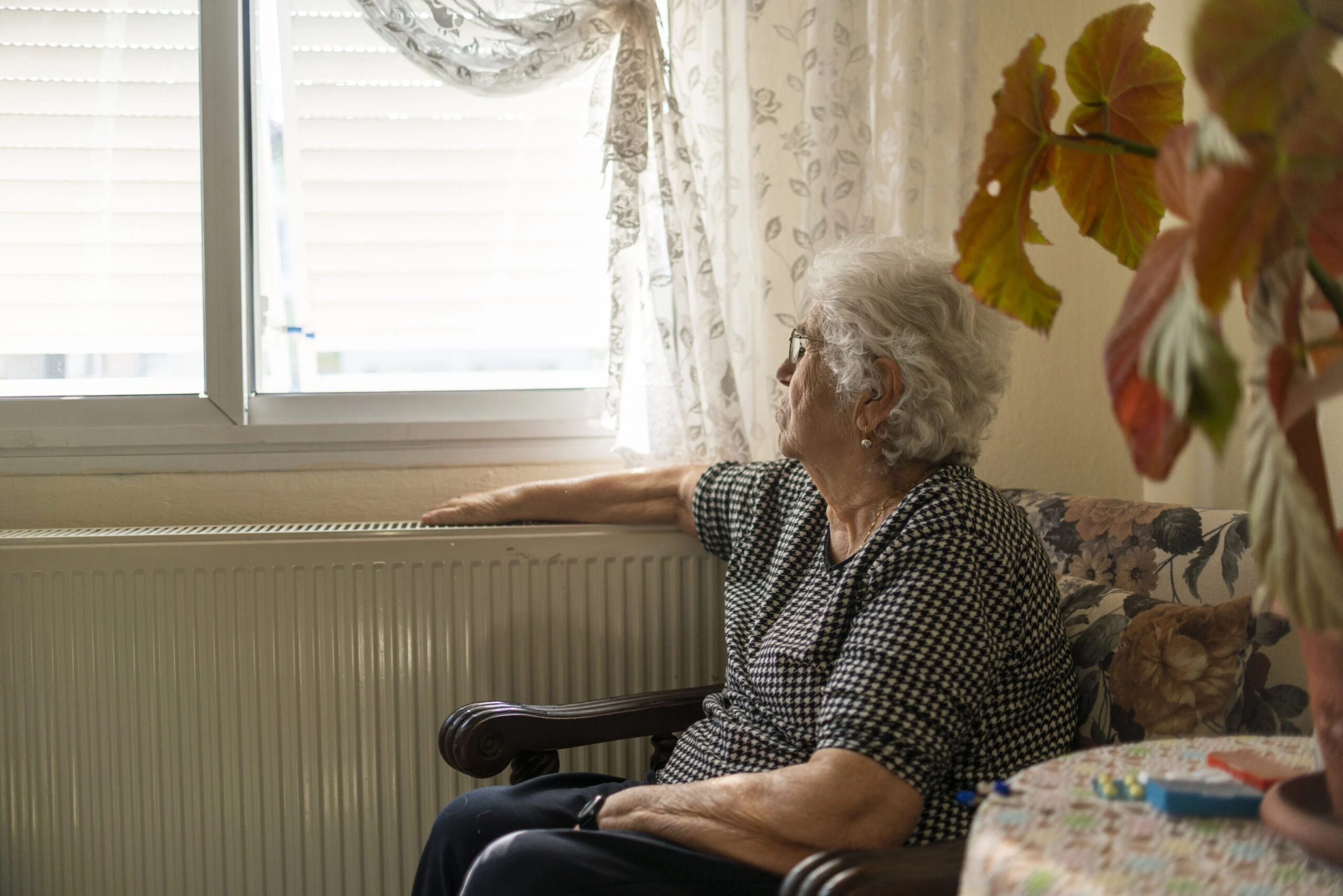
They want to continue living in their own home, maintain their habits and preserve for as long as possible that autonomy which becomes even more precious as they age. For millions of elderly Italians, however, domestic independence coexists with a risk that children and family members often tend to underestimate, at least until something happens.
In the last five years, in fact, almost two out of three Italian families, 64%, have had to face at least one domestic emergency involving a parent or father-in-law over 65 who lives alone or as a couple. This is what emerges from research conducted by Altroconsumo for Sector Alarm’s Domestic Serenity Observatory, which photographs not only the most frequent accidents, but also the way in which Italian families are trying to reconcile autonomy, safety and remote assistance.
The topic concerns an increasingly larger segment of the population. The press release accompanying the survey recalls the latest demographic data according to which in Italy there are over 14.8 million over 65s and represent 25.1% of the population, practically one in four inhabitants.
Falls and illnesses are the most frequent emergencies
The first cause of domestic emergency among the elderly is represented by fallsreported by 33% of the families involved in the survey, followed very closely by sudden illnesseswhich affect 29% of cases.
But living alone can also increase exposure to risks of a different nature: 17% of those interviewed report episodes linked to attempts at deception or fraud, while in 8% of cases the family has had to deal with a theft or attempted theft.
And the consequences can be important. In more than four cases out of ten the physical impact on the elderly person is described as moderate to very serious, while in more than three cases out of ten the episode also had repercussions on a psychological level. In the In 34% of emergencies it was also necessary to call an ambulance or request the intervention of healthcare personnel.
Numbers that show how a seemingly trivial fall, an illness or a domestic accident can become much more difficult to manage when the elderly person is alone and does not have someone in the immediate vicinity capable of intervening.
Children and family members check mainly with phone calls and visits
Despite the frequency of emergencies, the protection of elderly people who live alone continues to rely above all on traditional family relationships. The 68% of families use frequent phone calls and texts to make sure everything is going well, while 46% rely on periodic visits from children or other relatives.
A seemingly simple solution which, however, becomes more difficult as the distance increases. About one in five families takes more than an hour to reach the elderly person’s homewhile for around one in ten the journey actually exceeds five hours.
It is in this distance that one of the most delicate problems for families arises: respecting their parents’ desire to continue living independently without turning every unanswered phone call into a source of anxiety.
Only 11% use monitoring systems
Technology could bridge at least part of this gap, yet its use still remains limited. Only 11% of the families interviewed declare that they use electronic devices that allow them to remotely monitor their family member’s situationwhile a further 10% plan to adopt an alarm system connected to an operations center in the next three years.
It is not just the price that is slowing down the spread of these tools. 21% indicate an economic obstacle, but the most interesting data concerns the perception of risk itself: among those who do not use electronic devices, the 43% believe they don’t need it or say they already feel safe enough.
This creates a largely reactive mechanism, in which the problem is only fully perceived after an incident has already occurred.
In fact, those who have experienced an emergency in the last five years say they are very or totally worried in 17% of cases, compared to 11% of those who have never faced one. The propensity to adopt security systems also grows almost double after direct experience: 15% of those who have already faced an emergency would consider a system connected to an operations center, compared to 8% of those who have not had similar episodes.
The difficult balance between security and independence
This is probably the most interesting point that emerges from the research: for many families, security is still perceived almost as the opposite of autonomy, as if increasing control necessarily meant limiting the independence of an elderly parent.
In reality, with an aging population and families increasingly spread across different cities or regions, the issue could become exactly the opposite. Assistance and monitoring tools can be one way to enable people to stay in your home longerpreventing the mere fear of an accident from becoming a reason to prematurely give up one’s independence.
The research also reports the story of Pietro, resident in Turin, who had installed a protection system in his father’s home to allow him to continue living independently. When the man fell and suffered a fractured femur, the SOS button allowed him to call for help; the same system was subsequently used in two other emergencies to activate assistance.
It does not mean that technology can replace visits, phone calls or family presence, but rather that it can add an additional level of protection precisely in the hours and moments in which no relative can be physically present.
A problem destined to concern more and more families
The demographic data makes a broader reflection inevitable. As the number of elderly people grows and the desire to continue living in their own home increases, it will be increasingly difficult to imagine a care model based exclusively on the daily presence of children.
According to the investigation, approx six out of ten families believe that an alarm system connected to a 24-hour operations center can guarantee a good level of protection for their family memberwhile the share of those who use or think of installing tools of this type could rise, in the space of a few years, to around one elderly person in five.
The challenge, therefore, does not just concern which devices to put in homes, but how the very concept of care will change. Because protecting an elderly person does not necessarily mean preventing them from living alone; more and more often it will mean finding the tools that allow it to continue to do so, simultaneously reducing the risks and that distance, physical and psychological, which today weighs both on the elderly and on their families.