
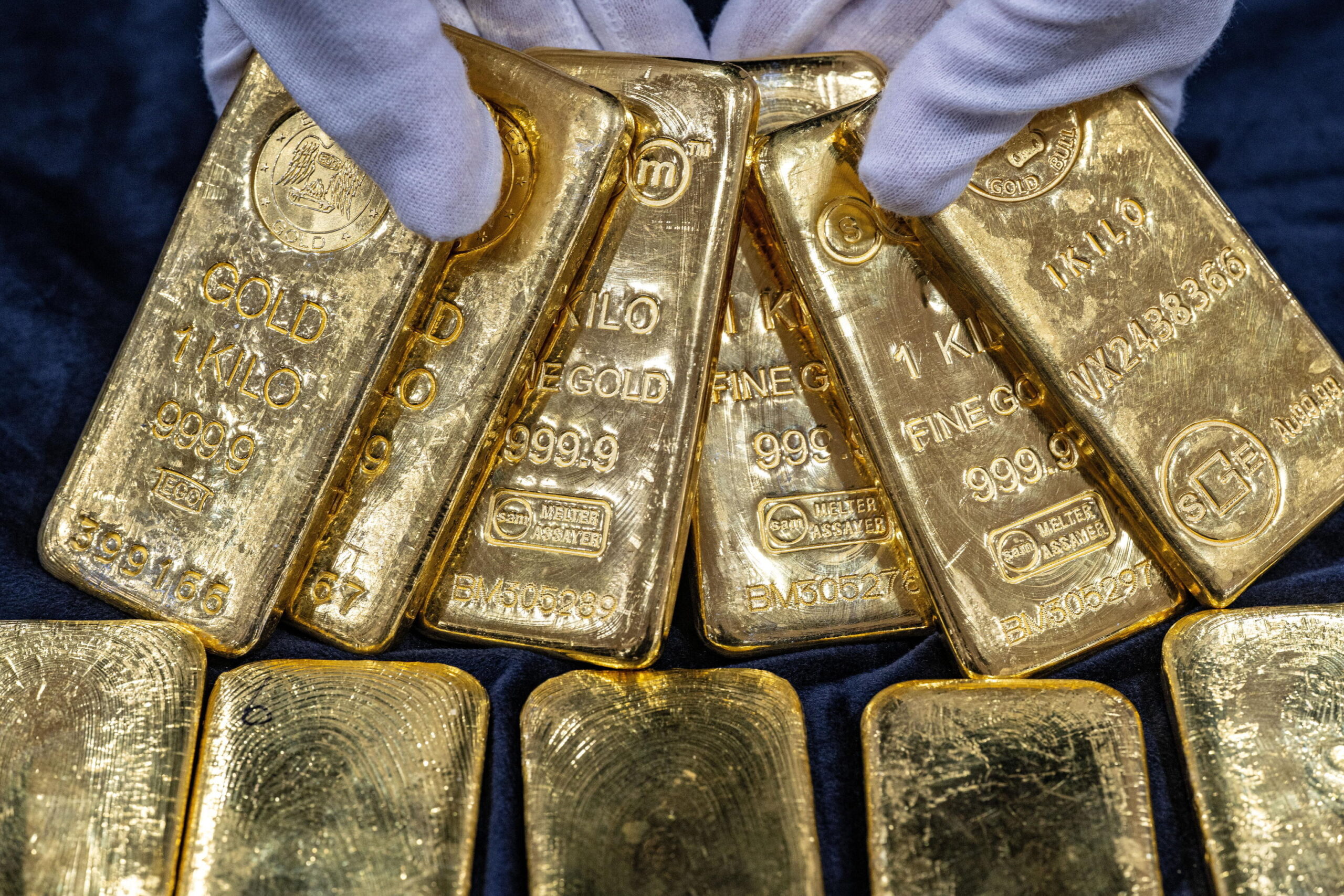
Gold at one-year lows: is the safe haven asset still safe? Here are the reasons for the 30% drop and what to expect for the future
It seems that the yellow metal has lost its touch. The price of gold has in fact fallen below the psychological threshold of $4,000 an ouncesliding to lows around $3,880, levels not seen for over a year.
Gold showed a slight rebound today, but it is a modest recovery, which does not erase the extent of the correction. The overall decline in fact it exceeds 30% compared to the January highswhen prices approached $5,600 an ounce.
A retreat of this magnitude can only signal a profound change in investor expectations and how the market prices risk, inflation and monetary policy.
The decline was in fact not caused by a single event, but by the convergence of macroeconomic, financial and technical factors which temporarily weakened the role of gold as a safe haven.
Fed, inflation and real yields
The main driver of the correction is macroeconomic in nature. The geopolitical tensions and the high debt of almost all Western countries pushed real bond yields higher.
When the yield offered by bonds becomes more attractive, gold (which does not generate interest) loses competitiveness. The opportunity cost of holding it grows and investors prefer to move capital towards instruments that guarantee a certain return.
It is therefore not just a question of physical demand, but It is above all the comparison with bonds and cash that penalizes the precious metal. The market fears that the Fed may keep rates high for longer than expected, and this prospect weighs on the yellow metal more than central bank purchases can support it.
In this context, high inflation is not enough to protect gold, if real yields rise, the safe haven narrative takes second place to the logic of opportunity costs.
Forced selling and stock market weakness
Forced sales by investors also accelerated the decline and liquidations in the context of weakness of the stock markets in recent weeks, especially in the tech sector.
Last week many traders had to reduce positions to cover losses and face margin calls. Gold, whose price is still significantly higher than in previous years and was therefore easily liquidated, has become one of the first assets to sell.
The breaking of the psychological threshold of $4,000 then triggered automatic sales and stop-losstriggering a more rapid and violent descent. Despite central bank purchases, the metal has not acted as a typical safe haven asset: institutional demand continues to provide underlying support, but has not been sufficient to offset the pressure of financial flows and the reallocation towards bonds and liquidity.
The market has therefore favored the security of returns over the protection of value, at least in the short term.
The equity weakness of recent days, in particular that of technology stocks, has thus ended up also overwhelming gold, which in other phases could have benefited from the search for shelter.
The outlook on gold
For the future, especially in the short term, much will depend on inflation data, the Fed’s moves and the evolution of real yields. Some observers, however, predict a long-term recovery linked to structural factors: high public debt, central bank demand, geopolitical uncertainty and the search for diversification.
The recent collapse therefore does not erase the strategic role of gold, but reminds us that in the short term the yellow metal remains vulnerable to the strength of rates and competition from bonds and liquidity.
As long as real yields remain high, gold may struggle to consistently recover the highs, even if structural factors continue to offer recovery potential in the medium to long term.