During the night, the Israeli Air Force (IAF) shot down a series of drones heading towards central Israel, as reported by the IDF and cited by Times of Israel. The newspaper also reports that Yemen’s Houthis have claimed responsibility for launching the drones. Yemeni terrorists claimed “to have hit a vital target in Tel Aviv with several drones”; however, the news is baseless, as reported by Times of Israel. Subsequently, the Israel Defense Forces (IDF) said that last night two drones set off alarm sirens in Bat Yam, a city located immediately south of Tel Aviv. According to the IDF, one of the drones was intercepted by the Israeli Air Force, while the other fell in an open area and no injuries or significant damage were reported.
This morning, the Israeli army and the Shin Bet announced the killing of Rawhi Mushtaha, a prominent Hamas leader in the Gaza Strip, “who served as head of the group’s government in the area.” The attack, which dates back to three months ago, also hit two other senior Hamas officials: Sameh al-Siraj, head of security in the group’s political office, and Sami Odeh, “head of the general security mechanism”. The three were hidden in a tunnel located in the northern Gaza Strip, described by the IDF as a fortified underground complex, used as a command center for Hamas. This system allowed militants to remain hidden for long periods. Hamas has not yet confirmed the deaths of these leaders, and it is clear that the jihadist group is hiding its losses to avoid a collapse in morale and effectiveness among its militants. Still on the subject of Israeli raids, a military advisor to the Iranian Revolutionary Guards, Majid Divani, died due to wounds suffered during an Israeli air raid on Damascus two days ago, as reported by the Iranian news agency SNN. Divani is the latest victim added to the toll of the attack, which caused the death of four people in a building in the residential neighborhood of Mazzeh, in the Syrian capital. Also among the dead is Hassan Jaafar Qassir, son-in-law of former Hezbollah leader Hassan Nasrallah and brother of Jaafar Qassir, a key figure in the trafficking of weapons and drugs from Iran to Lebanon.
Speaking of Hezbollah, as we write, the Iranian state news agency IRNA publishes the news citing Sabereen News, according to which the funeral of Hassan Nasrallah, Hezbollah leader killed during an Israeli raid on 27 September in the southern outskirts of Beirut, will will be held on Friday. Irna specifies that Sabereen News has not specified the exact location of the funeral, which is at very high risk for what remains of the Lebanese terrorist organization and for the Iranians, given that Israeli drones and missiles are always lurking. The Israeli air strikes, which are still underway today (so much so that the IDF has asked civilians to evacuate 25 locations in southern Lebanon), have destroyed Hezbollah’s leaders and jeopardized its internal security, represent a very serious blow for Iran’s decades-long plan to wield power in the Middle East through proxies, former U.S. intelligence officials and analysts say. In a matter of weeks, Iran and its most prominent proxy, Hezbollah, have suffered catastrophic security failures. Israel completely sabotaged the group’s communications, to the point that key figures had to come out of hiding to talk to each other, eliminated numerous senior figures, and killed Hezbollah’s powerful and influential leader, Hassan Nasrallah, who cannot easily be replaced, and certainly not with a charismatic figure of equal criminal stature. According to what was declared by Lebanese Foreign Minister Abdallah Bou Habib, quoted by the Turkish news agency Anadolu, Hassan Nasrallah had accepted a ceasefire with Israel shortly before being killed in a raid on Beirut. Bou Habib said that “the Lebanese side had accepted” and that the speaker of parliament, Nabih Berri, “had consulted with Hezbollah”, later informing the representatives of the United States and France of the decision. True or false? We will hardly know; however, it seems more like a clumsy attempt to mystify the facts.
US officials told ABC News that Israeli airstrikes eliminated much of Hezbollah’s leadership and destroyed numerous weapons depots, causing unprecedented damage, both physical and psychological, to the militia group. The Iranian regime considered Hezbollah the pillar of a strategy aimed at overcoming militarily superior adversaries with troops armed, financed and trained by Tehran’s Islamic Revolutionary Guard Corps, nicknamed by Tehran “the axis of resistance”. By equipping Hezbollah with an arsenal of rockets and missiles, along with other groups in Gaza, Iraq, Syria and Yemen, Iran bet that it could gradually weaken Israel and the United States and flex its muscles, while avoiding a direct confrontation that he couldn’t have won. But Iran’s strategy completely underestimated and failed to take into account how Israel would respond to Hamas’ October 7 terrorist attack and Hezbollah’s subsequent cross-border rocket fire. Tehran also overestimated the strength of its proxy network, former intelligence officials and counterterrorism analysts said. Terrorism expert Bruce Hoffman, a professor at Georgetown University’s School of Foreign Service, said ad ABC News: «Basically, the entire calculation was torn to pieces. For Israel, this is a stunning turnaround from events nearly a year ago,” referring to the Hamas attack on October 7, 2023, which caught Israeli intelligence agencies by surprise, killing 1,200 Israelis and taking them hostage. 250 people. “Israeli intelligence has restored its aura of deterrence that it lost after the 7/10 disaster.”
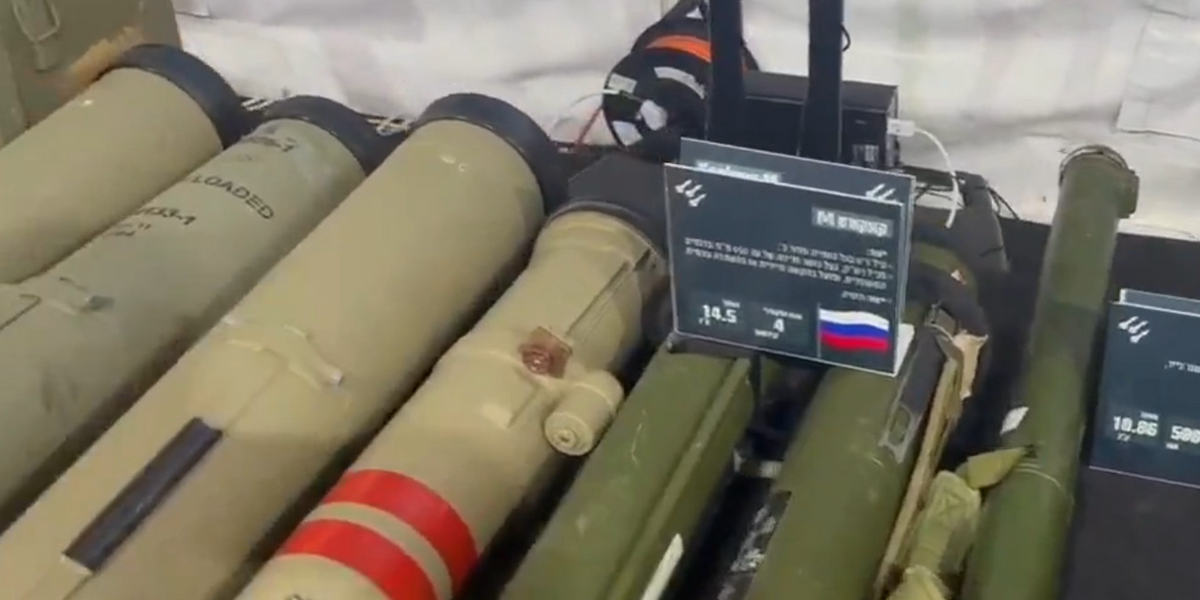
Finally, the Israeli Defense Forces announced on October 1st that they had seized Russian-made weapons from Hezbollah positions during an operation in southern Lebanon. This was reported by the local television station Canale 13. During the press conference, the 9K32M Strela-2 portable air defense missile system and the RPG-29 Vampire and RPG-27 Tavolga grenade launchers, intended for infantry, were also exhibited. In other images published by the Israel Defense Forces, an MRO-A rocket-propelled anti-personnel flamethrower can be seen. These Russian-made weapons may have arrived in Hezbollah’s arsenals via third countries, with Syria as the likely source. Furthermore, the possibility of supplies coming from Russia via exports through intermediate countries is not excluded. Recently, Hezbollah was reported to be using Soviet-made Tu-143 Reis reconnaissance drones, converted into offensive weapons. The terrorists place Reis launchers in residential buildings modified for this purpose. To confirm this, the Israeli authorities have released a video showing the moment in which the wall of a building is opened to allow the launch of a Reis. The only country in the region that has officially used Tu-143 Reis is Syria.
@reproduction reserved