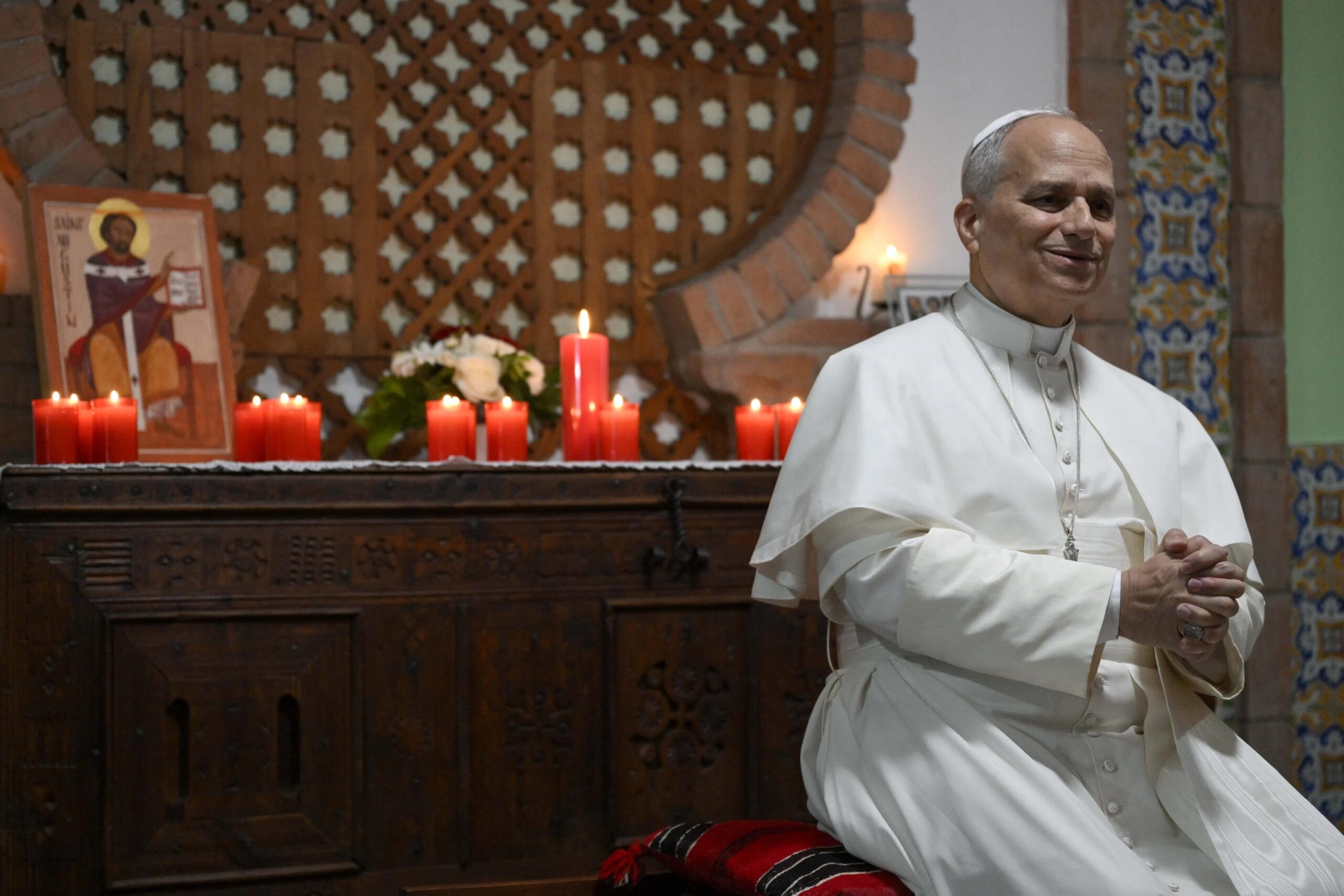
Leo XIV signs the first encyclical on AI on May 15. A document that relaunches the tradition of Rerum Novarum in the time of algorithms
There is something almost paradoxical – in the noble sense of the term, the one that Chesterton would have appreciated – in the fact that the Catholic Church, a two-thousand-year-old institution guardian of revealed and immutable truths, today finds itself among the few global subjects capable of asking the right question about artificial intelligence. Not “how it works”, not “how much it pays”, but: “who needs it”, and “at whose expense”. On May 25 Leo XIV will publish Magnificent Humanitasthe first pontifical encyclical “on the protection of the human person in the time of artificial intelligence” – and the choice to sign it on 15 May, on the 135th anniversary of Rerum Novarum of Leo XIII, is already in itself an act of historical interpretation.
The lesson of Leo XIII reread by Leo XIV
A little is needed here excursus historical. There Rerum Novarum of 1891 was born at a time when industrial capitalism was redesigning the power relations between labor and capital, between man and machine, between community and market. The Church of the time did not limit itself to condemning the excesses: it framed them within an anthropological vision that twentieth-century liberalism, in its social variant, would have partly assimilated – often without admitting it. Today the digital transition and artificial intelligence are redesigning those same relationships with incomparably greater speed, and with a pervasiveness that affects not only work, but also knowledge, relationships and conscience.
Anthropic will be present at the Synod
It is no coincidence that among the speakers at the presentation – in the Synod Hall, with the unprecedented presence of the Pope himself at the presentation of his own encyclical – was Christopher Olah, co-founder of Anthropic, one of the most advanced companies in research on artificial intelligence and among the most serious in addressing the problem of its interpretability. A Californian engineer sitting next to cardinals and theologians is a sign of recognition of a problem that is not theological nortechnical, but anthropological – and on this ground the skills must communicate without predefined hierarchies. Professor Anna Rowlands, a theologian in Durham, and Leocadie Lushombo, who teaches Catholic social thought at the Jesuit School of Theology, complete a panel that has the rare merit of not being too far from either the clerical or the technocratic side.
The true function of Magnificent Humanitas
What can already be seen from the title and context is that Magnificent Humanitas it does not promise to be a document of condemnation or enthusiasm. The tradition of Catholic social teaching – from Leo XIII to John Paul II – has always operated through distinction: not progress against the person, but progress tidy to the person. In a time in which the speed of innovation exceeds the capacity for cultural and regulatory elaboration – and in which governments legislate on AI with the same clarity with which the American Congress questioned Zuckerberg on the functioning of Facebook – a document capable of offering criteria for discernment is, simply, necessary.