The thesis is suggestive and boasts many supporters: the war in Iran would be just one piece of the Great Game of this millennium, the confrontation between the United States and China. The conflict would in fact be part of a precise strategic plan by Washington aimed at weakening Beijing. First the fall of Bashar al-Assad in Syria, which severed an important node along the new Silk Road towards the Mediterranean, then the regime change in Venezuela and finally the attack on Iran, two countries that supply crude oil to China. All seasoned with duties and threats of sanctions. Objective: strangle the Dragon. But if this is truly the Americans’ intent, is their strategy succeeding? Or is it instead their enemy who is using this crisis to shift the balance in his favor, from energy to diplomacy, up to the technologies of the future?
Let’s start with oil. China is the world’s largest importer of crude oil and is structurally dependent on barrels arriving from abroad. Tehran and Caracas guaranteed around 17% of the total purchases of black gold in 2025, a good chunk. What the White House tends to forget, however, is that the country does not arrive at this crisis empty-handed. In the same years in which Washington was building its strategy of sanctions and blockades, something less visible but equally strategic was created on the other side of the Pacific: a wall of barrels. In the two-year period 2025-26, storage capacity was enhanced and eleven new hubs came into operation or are under construction, adding almost 170 million barrels of reserves. Between January and August 2025, the country accumulated around 900,000 a day in stocks, transforming almost a million daily bins intended on paper for the global market into oil “frozen” in its tanks, while prices rose. And then the increase in supplies from Russia, Indonesia and Malaysia partly offset the deficit caused by the Hormuz blockade, limiting the decline in overall crude oil imports to 2.24%. Of course, the increase in the price of hydrocarbons is also bad for the Chinese economy, but it does not bring it to its knees.
Above all, the Iranian crisis offers the People’s Republic the opportunity to present itself as a rational actor that resists, manages the shock and weaves a diplomatic network while the others shoot. Two months ago, Foreign Minister Wang Yi promised that 2026 would be “an important year” for relations between the two superpowers. He was right, but not in the way he had hoped. After Donald Trump’s attack on the Pasdaran and the blockade of the Strait, Beijing accused the United States of behaving in a “dangerous and irresponsible” manner. There is a symbolic date on the calendar: the Tycoon’s state visit, postponed from March to May. It was supposed to be the trip of détente, the American president’s first trip to China since 2017, with the aim of closing a “mutually advantageous” trade agreement after years of tariffs and skirmishes. Now the tour risks being sucked into suspicions of Chinese military aid to Tehran and accusations of having sparked an unnecessary conflict in the Middle East.
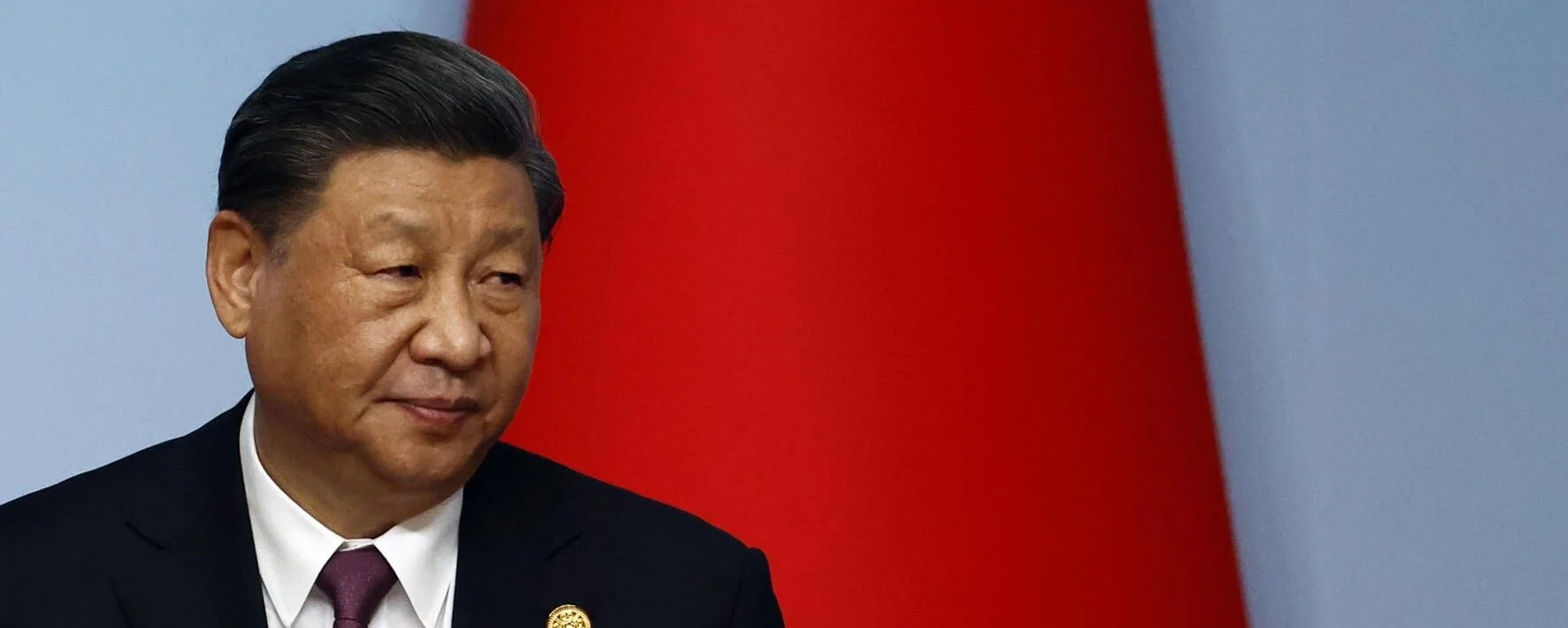
Meanwhile, the Dragon moves on another plane. While The Donald attacks NATO and even the Vatican, insults allies and threatens new duties, Xi Jinping organizes an unprecedented diplomatic relay: in a few days he receives the Russian Foreign Minister Sergei Lavrov, the Spanish Prime Minister Pedro Sánchez, the Crown Prince of Abu Dhabi Khaled bin Mohamed bin Zayed. With the Kremlin, the message is immediate: Moscow is ready to increase hydrocarbon supplies, helping to cement a new energy geography outside Western control. With the Emirati prince, Xi presents a four-point peace plan for the ceasefire in the Middle East, based on sovereignty, cooperation, shared security and respect for international law: exactly the opposite of the “I don’t care about the rules” openly claimed by Trump. «In fact, China seems to want to do everything to accredit itself as a balanced and responsible power, committed to a patient weaving of diplomatic relations rather than actions of force», observes Ambassador Michele Valensise, president of the Institute for International Affairs (IAI). «The paradox is therefore that some are starting to see the country as a factor in stabilizing and defending multilateralism, leaving the ambitious policies of expanding its influence on a global scale in the background».
Europeans, despite attempts to break away from dependence on China, are queuing in front of the Great Wall. In recent days, Foreign Minister Antonio Tajani stopped by Beijing and Shanghai to relaunch the economic channel: talks with Wang Yi, with Trade Minister Wang Wentao, co-presidency of the Mixed Economic Commission, an entrepreneurial forum on exports, hi-tech, strategic supply chains. It is difficult to do without collaboration with companies from the People’s Republic. An interesting case is that of the automotive sector, a key industry in Europe, where Chinese companies act as competitors but also as possible partners, for example offering to use under-used factories in Italy (known as Dongfeng) or closed ones in Spain (Chery). The former Celestial Empire appears as the great power that proposes solutions, perhaps in an interested way, but with a narrative of calm and predictability.
On the Asian front, the picture is even clearer. In his long essay Asia After America: How US Strategy Failed and Gave Up the Advantage to China, Zack Cooper, senior fellow at the American Enterprise Institute and professor at Princeton, talks in Foreign Affairs about the slow erosion of American centrality in the region. Barack Obama’s idea was clear: invest in security, trade and governance to strengthen partners and allies, so as to make it more difficult for his rival to overturn the regional order. The practice was different: the military pillar was fueled, the economic and political ones crumbled between protectionism, exit from the Trans-Pacific Partnership (TPP), and lack of interest in multilateral institutions. Cooper speaks openly of a growing gap between goals and means, which has eroded Washington’s credibility.
Today the American strategy is, in fact, reduced to maintaining deterrence around Taiwan while large slices of South-East Asia and South Asia integrate economically with the largest local player: trade, investments, infrastructure, debt.
Moreover, American political volatility fuels the feeling, in Tokyo as in New Delhi, that the USA is an increasingly less predictable ally. China, on the contrary, is perceived as a power that can be feared, but which is unlikely to change course suddenly: it centralizes power, plans for ten-fifteen years, updates industrial and security plans without overturning the table. Even on the most sensitive dossier, Taiwan, the Dragon is working to build an image of a “responsible” actor. In April, while Chinese fighters continued to cross the median line of the Strait and naval exercises around the island multiplied, Xi Jinping received Cheng Li-wun, leader of the Kuomintang, Taiwan’s main opposition party. It is the first visit of a KMT leader to China after a decade, called the “Journey of Peace”: three stops – Nanjing, Shanghai, Beijing – with Xi speaking of “peaceful development of relations between the two sides” and of a “bright future” if Taiwan accepts the “one China” formula. A few days later, the giant announced measures to “strengthen ties” with the island: more direct flights, opportunities for students and businesses, targeted openings on trade and services. No one in Taipei has any illusions about the underlying intentions – the People’s Republic has never ruled out the use of force – but in the eyes of the rest of the world the image that remains is that of a superpower that “offers dialogue” while the United States ships aircraft carriers and violates international law, among other things giving it an assist if it wants to invade Taiwan.
The picture is completed if we look at critical resources and technologies. Here, the grip seems to be tightening more on the Western side than on the Chinese side. Beijing is responding to American blockades with restrictions on the export of gallium and germanium (fundamental for radar and hi-tech), creating a bottleneck that directly affects the US defense industry
The United States Geological Survey (USGS) has been certifying China’s primacy in rare earths for years: the People’s Republic controls around 70% of global extraction, and an even greater share of the refining and transformation phases.
Not only that. Data from CEIC – an economic and industrial statistics platform – indicate that China manages up to 90-92% of the chain of permanent magnets, indispensable components for electric cars, wind turbines, advanced electronics, weapons systems. If Washington tries to use Iranian and Venezuelan oil as leverage, Xi Jinping has the possibility, even if only theoretical, but sufficient to influence markets and political decisions, to use as counter-lever materials without which the Western energy transition simply stops.
Added to this is artificial intelligence. China now leads in terms of the number of international patents in various AI segments, has built an ecosystem of large groups (Huawei, Alibaba, Baidu, Tencent, SenseTime) that compete with American big tech in Asia, Africa and Latin America, and is imposing its own standards in fields such as 5G and 6G, smart cities, digital surveillance. In summary: if oil is still one of the few areas in which the United States can try to attack it, rare earths and hi-tech supply chains are already fields in which it can exercise a conditioning power on other world players.
In the 1960s, the moon landing had established American hegemony: the world had understood that whoever brought a man to our satellite would dictate the rules on Earth too. But if the next foot to imprint on the dust of the Sea of Tranquility should be that of a taikonaut, perhaps the answer to the question of “who is really strangling whom” will be clearer looking at the sky than at the diplomats’ papers.